


















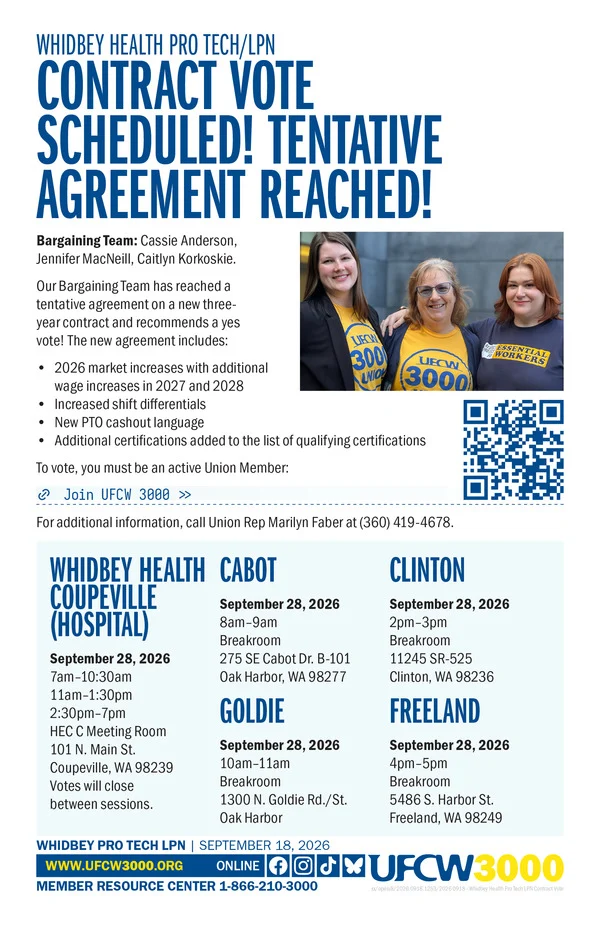

The Struggle to Bust Free from Staffing Stasis
/
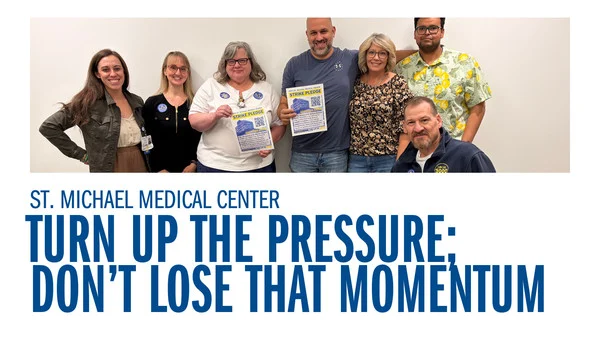
Our fearless st michael medical center Bargaining team: (L-R) Kim Fraser, pre-op; janice brown, fbc; meredith francisco, med surg; lindsey gearllach, obs; tammy olson, icu.
This summer, hospitals across the state took a few more big steps toward implementing Washington’s safer staffing law, a union member-led measure to help nurses deliver the level of care their patients deserve.
Starting July 1, most hospitals activated new staffing plans and began reporting compliance to the state. (Urban acute care hospitals started doing the same on August 7.)
Thanks to the efforts of the WA Safe and Healthy coalition, which harnessed the power of rank-and-file members from UFCW 3000, WSNA, and SEIU 1199NW to push the safer staffing bill through the State Legislature, more healthcare workers now have a real voice on those staffing committees – a voice that hospital CEOs can no longer ignore without consequence.
At St. Michael Medical Center in Silverdale, WA, medical-surgical nurse Meredith Francisco, who served on the new staffing committee, says the process worked out well enough. However, as many of us suspected when the landmark legislation passed in 2023, she and other nurses see room for improvement. Workers also voice serious concerns about loopholes that hospital managers already appear to be exploiting.
Slow but Steady Progress

former wa governor jay inslee signing the staffing law in 2023
Broadly, the safer staffing law establishes hospital-wide staffing committees composed of workers and management. Over the course of several meetings, those committees develop and approve plans designed to adequately staff hospitals. Hospital administrators must then regularly report staffing levels to the state. If staffing levels drop below 80% in a month, the hospitals face fines for noncompliance starting in 2027.
According to Francisco, the approved staffing plan at St. Michael’s led to the company hiring more nurses in one unit and moving around some positions in a few others to fill in gaps.
The process of getting to that point more or less went smoothly, Francisco said.
In brief, managers drafted plans and presented them at committee meetings. During those meetings, workers held sidebar conversations with other workers to ensure that management hadn't exerted undue pressure on units to support a given plan. At St. Michael’s, at least, the workers said they felt no such pressure, and so the committee ultimately agreed to approve the plans.
Great, right? Well, kinda.
Needs More Teeth
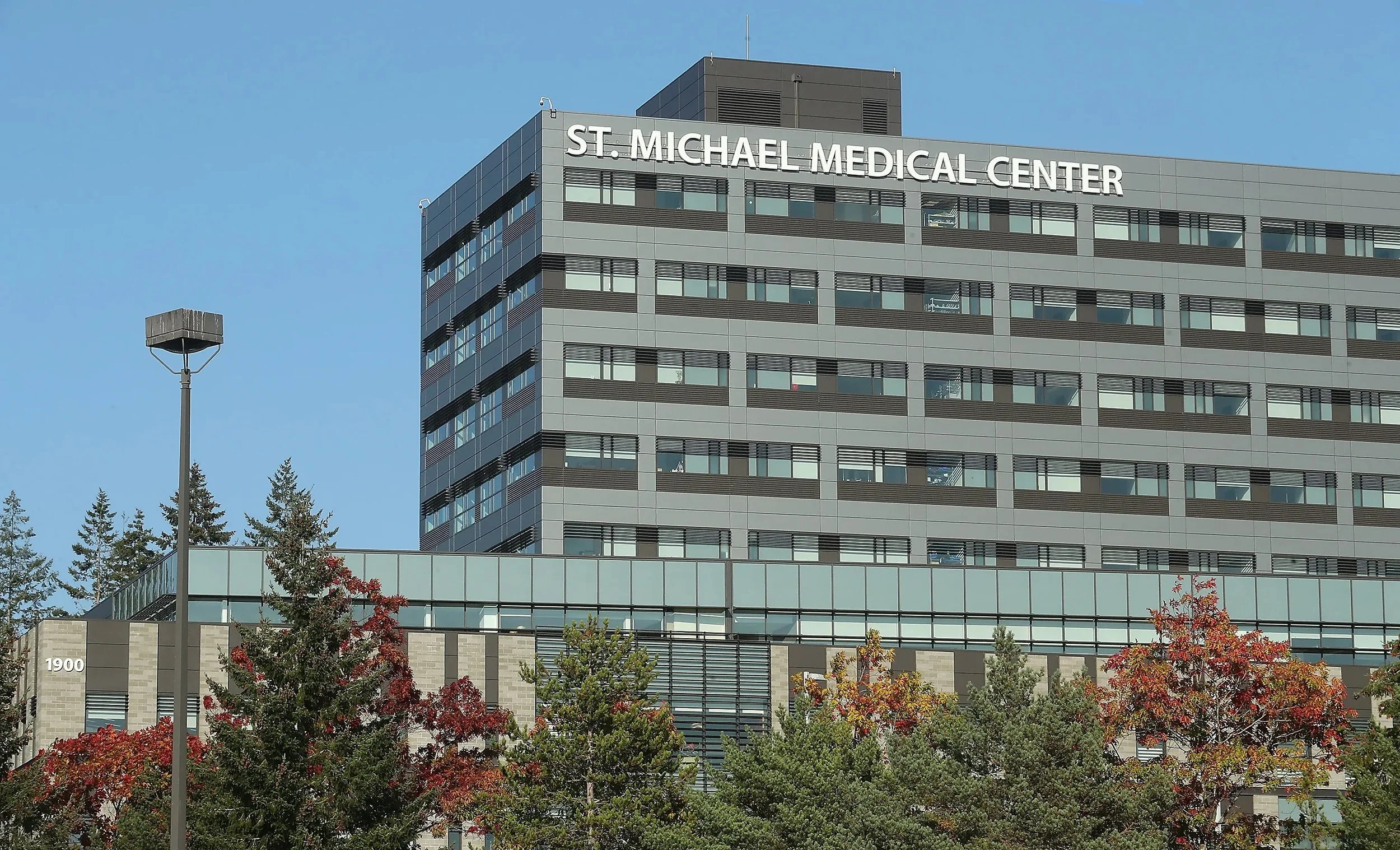
While three units at St. Michael’s benefited from the new plan, nearly 90% of the hospital’s staffing grid remained unchanged, Francisco said. That reality put committee members between a rock and a hard place; voting to approve the plans wouldn’t fix the hospital’s staffing crisis, but voting against the plan risked leaving the units that would benefit in a worse position.
State lawmakers hope the fines hospitals may later face for failing to adhere to staffing plans will incentivize them to craft plans that actually work, but nurses are already spotting loopholes that may lead to hospitals not capturing the true scope of the staffing problems in their quarterly reports, which could slow progress.
For instance, Francisco said, one week in early July hospital management pulled a resource nurse from a critical care unit to fill a staffing gap on another floor. While that move fixed the issue in one unit for that shift, it deprived another unit of a team member they needed to properly staff the floor. Sounds like a problem the staffing law was designed to help prevent! In this case, however, the hospital won’t need to report any short staffing. Why? Because resource nurses do not take on a patient load, so they don’t count toward the staffing grid. So, from the perspective of the law, nothing actually happened.
“They're robbing Peter to pay Paul,” Francisco said.
Francisco worries that shorter-term noncompliance with the law will go unseen, too. If two nurses go on a 30-minute break at the same time, for instance, then the unit would drop below safe staffing levels during that period, but hospitals wouldn’t have to report it.
To help solve this problem, Francisco suggests a tweak to the law that would count charge nurses and resource nurses toward the grid when they’re pulled to another unit.
Lindsey Gearllach, an observation nurse who’s worked at St. Michael for nearly 18 years, ran into similar problems with earlier versions of the staffing committees.
“You can’t poke a hole in one place to patch a hole in another,” she said.
For Gearllach, the core issue stems from the fact that staffing committees must work with the numbers corporate executives give them. Without more authority to draft plans that will actually solve the problem, and without more “teeth” to enforce those plans, she argues that the hospital will only make incremental change.
Complaint Fatigue
Gearllach and Francisco also worry about complaint fatigue. To get the attention of staffing committees in the first place, healthcare workers must fill out complaint forms. After working a short-staffed 12-hour shift and filling out all the associated paperwork, the last thing a nurse wants to do is fill out a Collaborative Staffing Intervention (CSI) form. But if they don’t, then they risk staffing committees overlooking that floor’s staffing problems.
Though we can’t do much about the drudgery of filling out forms, Gearllach suggests holding longer meetings to make sure staffing committees address all the complaints.
Though staffing problems persist despite the law change, we all know how that old saying goes: no permanent victories; no permanent defeats. While UFCW 3000 gathers member stories and suggestions that could help us build a case to push for changes to improve the law, bargaining team members like Francisco and Gearllach are trying to achieve the change we want to see in the world in the next contract. But that fight also presents some challenges.
Like Arguing with a Pre-Teen
At the table with CHI Health – the giant corporation that owns St. Michael -- the bargaining team proposes ditching the grid in favor of creating safe nurse-to-patient ratios. To help meet that demand, they also want to hire break nurses to work the floors so that nurses can regularly take their state-mandated breaks. And as a stop-gap measure, they’re pushing for premiums for nurses and discounts for patients when the hospital fails to comply with the safer staffing law.
So far, CHI Health executives have dismissed these proposals outright, offering only the claim that there is no staffing issue—without providing any meaningful explanation. “It’s worse than arguing with my 12-year-old,” Francisco said.
Management continues to insist that there is no staffing problem and that their retention numbers are strong, which they claim negates the need for ratios or incentive premiums. As long as they refuse to engage with the realities nurses are raising, it will remain nearly impossible to work toward solutions that ensure safe, high-quality patient care. In the meantime, nurses will keep demanding answers — and they will continue to escalate the pressure each time corporate responds with silence.
Take Action
Sign our community petition and tell the corporate execs at CHI Health to listen to nurses.