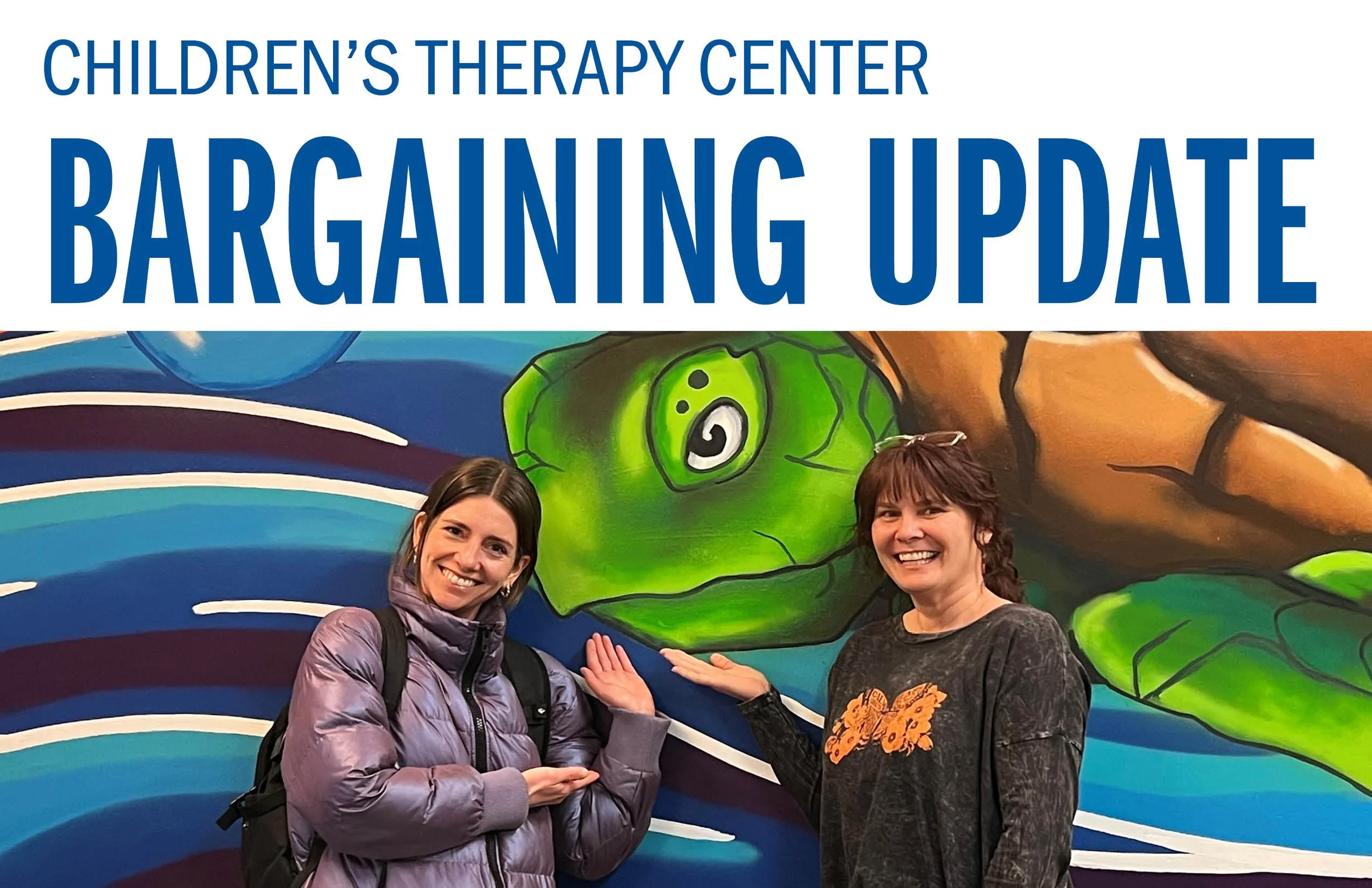







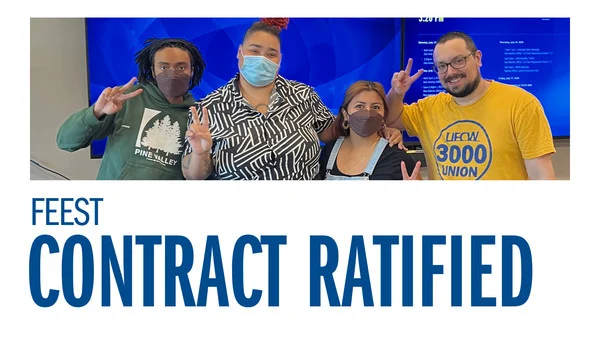




Children’s Therapy Center Contract Ratified!
/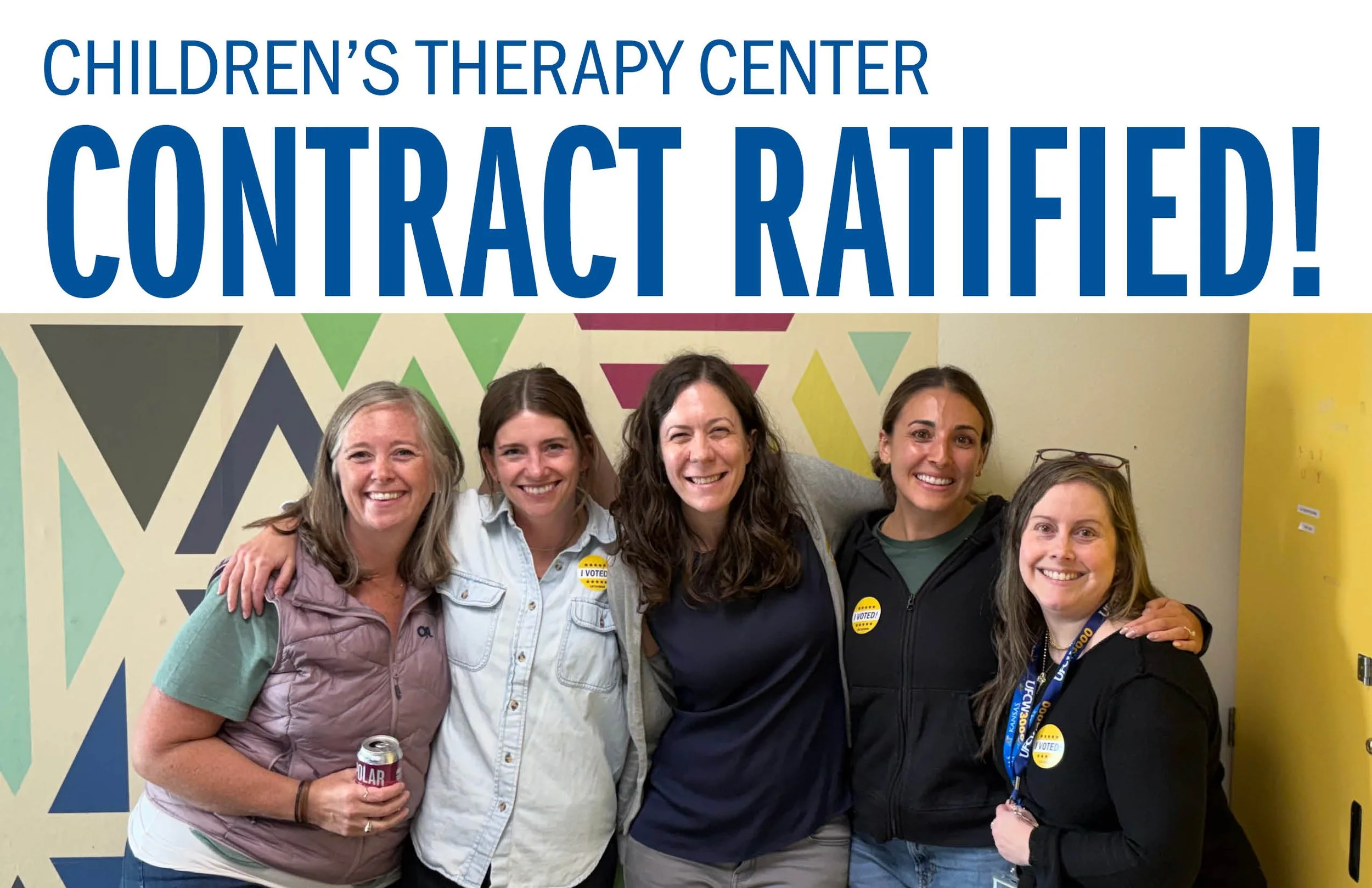
On Wednesday, September 2, UFCW 3000 Children’s Therapy Center members voted with an OVERWHELMING MAJORITY to ratify our new two year collective bargaining agreement.
Read MoreOur worker-led Bargaining Team is excited to announce that we have reached a tentative agreement with Football NW on our first Collective Bargaining Agreement (CBA) and are recommending a YES vote.
In 2021, our union fought for two workers —Donna Rasmussen of PCC-View Ridge and Laurae McIntyre of PCC-Fremont—to win seats on the PCC Board of Trustees. These workers brought a unique perspective to the board, tapping their lived experiences with coworkers, customers, and the community to help steer the future of the co-op.
To maintain a strong worker voice on PCC’s Board, we need to act now.
Attention EvergreenHealth Kirkland Laboratory Technical Coordinator, Point of Care Specialist and Neurodiagnostic Technician and Technologist Members!
UFCW 3000 is announcing a accretion ratification vote for EvergreenHealth Kirkland Lab and EEG members.
When we made the Employer’s last proposal public, Labcorp’s supposal had not been given to the Union. We received it last Friday, and it was never formally presented at the bargaining table.
On Tuesday, October 27, our union Bargaining Team representing the newly-organized clinic workers in the MultiCare Mary Bridge Therapies group met with management for our first official session of negotiations towards our first union contract!
On Wednesday, October 21, and Thursday, October 22, our union Bargaining Team met with Management for our seventh and eighth contract negotiation sessions this cycle.
As with our back-to-back sessions in July and September, we left these two days disappointed by Management’s overall pace at the bargaining table;
With ULPs on the horizon and a strike authorization in hand, we bargained late into the night two days this week. While some progress was made, the hospital is still short of meeting our priorities and continues to push their takeaways. We will not let that happen! Stay prepared and join us for all the upcoming Strike preparation meetings via ZOOM to learn more about the next steps in your fight for a best contract.
Our collective actions over the last two weeks have paid off in this bargaining session, and we are encouraged by the results! Management arrived prepared to engage and met with our team early in the day, replying to several outstanding proposals. Throughout the course of the day, we reached sixteen tentative agreements. One of these was a major breakthrough in our economic proposals – agreeing to the definitions of full time and part time employees. Thank you to our Contract Action Team members who pulled a lot of information to support the need for these definitions.
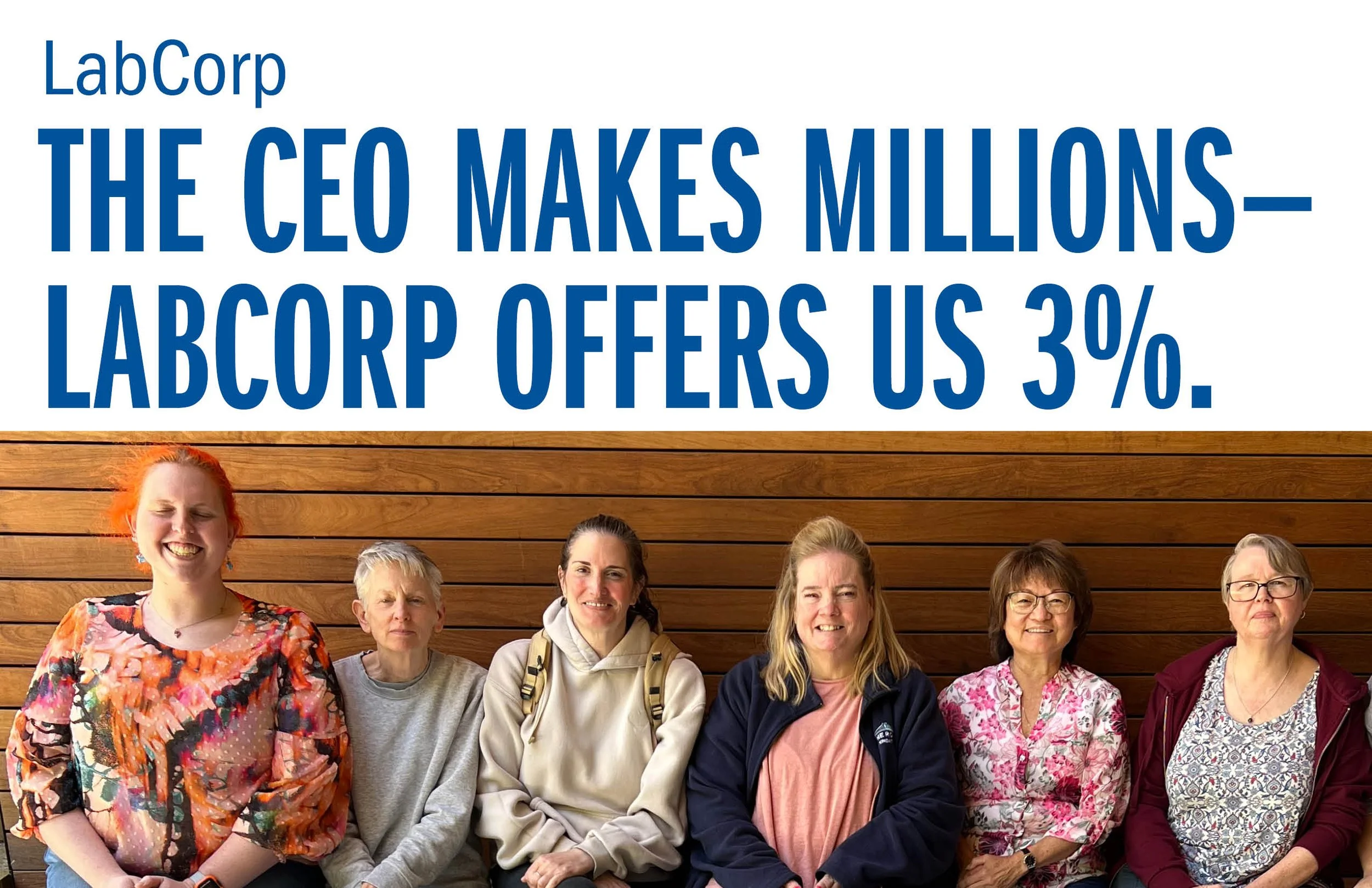
The union met with LabCorp on Wednesday, October 28, and once again received unacceptable, disrespectful proposals. LabCorp offers minimal, below-market wage increases, resists giving reasonable notice of outsourcing, and wants to strip away our rights and gain total power to change your health insurance whenever it chooses. The company blames upcoming Medicare reimbursement cuts for refusing to move closer to our proposals, but we are skeptical: LabCorp is thriving financially, its stock price is rising, and CEO Adam Schechter received $18,399,913 in compensation last year.
Grocery executives are working to grab every penny from their workers and members of our communities. Every contract negotiation is an opportunity to fight for what we deserve and work to steer the grocery industry back on track, to focus on what matters: delivering quality customer service and great products to feed our neighbors.
In our last contract negotiations, our union won the largest wage increases that we’ve seen, secured a transition to the stable our union health plan through the UFCW Spokane healthcare Trust, and ensured funding to keep our pension plan dependable for retirement. Our NE Oregon contracts recently expired, and our union is prioritizing a new contract that builds upon our previous wins.
After four long days of bargaining with the Employer and countless hours of preparation, our Bargaining Team reached a Tentative Agreement (TA) that we are excited to bring back to our members!
While our initial bargaining sessions were largely positive and relatively low stakes, we now have reached the meat and potato economic proposals that our unit cares about most. This is often the most challenging stage of bargaining – especially when bargaining a first contract. An example from today: in response to our extensively researched wage proposal, the company stated "we don't want to change how we do things" without further discussion.
As 2,500 UFCW 3000 members at MultiCare continue preparations for contract bargaining to begin early next year, there are several upcoming opportunities to gather, discuss and contribute. First off, a big thanks to all who completed the bargaining surveys during August and September. That information will be crucial in our assessing priorities before bargaining.
After holding nomination votes for the Labor Management Advisory Committee (LMAC) from September 21–25, 2026, and then holding nominee votes for Ballard, Central District, and Issaquah on October 21, 2026, we are happy to announce your committee members!
This agreement comes after more than six months of bargaining, an informational picket, federal mediation, a strike pledge campaign, and a strike authorization vote that showed CommonSpirit members were ready to fight for a better contract
After more than a month since our last session, our Union Bargaining Team; Alyssa and Oliver were able to reconvene with the employer on October 19 to receive their economic counter proposal.
Join us via Zoom on Tuesday, October 20, at 6:30 PM to learn more about the tentative agreement reached between our Union Bargaining Team and CommonSpirit.
“At a time when workers are struggling to keep up with sky-high prices for groceries, housing, health care, and other basic necessities, we cannot afford to give a tax cut to the wealthiest people in our state,” said Sam Dancy, UFCW 3000 Executive Board Vice President and Grocery Bargaining Team Member
Our member-led Bargaining Team met with representative from Puzzle Break to lay the foundation for the negotiations of our first union contract. We discussed guidelines around how proposals will be passed, Bargaining Team availability and our desire to have consistent and timely bargaining dates moving forward.
On Wednesday, September 2, UFCW 3000 Children’s Therapy Center members voted with an OVERWHELMING MAJORITY to ratify our new two year collective bargaining agreement.
Read MoreWe finally got to a tentative agreement on our first union collective bargaining agreement! After almost a year of bargaining, we were able to reach a tentative agreement in our last session on August 14 with the employer.
Read MoreOn February 12, we met for our seventh bargaining session with management to continue negotiations on our first contract. We received a response to our proposals from January 23 from the Employer at 10:30am and have been making steady progress.
After our discussion regarding inclement weather, the Employer came back with a proposal that addressed the majority of the concerns of the team from their previous proposal on the subject. We agreed to a 5% minimum increase in pay for those who obtain certification or licensing within the same covered discipline throughout their employment at CTC. This means if a Certified Occupational Therapy Assistant, Developmental Specialist, Speech-Language Pathology Assistant (or other positions) obtains their licensing while working at CTC, they will receive no less than a 5% increase. We also have had ongoing conversations surrounding the caseload calculator.
We presented management last time with our market analysis of wages, so they returned with publicly listed jobs that had information about wages and paid time off at other organizations. The Employer is insisting their "Total Compensation Package" (which includes paid time off and health care insurance amongst other benefits) is the reason why their competitors might pay more or less in wages than CTC. The way we see it is our health care costs are very high, we do not feel our wages are very competitive, and we are offered less in total time off than other employers. We have pointed out to CTC that the current compensation model has not attracted candidates to fill open positions, leaving CTC with more vacancies compared to similar employers. It is difficult to reconcile how all of these components factor into the "total compensation" offered by the Employer, and we are currently analyzing the information to inform our next response.
We spent the rest of the day working on a response, however, we were unable to finalize one before the end of the day. Our next meeting with the Employer is on February 27, and we will present our proposals in the morning.
Please join us for a Contract Action Team meeting on February 24 at 7pm to discuss our next steps in securing our first Union contract!
On Friday, January 23 we had our sixth bargaining session with Children’s Therapy Center Management. Our team presented our responses to Management’s proposals from our previous session and brought up the total compensation model that Children’s Therapy Center touts as their strategy.
Read MoreOn January 14, we met for our fifth bargaining session with Management at CTC to continue negotiations on our first contract. We first met with the Employer at 11am to receive their counterproposals, as we had provided them with responses to everything in our previous session on December 12.
Read More
We left our fourth meeting with the Employer feeling like overall, this was a productive session. In the morning, we presented the Employer with our responses to all of the proposals on the table. This proposal from our Bargaining Team included a significant number of individual articles we've agreed to, in addition to items that the Employer had previously agreed to. As we discussed the proposals with the Employer, we are really beginning to see where our proposals align and other places where additional work will need to be done to reach mutually aligned language.
Directly following our meeting with the Employer in the morning, their team stayed in our conference room to engage in a productive conversation regarding caseloads. During this meeting, the Employer walked us through their calculations and we were pleased to see that they had clearly put in a lot of thought and effort into their proposal. The Employer also acknowledged what they see as responsibilities that fall outside of the "direct time" calculations, and how these would impact the final caseload calculations for each worker. While more discussion is planned on the caseload contract language, we were encouraged by the consideration management gave to this.
Prior to departing in the early afternoon, the Employer returned to our meeting room to ask questions about our proposals, and committed to returning us a response at our next scheduled date on January 14.
We are disappointed to share that management has canceled our upcoming bargaining session—which was scheduled for tomorrow, October 15—stating that their reason for doing so is a proposal which they felt was incomplete or missing information.
Specifically, management referenced our proposed "Caseload" language, which was intended to outline the anticipated workload of the various positions represented in our union contract, and includes factors like whether an employee is serving as a mentor, if they're a specialty coordinator for CHERISH, and so on. The proposed article we shared with the employer on October 3 outlines how different patient requirements are to be calculated together to ensure these are all considered in our overall workload.
After clarifying the language to the employer to show how the calculations would be completed based on the article—our bargaining team came together and drafted an example of a caseload document, which we then shared with the employer.
In summary, we shared that cancelling a session due to questions they have on certain proposal(s) feels counter intuitive to our bargaining team. We are hopeful that we have signaled our willingness to work with the employer and look forward to engaging in discussion and exchange of proposals at our next session on October 28.
Tonight, we have a Contract Action Team committee meeting, the details of which have been emailed out. This will be held with your representative Ian Jacobson and will help clarify any questions you might have.
October 14, 2025
7pm

On Friday, October 3, our bargaining team met with management for our second day of negotiations on our first union contract.
We began our second bargaining day putting the finishing touches on what we would later present to the employer as the final few new proposals we expect to make towards our union contract. These primarily consist of the economic sections, some of which we have highlighted below:
Scheduling: A proposal to memorialize existing practices when it comes to our work schedules, particularly our day-to-day flexibility.
Caseloads: We proposed a framework to outline the appropriate day-to-day caseloads for each job classification and proposed earning an hourly premium when maximum caseloads are exceeded for a prolonged period of time.
Premiums: We proposed additional compensation if you hold specialty certifications, train or mentor new employees, are qualified to care for patients who are deaf/hard of hearing or require medically complex feeding, and more!
Health Insurance: Proposed that the employer pay more towards the cost of our health insurance premiums.
Continuing Education: We proposed to increase the amount of money available to employees for continuing education related expenses, as well as an increase to the paid education time we can utilize.
Wages and Placement on the Wage Scale: We proposed union wage scales which outline set increases for both continued years of experience and future cost-of-living adjustments. Furthermore, our bargaining team proposed a pathway for current employees to be placed onto these wage scales, incorporating credit for our relevant experience in our positions.
After presenting our initial proposals to the employer, they asked a couple of clarifying questions and went back to their caucus room to continue reviewing/discussing. Overall, our team were encouraged that the employer indicated that our proposals were thorough and straightforward. We are eager to get back to the bargaining table and remain hopeful that we will get responses to our proposals from the employer at our session scheduled for October 15.
Join our Contract Action Team Meeting to ask members of our bargaining team questions about our progress so far, and discuss next steps as first contract negotiations continue!
Bargaining Team: Lindsey Gilbert, Family Resource Coordinator; Ronda Duluoz, Infant Mental Health; Megan Rupert, Special Educator
"We're feeling great about the progress so far! Two sessions down, and all of our proposals are on the table!"
— Megan Rupert, Special Educato
On Wednesday, August 27, our bargaining team met with management for our first official day of negotiations on our first union contract and it was a really productive day!
We began our first bargaining day putting the finishing touches on what we would later present to the employer as our initial contract proposal. Our initial proposal primarily focused on some of the "non-economic" (may not directly relate to money) workplace protections and union rights we hope to win in this process, for instance:
Union Representation: This section establishes union stewards, who are one of us, elected by us, to help in grievance and investigatory matters like Weingarten meetings. A Weingarten meeting is an investigatory meeting conducted by management which could lead to discipline.
Just Cause: We also proposed just cause, which means that there needs to be progressive discipline, rather than the employer having the ability to fire us at-will. They have to document every infraction and we have an opportunity to dispute it if that discipline is unfair or goes against what the contract says.
Labor Management Committee: This is a committee where management has to hear our concerns about working conditions and the administration of the agreement.
Grievance Procedure: Grievance procedures are important to help us enforce our contract, whether related to discipline, scheduling, pay, etc.
After presenting our initial proposals to the employer, we spent the remainder of the day discussing and finalizing proposals to provide to the employer at our next session, including economics (wages, premiums, and more!).
We have scheduled our first Contract Action Team Meeting from 7:00 PM - 8:00 PM, where members of the bargaining team will be available (with the representative Ian Jacobson from the union).
Bargaining Team: Lindsey Gilbert, Mali Olson and Ronda Duluoz
"Day one down!!"
We are the Union. The members of UFCW 3000 are over 50,000 members working in grocery, retail, health care, meat packing, cannabis, & other industries across Washington state, north-east Oregon, and northern Idaho. UFCW 3000 is a chartered member of UFCW International with over 1.4 million workers in North America.
To build a powerful Union that fights for economic, political and social justice in our workplaces and in our communities.


Correcting the Record: Decades after Organizing Her Own Unit, Leslie Ball Is Still Fighting for Her Coworkers
Leslie Ball, a certified surgical technologist at St. Joseph Medical Center in Tacoma and a longtime UFCW 3000 Union Steward, has spent decades standing up for herself and her coworkers.
Her fight for better working conditions began in the late 1990s, when she received a 30-cent wage increase, which ended up only being a five-cent raise after her employer reduced her shift differential by a quarter. With years of experience and a deep understanding of the value surgical techs bring to the table, she knew a nickel wasn’t going to cut it. So she and a coworker, Gail Miller, started organizing their colleagues at St. Joe's despite warnings that previous organizing efforts had failed.
Within a year, they helped Radiology, Respiratory Therapy, Pharmacy, Physical Therapy, and other departments form the hospital’s first Technical Unit, which ratified its first contract in 1999.
Jenny C., a transporter at Providence Sacred Heart Medical Center in Spokane, knows what it looks like when management hopes a problem will just go away.
Jenny has watched the facility's transport elevators malfunction for more than a year, filing report after report after each incident she witnessed. Supervisors did not appear to take these complaints seriously.