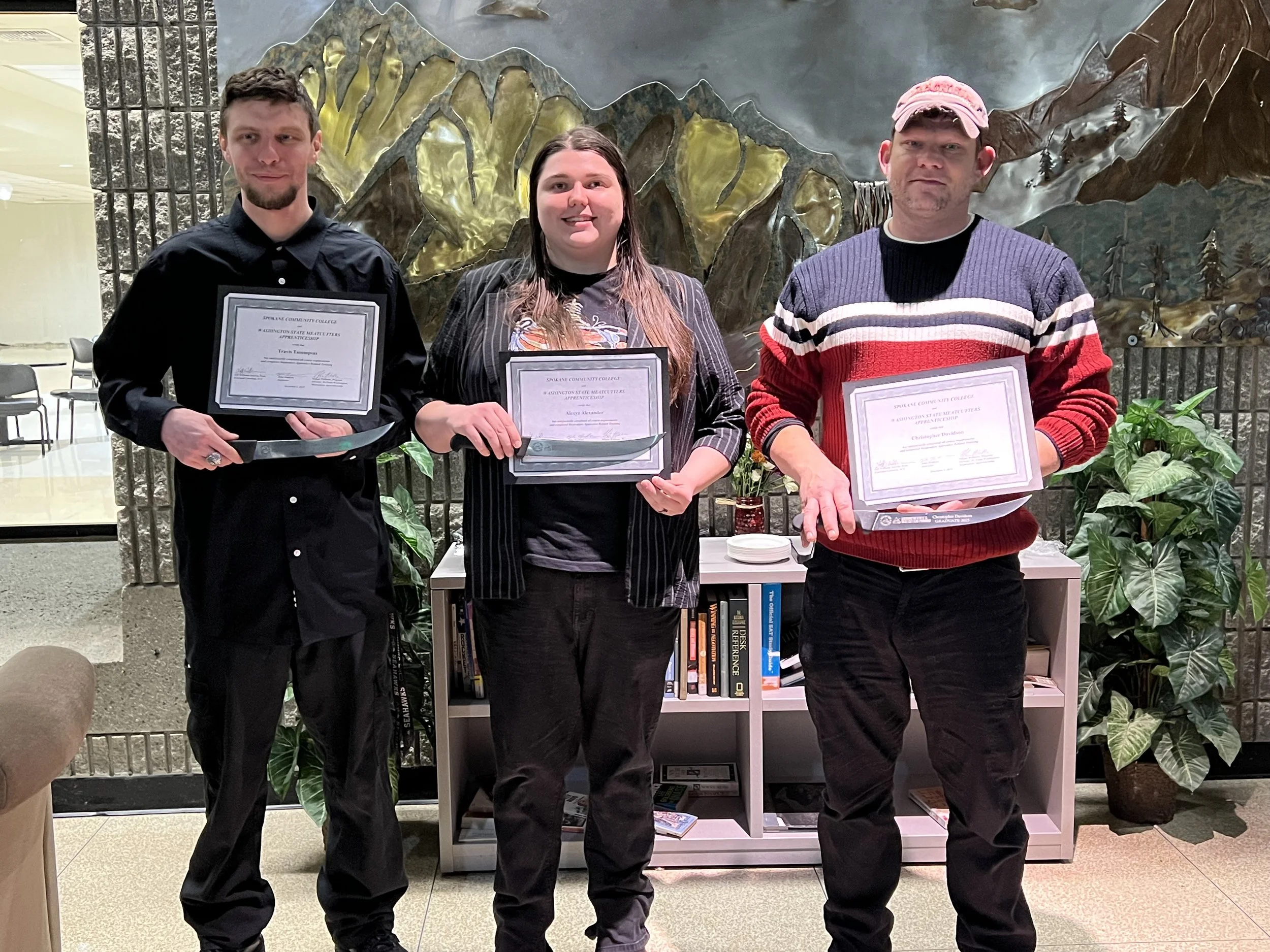
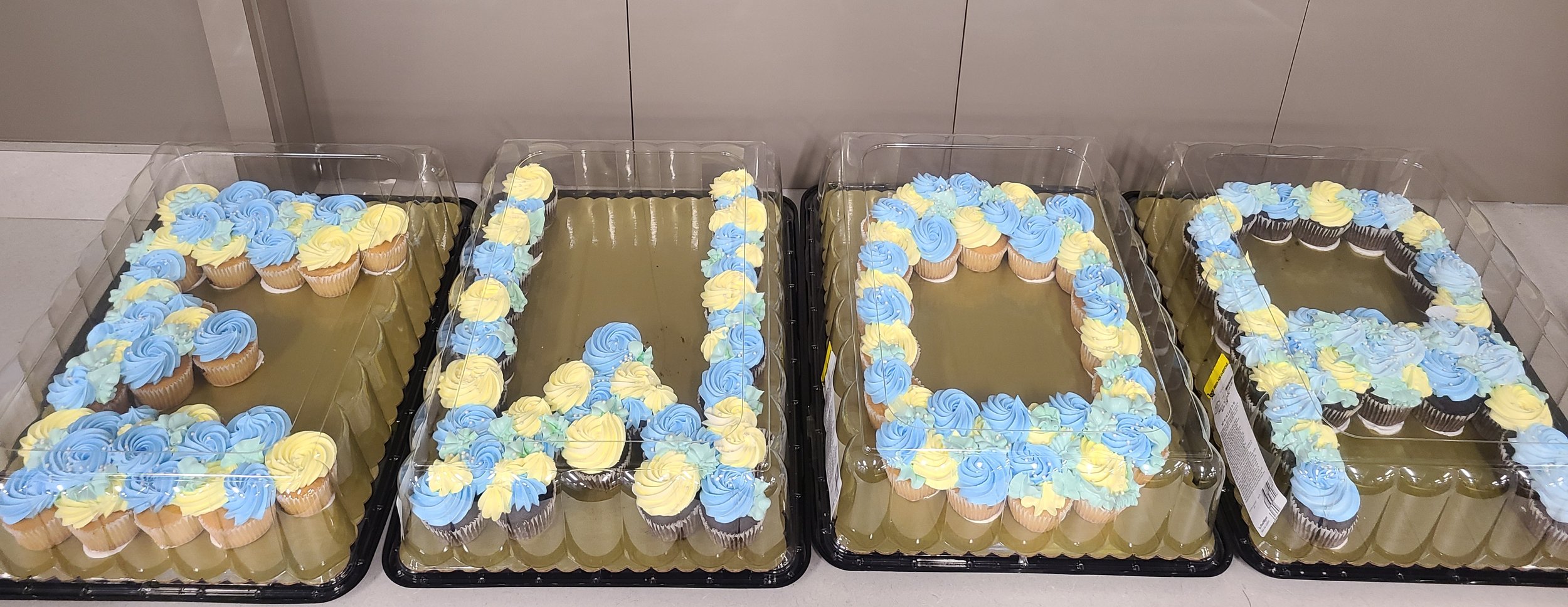
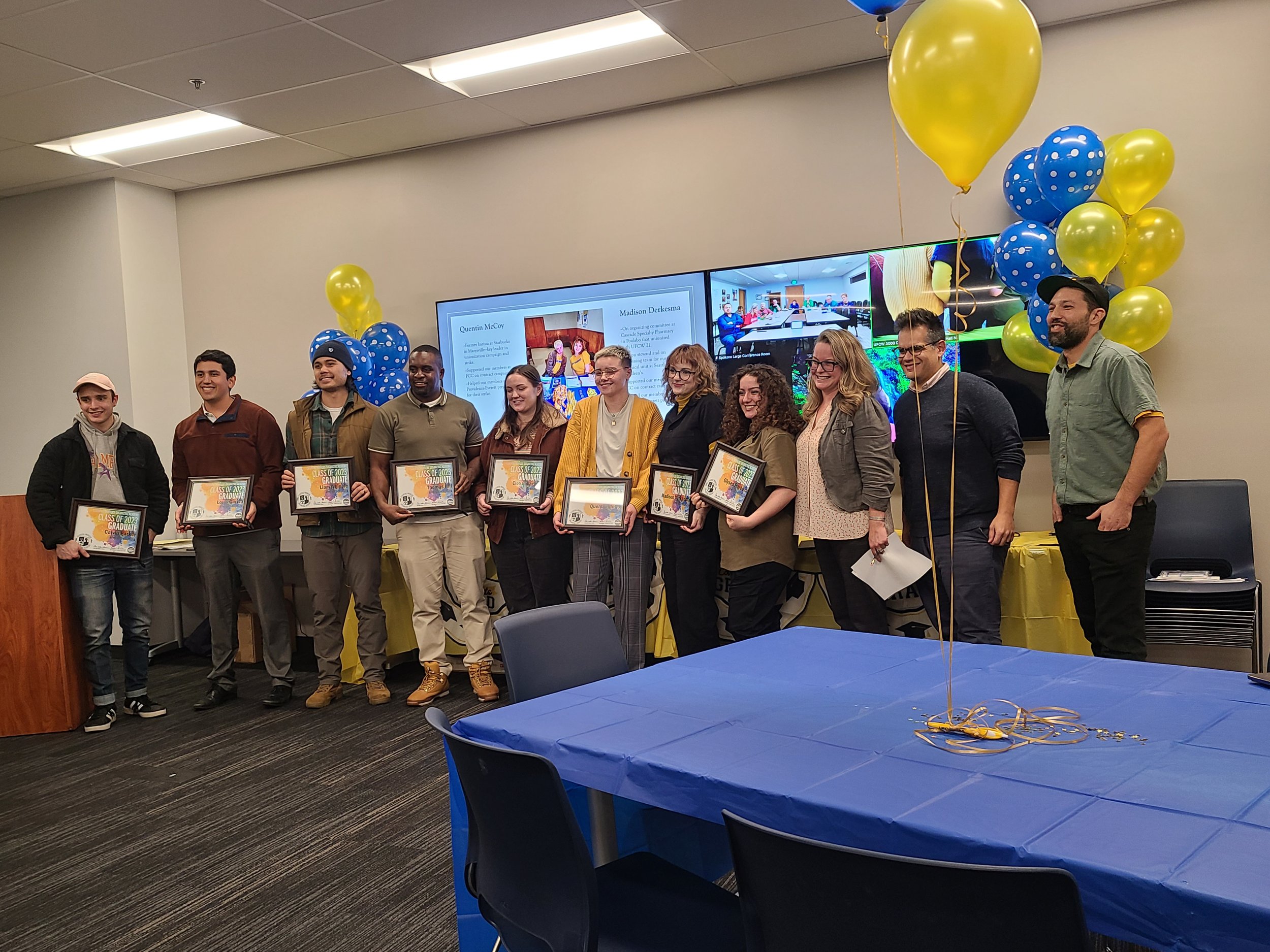
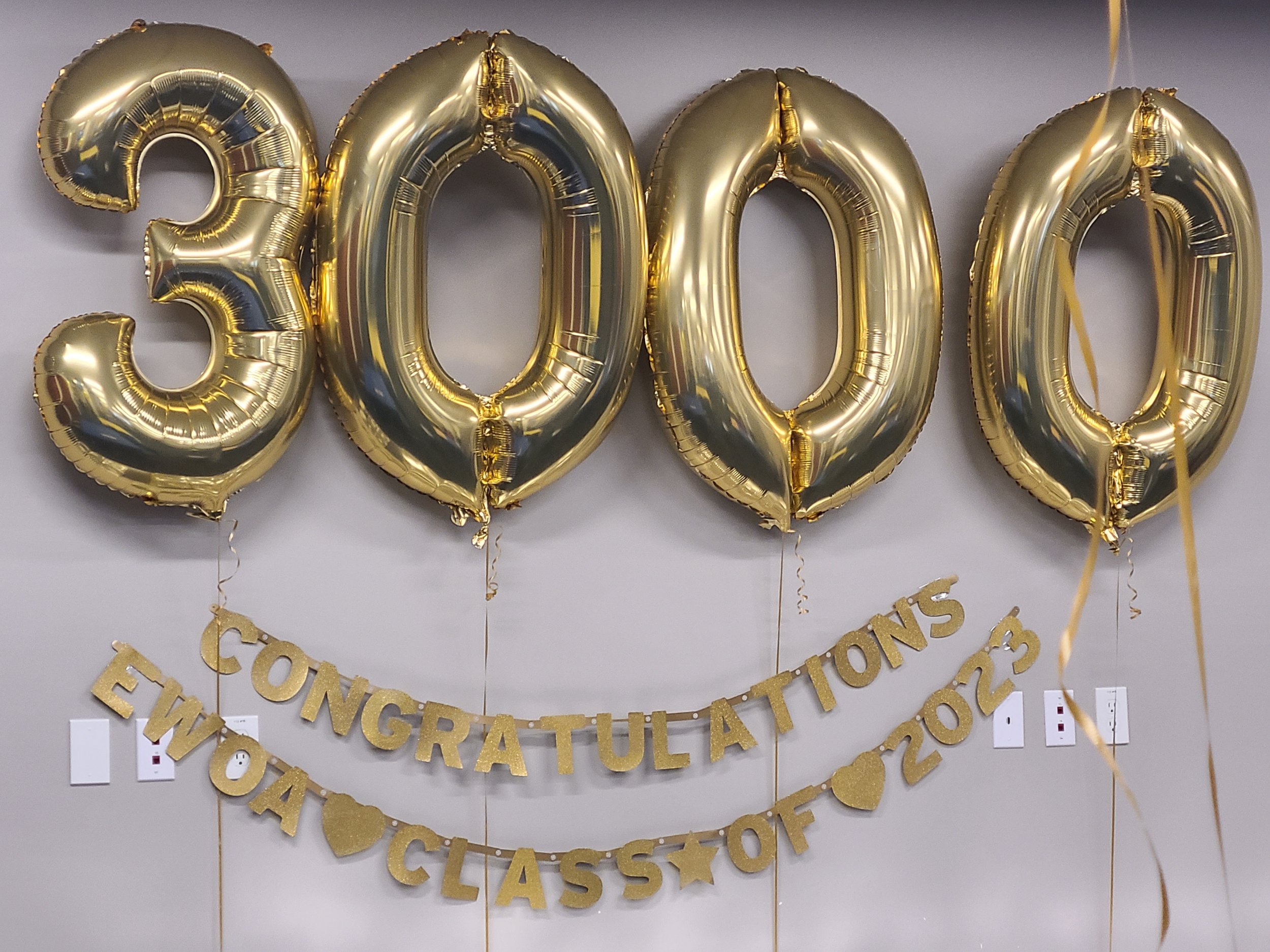
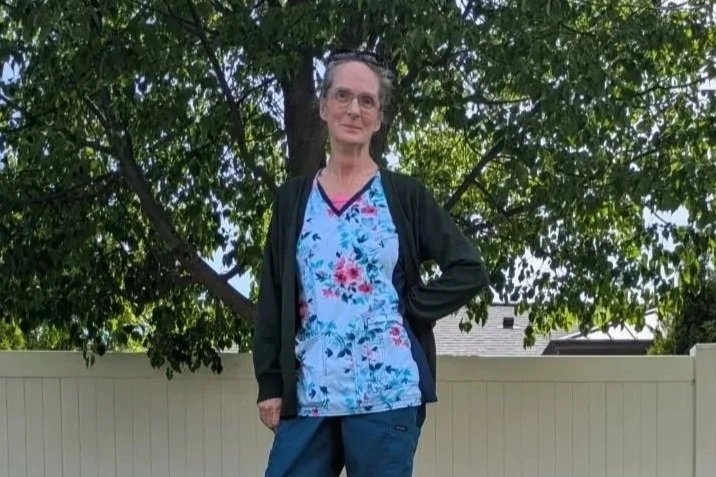
Congratulations to Spokane Graduates of the WeTrain's Washington Meatcutter Apprenticeship Program
/Big congratulations to the inaugural graduating class of the WeTrain Washington Spokane Meatcutter Apprenticeship Program!
Read MoreBig congratulations to the inaugural graduating class of the WeTrain Washington Spokane Meatcutter Apprenticeship Program!
Read MoreAs the federal government shutdown drags on, we know many of our members and their families are feeling the impact, especially those who rely on SNAP (Supplemental Assistance Nutrition Program) benefits, which will no longer be paid after October 31 unless Congress resolves the shutdown.
UFCW 3000 is committed to making sure no one goes through this disruption alone. Below, you’ll find resources to help you plan ahead, find support, and push the federal government to fund SNAP now.
Read More
The President just signed a budget bill that cuts $1 trillion from healthcare to pay for tax cuts that overwhelmingly benefit the rich.
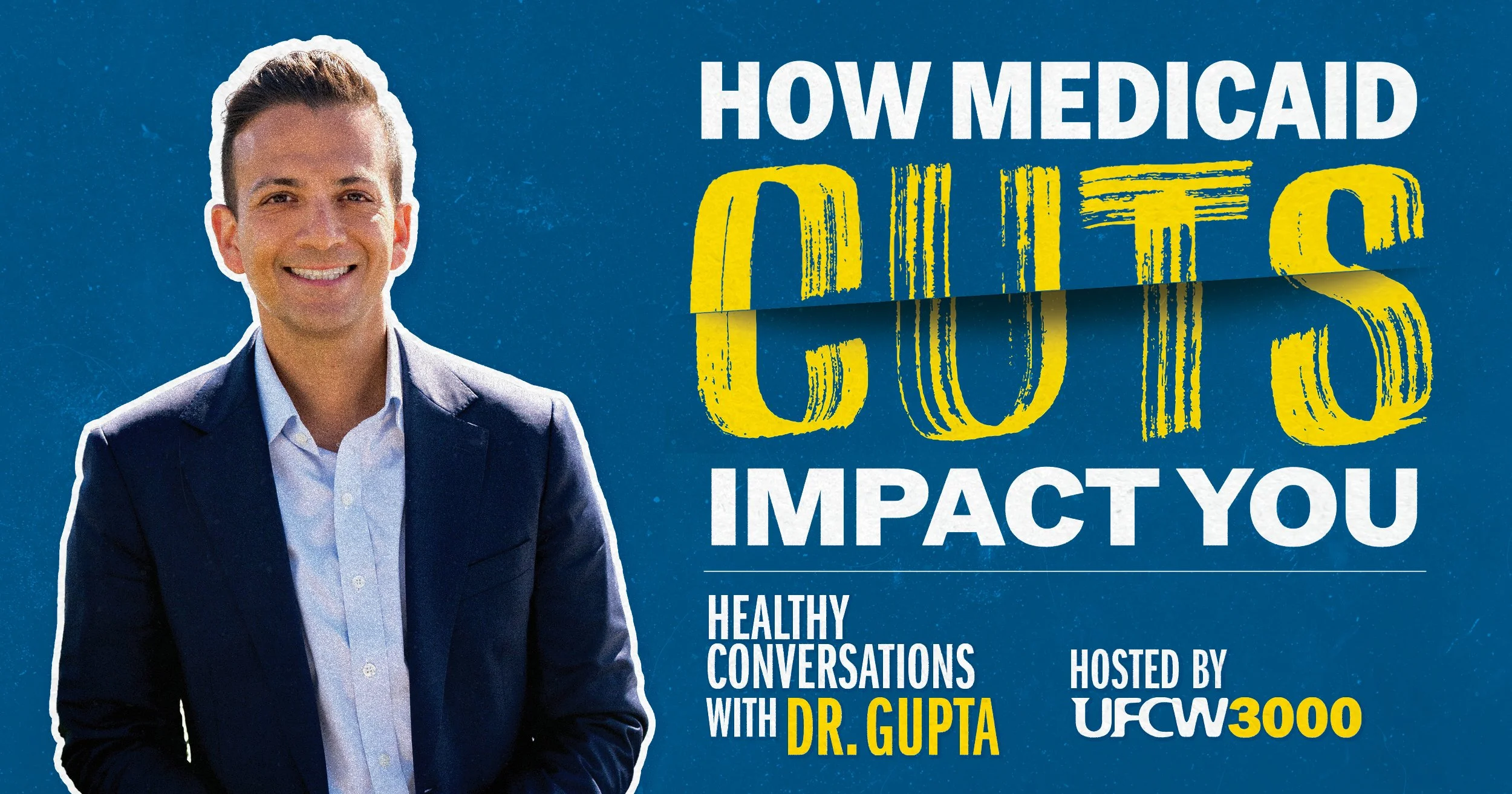
In a live town hall, nationally recognized public health expert Dr. Vin Gupta and a team of health policy experts from Manatt Health will explain how these severe cuts to healthcare will impact you, your family, and your community.
As Dr. Gupta recently shared on MSNBC News, “It’s scary—and there’s a reason the proponents of this bill don’t want to talk about it.”
Save the date: RSVP here to join us on July 29 at 3:30 pm for this discussion. And come with your own questions -- we’ll leave plenty of time for a live Q&A!
In his second digital town hall for UFCW 3000, nationally recognized public health expert Dr. Vin Gupta invites Virginia Mason Franciscan Health cardiologist Mariko Harper to our digital stage for a conversation about how to keep our tickers ticking longer.
In this important discussion, Dr. Gupta and Dr. Harper plan to cover the latest discoveries in heart health and to help us shape a few key questions to ask our doctors at our next appointment.
Read MoreCongratulations to all our 2025 union scholarship recipients! Scholarships are reviewed and awarded yearly by our UFCW 3000 Scholarship Committee made up of rank-and-file members from our Executive Board.
Read MoreThis year, we’re showing up in force to May Day marches all around Washington state. Sign up to stand together in Spokane, Seattle, Yakima, and Mt. Vernon. RSVP and join us!
Read MoreApril 2, 2025 marks UFCW 3000’s quasquicentennial, a word so fancy that nobody quite knows how to say it. Regardless of how you pronounce it, the absurdly Latinate term means we’ve been around for 125 years. During that time, we’ve grown from a crew of nine butchers in downtown Seattle to the largest private-sector union in the Pacific Northwest, representing more than 56,000 workers in grocery, retail, food processing, health care, laundry and textiles, cannabis, and others industries.
Read MoreAs we navigate these adverse weather effects, please remember there are resources and rights through our union and through our communities that can help.
Read More
Despite what the companies are saying, this proposed merger threatens lay-offs, store closures, and higher prices as well as undercuts our strength in collective bargaining negotiations.
During the call, we will take members’ questions live on the topic of the proposed merger, discuss the ongoing federal court trial taking place in Portland regarding the Federal Trade Commission’s lawsuit to block it, as well as prepare for a rally in Seattle the first day of the trail by our Attorney General to block the merger on September 16.
We will plan to call you at 5:30PM on Monday, just answer the phone and you will join us.
If, for some reason you don’t receive a call by 5:35pm, or get disconnected during the call, you can join us by dialing directly: 888-652-0384 And enter meeting ID 8143.
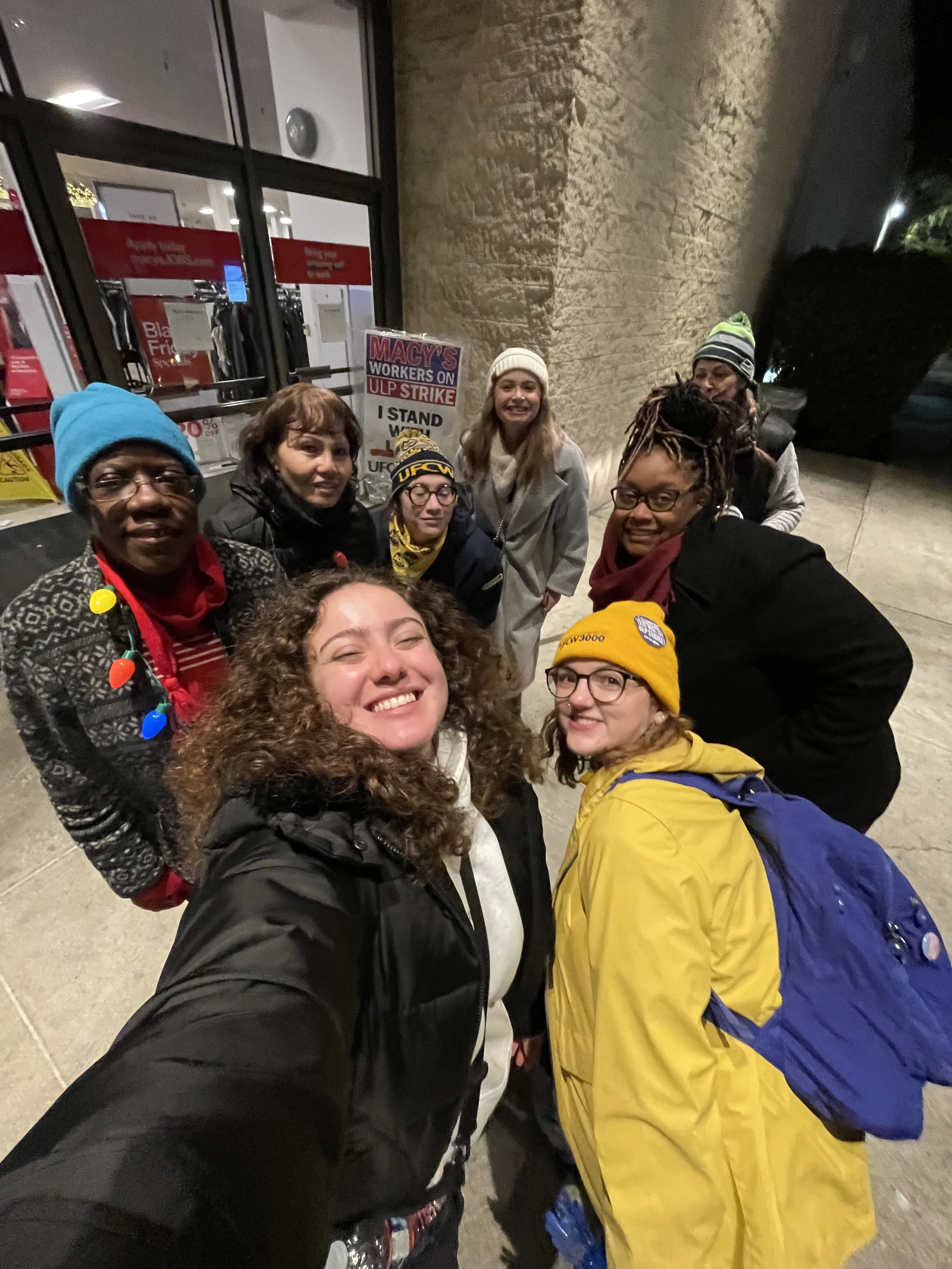
When we last talked about Unfair Labor Practice Strikes it involved nurses at a hospital. Unfair Labor Practice Strikes in other industries often look very different. Michaela talks with Macy’s retail workers who went on strike in Black Friday in 2023 and again on MLK Day 2024 about the unfair labor practices and reasons that they went on strike during their contract negotiations. She also interviews community members about why they joined the Macy’s picket lines, and reviews the differences and similarities between Macy’s and her career in healthcare. Please note that this episode has parts where both English and Spanish are spoken.
Read MoreEl Fondo de Nuevos Ciudadanos Americanos es un fondo para apoyar a miembros de la UFCW que obtienen ciudadanía Americana. A través de este fondo, los Latinos Unidos de la UFCW distribuye dinero en el monto de $600 por miembro.
The New American Citizenship Fund is fund to support UFCW members who become New American Citizens. Through this fund, the United Latinos of the UFCW distributes awards in the amount of $600.00 per member.
Read More
The Racial Justice Advisory Board was created to set priorities for UFCW 3000 around fighting to build racial justice at every worksite and in every community where UFCW 3000 members live and work. We know to build a unified labor movement all members must be treated with dignity and respect and racism must be eradicated from the institutions and worksites that surround us. We know that to grow our political, community and organizing power we all must be united..
Our core purpose is to build power for UFCW 3000 members and our communities so that we have safe workplaces, good jobs, and strong, resilient communities. We will identify key policies to move in local, state and federal bodies and meet with key decision makers to ensure our voices are heard. Our member leaders within UFCW 3000 know that what divides us hurts us at the bargaining table. Thus, we must dedicate ourselves to justice for all. We know the issue of racism and race can be a difficult conversation and we commit to navigate with confidence and care. We will focus on educating ourselves about all policies that are tainted by racism and work to eradicate these policies.
How can we build anti-racist, pro-democracy worksites that make all of our jobs better? We focus on solutions.
What policies and practices perpetuate racism, and how can we as individuals, and as an organization, counteract these practices?
What can we do to gain a deeper understanding of racism and its root causes?
How can the Racial Justice Advisory Board address racial discrimination as a safety issue in our workplaces?
The Racial Justice Advisory Board will make specific recommendations for bargaining and negotiating.
The Racial Justice Advisory Board will make specific recommendations to UFCW 3000 regarding UFCW 3000 policies and practices as an institution, to live as an anti-racist organization.
The Racial Justice Advisory Board will make specific policy recommendations for local, state and federal policies and work to recruit and endorse candidates that will commit to moving and passing said policies.
The Racial Justice Advisory Board will work to link our racial equity work with the broader labor community and the broader equity community.
The Racial Justice Advisory Board meets three times a year to review our priorities and determine the steps that we need to take, in order to move toward the goal of equity at work and in our community. The committee welcomes participation from every worksite represented by UFCW 3000, including any worksite where workers are trying to form a union with UFCW 3000.
Build trust with each other and build unity around what it means to become anti-racist.
Deepen our understanding of institutional racism and how that impacts us at work and in our communities.
Discuss both individual and collective actions we can take to build an anti-racist UFCW 3000.
Educate each other about racism and the long fight for justice.
“We must build alliances within labor and the community to take on issues of affordable housing, workplace safety, racial and gender discrimination, climate justice, and the future of work.” —Ana Alvarez, Washington Beef; Jeff Smith, Fred Meyer; Patricia Brown, Multicare
While the Racial Justice Board has a very long way to go and many years of work ahead of us, we wanted to let you, as a member of our union, know that this Board is up and running and beginning to do the important work necessary to make an impact. Since the board was created, we have accomplished much including: member trainings on how to incorporate these ideas into our collective bargaining; developed and helped pass resolutions at the 2023 UFCW International Convention on these topics; and, partnered more deeply with some of our closest community partners who are leaders on racial justice work.
We are confident that among the more than 50,000 members of our union – from Bellingham to northeast Oregon, from Aberdeen to northern Idaho – in hundreds of workplaces, there are additional members, maybe you, who would like to find out more and maybe get involved yourselves.
We need more members to join the dozens of other members who have already become involved in this Advisory Board. You don’t need to be an expert to participate, just be interested in the issues, committed to being a thoughtful and respectful partner with others, and willing to dedicate an hour or so a month to the effort. Meetings are held usually about every two to three months and are made to be as accessible as possible for members.
If you’d be interested in finding out more about getting involved, email: RacialJustice@UFCW3000.org
Our core purpose is to build power for UFCW 3000 members and our communities so that we have safe workplaces, good jobs, and strong, resilient communities. We also want to ensure that the natural world that we all depend on for our lives, our health, our food, and our well-being, is protected. We will identify key policies and practices that best engage our membership and move our employers, and our elected officials at the local, state and federal levels to forward changes that both respect the voices of working people and ensure that climate policies reflect our principles as adopted by the Climate Justice Advisory Board.
For decades UFCW 3000, and our preceding local unions, have been involved in working on issues that directly impact our workplaces, and go beyond those workplaces. These have ranged from positions against the Apartheid regime in South Africa in the 1980s, demonstrating against the Iraq war in the 1990s, and fighting to protect voting rights that were increasingly under attack in the late 2010’s. It has become increasingly clear that climate change is not only a threat to our planet's health and all the natural systems that support life on earth, but that workers, and in particular workers of lower and middle incomes and Black, Indigenous, People of Color (BIPOC) communities are disproportionately impacted by the various side effects of climate change as well. These impacts include extreme temperatures, wildfires, increasing air pollution, rising sea levels and flooding, crop failures, the hazards of extraction and processing of fossil fuels, and on and on.
In 2015 UFCW 3000 helped found the Alliance for Jobs and Clean Energy with many leading environmental protection, BIPOC Climate Justice, labor, faith, public health, and many other organizations. We helped develop the Climate Initiative I-1631, gathered signatures, and eventually helped get it on the ballot in the fall of 2018 with the support of over 75 organizations statewide. Unfortunately, after a record-setting $30 million anti campaign of lies funded by Big Oil, the initiative was defeated. But the process for how that initiative was developed, and the policy content itself are both still recognized as ground-breaking models.
After a series of problems within the Alliance and a breakdown of trust and violation of the Guiding Principles (see below), in 2021 UFCW 3000 realized our members’ interests would be best served by leaving the Alliance and partnering more directly with BIPOC Climate justice groups. At the same time, throughout 2021 our Executive Board began discussions on how to best work on this critical issue within the union. After significant conversation and deliberation, the Executive Board decided in January of 2022 to launch the UFCW 3000 Climate Justice Advisory Board – a member-led effort to help guide our organization’s work in this area as well as to develop ways to best engage the membership of our union.
These are intended as a package of principles that stay connected with each other as a united set of values. They were reviewed, edited and approved by the Advisory Board at our inaugural 5/9/22 meeting.
Passing policies and making investments that effectively and deeply reduce climate pollution;
Ensuring that communities hardest hit by pollution and climate change have equitable representation at the decision-making table, receive an equitable share of investments and benefits, and see a tangible reduction of carbon emissions in their communities;
Ensuring that policies to reduce pollution do not increase costs for people with lower incomes and providing financial assistance and options to families with lower incomes to make low-carbon options available and accessible to all;
Ensuring a truly just transition for workers and impacted communities during the transition to a clean energy economy, including through the creation of family sustaining jobs;
Keeping energy intensive and trade exposed industries in our state, rather than driving their business and pollution offshore;
Making sure every community – urban and rural – has a stake in the benefits of a clean energy future;
Recognizing tribal sovereignty and abiding by the law of free, prior, and informed consent for projects impacting tribal lands; and,
Advocating for changes in our workplaces, by our employers and in our communities to pursue actions for individual members, our employers, industries and communities.
The work of the Climate Justice Advisory Board is evolving as the nature of member-led leadership models require involvement, deliberation, and time. We had our 1st meeting in May of 2022. We set a goal at that time to create an understanding for our work in this area, develop a core leadership team of members to drive the process forward, set up a framework for our efforts, and communicate this basic information out to the membership. In 2023 our goal was to begin the deep work of beginning to take actions to achieve our overall goals.
We meet at least three times a year and send updated information to Advisory Board members in between meetings. Given the Board’s focus on, and belief in the values of equity, and the historic and present-day disproportionate impacts of climate change on BIPOC communities, the participation of BIPOC members in the Board will be prioritized although an expressed effort will be made to assure the Advisory Board is reflective of the membership as a whole.
Build trust with each other and build unity around what it means to work for Climate Justice.
Deepen our understanding of the breadth of issues covered by Climate Justice and listen to each other as well as our BIPOC community partners and others who we partner with on Climate Justice.
Discuss both individual and collective actions we can take to combat climate change and effectively engage members to help build a broader movement for change on this issue.
Consider support of certain specific policy proposals, and possibly recommend taking a position in favor of these proposals to the Executive Board.
Develop member Leaders for Climate Justice to go out and speak to members in worksites, with elected officials, with partnering organizations, and other entities as we decide makes sense, and as time and resources allow.
“We must build alliances within labor and the community to take on issues of affordable housing, workplace safety, racial and gender discrimination, climate justice, and the future of work.” —Ana Alvarez, Washington Beef; Jeff Smith, Fred Meyer; Patricia Brown, Multicare
While the Climate Justice Advisory Board has a very long way to go and many years of work ahead of us, we wanted to let you, as a member of our union, know that this Board is up and running and beginning to do the important work necessary to make an impact. Since the Advisory Board was created, we have accomplished much including: member trainings on how to incorporate these ideas into our collective bargaining; developed and helped pass resolutions at the 2023 UFCW International Convention on these topics; and, partnered more deeply with some of our closest community partners who are leaders on climate justice work.
We are confident that among the more than 50,000 members of our union – from Bellingham to northeast Oregon, from Aberdeen to northern Idaho – in hundreds of workplaces, there are additional members, maybe you, who would like to find out more and maybe get involved yourselves.
We need more members to join the dozens of other members who have already become involved in this Advisory Board. You don’t need to be an expert to participate, just be interested in the issues, committed to being a thoughtful and respectful partner with others, and willing to dedicate an hour or so a month to the effort. Meetings are held usually about every two to three months and are made to be as accessible as possible for members.
If you’d be interested in finding out more about getting involved, email: ClimateJustice@UFCW3000.org.

UFCW 3000 is working with Providence to address the Meal Waiver situation. We consider the language in the meal waiver to be a direct negotiation with employees since Providence is asking you to waive rights outlined in our contracts. We want to ensure that you receive appropriate compensation for missed or late meal periods and that your contract is not negatively impacted.
For shifts of 11 hours or more: If your shift length is 11 hours or more, you are entitled to two 30-minute meal periods. If you are currently only receiving one 30-minute meal period and have not waived your second meal period, you may be entitled to compensation. Additionally, the employer may extend your shift based on the language in the CBA and past practices in order to accommodate your second meal period.
It is your right to waive the second meal period, but you may miss out on overtime pay for missing your second meal period if you choose to waive it. While we recommend not waiving your second meal period, the decision to do so is ultimately yours.
In the meantime, if you have any questions, please reach out to your union rep:
Anthony Cantu (Providence Everett RNs): 206-436-6566
Jack Crow (Providence Everett Pros and Techs): 206-436-6614
Madison Derksema (Providence St. Peter, Providence Radiant Care, and Providence Centralia): 206-436-6603
Lenaya Wilhelm (Providence Holy Family and Sacred Heart): 509-340-7369
Juanita Quezada (Providence Sacred Heart Techs and Providence St. Mary): 509-340-7407
Amy Radcliff (Providence Mt. Carmel and St. Joseph): 509-340-7370
| Shift Length | Rest Breaks | Meal Period |
|---|---|---|
| 4-5 hour shift | 10 min* x1 | 0 |
| 8-hour shift | 10 min* x2 | 30 min x1 |
| 10-hour shift | 10 min* x2 | 30 min x1 |
| 12-hour shift | 10 min* x3 | 30 min x2 |
| 16-hour shift | 10 min* x4 | 30 min x2 |
You must receive a paid rest break for every four (4) hours worked.
You cannot waive your right to a rest break.
A meal period cannot be substituted for breaks: Any employee who works more than four (4) hours gets their breaks as outlined above, and any scheduled meal period.
You are entitled to a 30-minute uninterrupted meal period when working more than five hours. The first meal period must be between the second and fifth hour worked. If you work 11 hours or more during the day, you must receive a second meal period no later than five (5) hours after the end of your first meal period.
Interrupted Mealtime: If you are required to stay on duty during a meal break you are still entitled to 30 total minutes of mealtime, excluding interruptions, plus 30 minutes of pay. Time spent performing the work task is not considered part of the meal period. The entire meal period must be paid no matter the number of interruptions. For example, if you received a 30-minute meal break but had to answer your work phone throughout then you should be paid 30 minutes for your meal period and receive a total of 30 minutes (non-consecutive) mealtime.
Late Mealtime: If you are not given time to have a 30-minute mealtime, you must be paid for your time worked plus 30 minutes. Paying employees 30 minutes for the meal period does not absolve the employer’s responsibility to give you a late 30-minute unpaid mealtime when practicable.
The above is a general guideline to meal periods and rest breaks. For more in-depth information please contact your union representative OR download the Health Care Guide to Meal and Rest Breaks >>
How and why does a union engage with politics? What's the "people power" we talk about in "people-powered politics"? Michaela talks with UFCW 3000 political organizer Derrick about the power of union members taking an active role in local and state elections and in politics beyond elections. Washington State legislature is now in session, and while this was recorded before the recent elections, it's also about all the work that UFCW 3000 members will now be doing to hold those elected lawmakers accountable! They discuss the potential corporate grocery mega-merger that our local is fighting against, and at the end of the episode you'll hear from longtime grocery worker and UFCW 3000 member Naomi speaking out at a press conference about that merger. Learn more about our political advocacy work, our 2024 legislative agenda, how to register to vote, and more at our website: https://ufcw3000.org/people-powered-politics Our Winter General Membership Meetings, also discussed here, are also coming up! Find your local quarterly meeting at: https://ufcw3000.org/gmmcall
UFCW 3000 union shop steward Michaela is always ready to answer fellow members’ questions about their union. She’s also a devoted murder podcast listener. Put those interests together, and she decided to start a union podcast to get all her coworkers’ questions and her own questions answered, and to meet as many people as possible who could share what it means to be a part of UFCW 3000. (No murder on this podcast, only solidarity!)
*The information shared on this podcast is offered by rank and file union member leaders of UFCW 3000. There may be inaccuracies or misstatements shared, as members will be speaking from the lenses of their perspectives and life experiences. While members are doing their best to share good information, we can make no claims to 100% accuracy and this podcast should not be construed as legal advice.
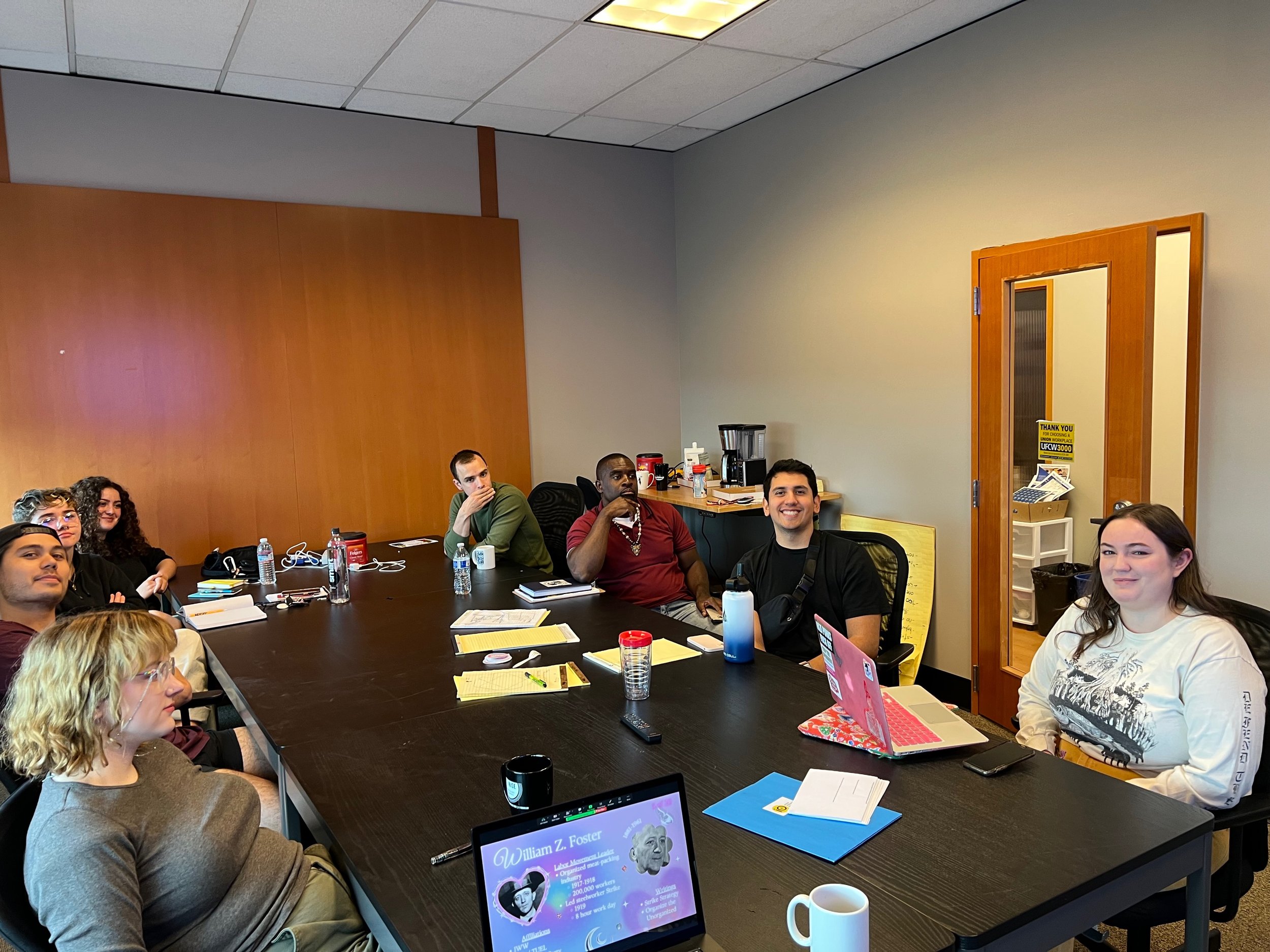
In April 2023, we began our first Essential Workers Organizing Academy (EWOA) cohort, hiring eight full-time and one-half time “apprentice organizers.” Candidates were drawn from UFCW 3000 members in healthcare and grocery, as well as from external organizing campaigns and a general applicant pool.
The program was broken up into three distinct phases: training, internal organizing, and external organizing/preparing for strikes. Training included exercises and readings about how to conduct organizing conversations and campaigns, learning about the history of unionization and organizing workers, presentations from guest speakers, and visits to both union and non-union worksites. Apprentice organizers supported on campaigns that included Macy’s, Bartell Drugs, Fred Meyer(s), PCC, Providence-Everett, as well as political and community projects.
Post-EWOA, our goal is to help every apprentice organizer who wants to continue in the labor movement to find a job either with this union or another movement organization.
The Seattle Puget Sound Meatcutters and Fishmongers Apprenticeship Program is a partnership between UFCW 3000, the State of Washington Department of Labor and Industries (L&I), retail grocery employers, and South Seattle College. The goal of the Seattle Puget Sound Meatcutters and Fishmongers Apprenticeship Program is to share industry knowledge, skills, and techniques to develop Apprentices into highly skilled Journey Meatcutters and Fishmongers. This Fishmonger Apprenticeship program is the first of it's kind in the U.S.
The Fishmonger Apprenticeship Instructor will teach aspiring Fishmongers in the Seattle Puget Sound Region, specifically in Snohomish and Kitsap Counties. The new instructor will need to work approximately one day per week between January and August of 2024. The application deadline is November 10, 2023.
What happens when you realize you could run for local office? How can the union, and the labor movement as a whole, help union members do that? And wait, how does being a mom prepare you for being a meat cutter? Host Michaela sits down with Amber Wise, a UFCW 3000 member, apprentice meat cutter at Kirkland PCC, mom of 2, and current candidate for the board of Commissioners for Public Hospital District #2…
Read MoreA strike isn't just a halt in our work; it's a collective stand for our rights and the well-being of our patients. According to federal law, we have the right to strike, but we must give the hospital a 10-day notice to ensure patient care isn't compromised.
The prospect of a strike isn't just a last resort; it's a powerful tool that can drive change. It forces Providence to reconsider its stance and acknowledge our proposals. The mere threat of a strike can be as influential as the strike itself, but for it to be effective, we must show that we are united and ready to take action.
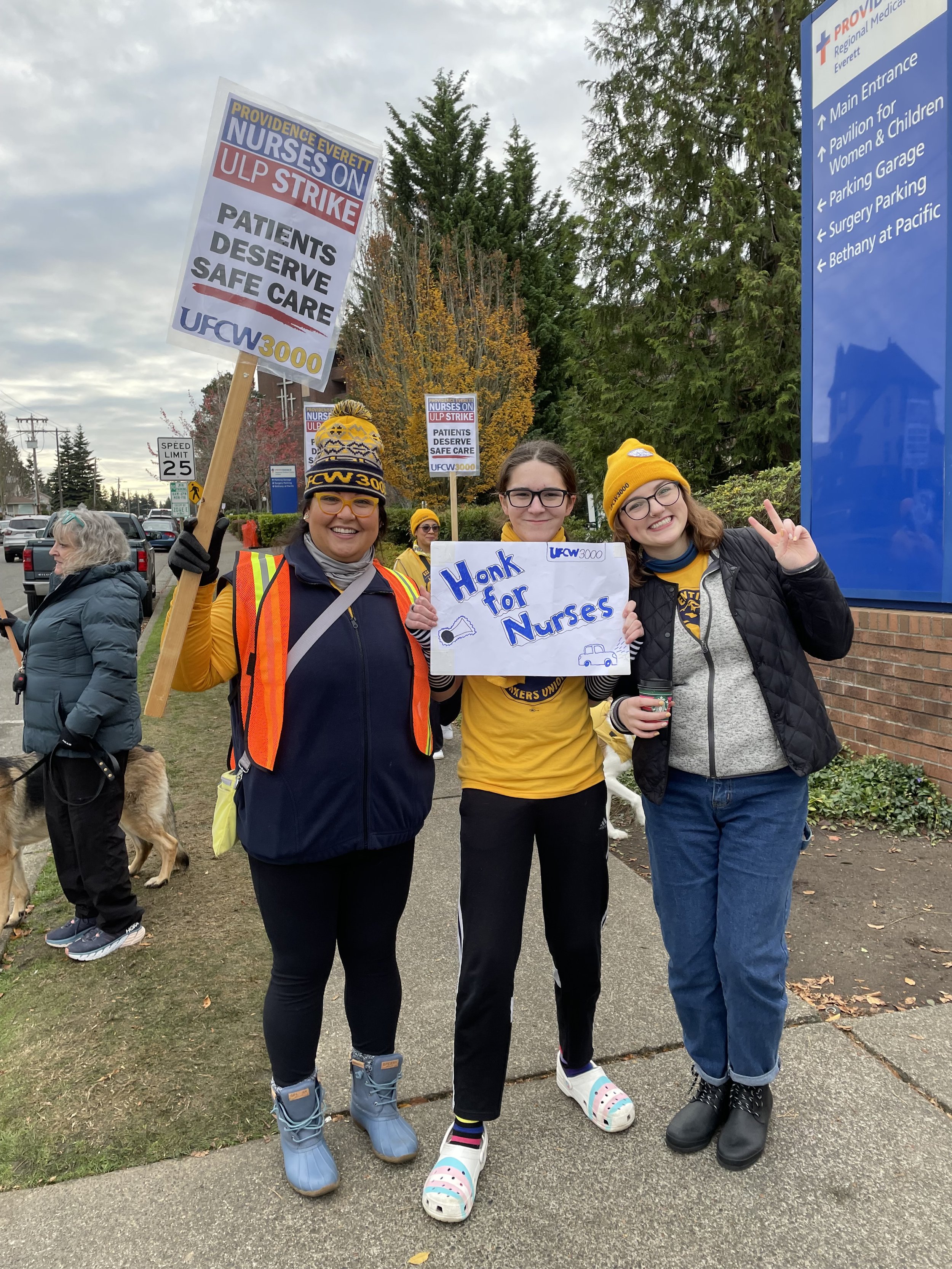
The initial step involves voting for strike authorization, allowing our nurse bargaining team to initiate a strike. Throughout negotiations, our team assesses the strike's potential impact. There might be instances where a strike is averted as our team deems a ratifiable contract agreement achievable. Strikes fall into two categories: economic and unfair labor practice (ULP). Economic strikes center around concerns like wage increases proposed by the Employer. In contrast, ULP strikes address issues such as the Employer's involvement in unfair labor practices, such as bargaining in bad faith.
The strike's main goal is to pressure the Employer to accept our proposals. In an economic strike, we stay on strike until a tentative contract agreement is achieved. Then, we resume work and vote on the agreement. During a ULP strike, we strike for a designated period. In both situations we will ask to engage in ongoing contract negotiations with the aim of securing a tentative agreement, and subsequently resume work and then hold a vote on the agreement.
Having an updated email, cell phone, and address is vital to making sure you receive updates and vote notices. Your address on file is where the Union will mail Strike benefit checks.
WILL I RECEIVE PAY WHILE ON STRIKE?
The Executive Board of UFCW 3000 will vote on strike benefits for nurses who take part in strike duty. Strike benefits will not fully replace our wages but will help. They have approved strike benefits of $500 for nurses, members and non-members, who picket a minimum 20 hours a week. Our Union also has a hardship fund to assist members whose families face particularly difficult financial situations. Additionally, food assistance and other financial assistance may be available through community organizations and other unions. Notify your creditors prior to falling behind. Communicate your situation and explore options for reduced payments or refinancing. Prioritize your expenses, placing essentials like mortgage/ rent, utilities, insurance, car payments, gas, child support, and alimony at the top.
WHAT IF THE EMPLOYER LOCKS US OUT?
If the employer chooses to lockout nurses they have to lockout all nurses including non-union members. Workers locked out by their employers are generally eligible for unemployment benefits. The Employment Security Department will determine eligibility for unemployment benefits on a case by case basis.
WILL I STILL HAVE HEALTHCARE BENEFITS DURING THE STRIKE?
There is a lag month under your insurance plan that would keep your insurance through the end of the month.
HOW LONG WOULD A STRIKE LAST?
The duration of a strike is a strategic decision made by the bargaining team. The 10-day notice given to the Employer would likely be for a 3 or 5 day ULP Strike. The key to a successful strike is a united work force and support from our allies and the patients in the community.
I AM A REPRESENTED BY UFCW 3000, DO I HAVE TO STRIKE? HOW MANY WORKERS WILL IT TAKE FOR A STRIKE TO BE EFFECTIVE?
A large active picket line is vital to a successful strike. Every nurse needs to participate—members of UFCW 3000 or not—to prevent the facility from operating as usual. The more nurses we have out on the line, the harder it is for people to cross it. Being at the picket is also the best way to get the latest information on how the strike is going and to show the community that healthcare workers are united in the strike.
WHAT IF I CHOOSE NOT TO STRIKE? WHAT ARE THE CONSEQUENCES OF CROSSING THE PICKET LINE?
There are no sanctions imposed on nurses who cross the picket line or choose not to strike. Crossing a picket line will undermine our attempts as nurses to provide a better framework for the future growth of our profession and achieve our negotiating goals. It also erodes the camaraderie in the workplace, prolongs the strike, and negatively impacts our efforts to work as a team once the strike is settled.
WILL I BE REQUIRED TO NOTIFY MY MANIGER IF I DECIDE TO STRIKE?
No, you will not be required to individually notify your manager. Our Union will be providing strike notice to the Hospital if our bargaining committee decides to invoke a strike. If you feel compelled to give them an answer tell them, “Yes I will be striking and standing with my bargaining team’s decision to strike.”
I know I have a Union Rep, but who are they? What do they do? And what are my "Weingarten Rights" again? Michaela sits down with her Union Rep, Brandan, to hear more about his role and discuss rights on the job, meetings with management, and the many ways members can be involved in enforcing their contract and supporting each other. || UFCW 3000 members: you can look up your union contract and your Union Rep at https://ufcw3000.org/find-a-contract
UFCW 3000 union shop steward Michaela is always ready to answer fellow members’ questions about their union. She’s also a devoted murder podcast listener. Put those interests together, and she decided to start a union podcast to get all her coworkers’ questions and her own questions answered, and to meet as many people as possible who could share what it means to be a part of UFCW 3000. (No murder on this podcast, only solidarity!)
*The information shared on this podcast is offered by rank and file union member leaders of UFCW 3000. There may be inaccuracies or misstatements shared, as members will be speaking from the lenses of their perspectives and life experiences. While members are doing their best to share good information, we can make no claims to 100% accuracy and this podcast should not be construed as legal advice.
We are the Union. The members of UFCW 3000 are over 50,000 members working in grocery, retail, health care, meat packing, cannabis, & other industries across Washington state, north-east Oregon, and northern Idaho. UFCW 3000 is a chartered member of UFCW International with over 1.4 million workers in North America.
To build a powerful Union that fights for economic, political and social justice in our workplaces and in our communities.