Wildfire and Smoke Resources for UFCW 3000 Members

 Wildfire and Smoke Resources for UFCW 3000 Members

As wildfires rip through our region and smoke chokes the air, UFCW 3000 members, families, and communities face evacuations, and loss of homes and livelihoods.  

Some workers could experience partial or total work closures creating difficult circumstances surrounding hours, pay, and life stability 

As we navigate this emergency, please remember the union and community resources that can help. Also, please review important information below that can help keep you safe and enforce your rights at work.

Read More

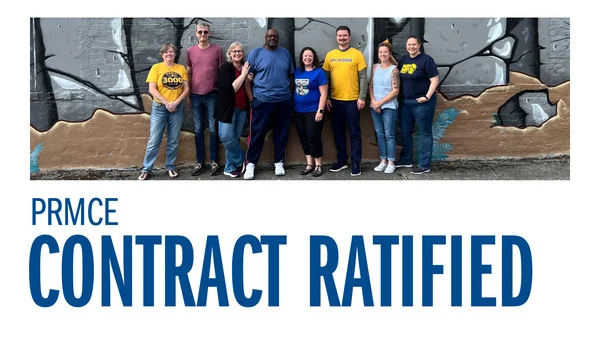
Harbor Regional Health - Contract Ratified!

Union members overwhelmingly ratified all five contracts at Harbor Regional Health on Friday. We had great conversations and were happy to share the improvements to the contracts.

People turned out in record numbers to vote!

Contract highlights include:

  • Significant wage increases

  • Ratification bonus

  • Increases to premiums and differentials

For additional information, contact a Bargaining Team member or Union Rep Kimberly Starkweather at (206) 436-6515.

Bargaining Team: Dan James; Eric Timmons; Janet Byrd; Ana Garcia; Debi Sturm; Bambi Shope

Your Rights During Flooding and Extreme Weather Events

Once again UFCW 3000 members and communities are facing some extreme fall and winter weather, including recent flooding. It is important to remember that if you, your family, or your coworkers have been affected by extreme weather, you have rights at work, resources through your union, and the support of your community.

Important rights and resources for UFCW 3000 members if your workplace, home, or transportation routes are flooded or evacuated:

  1. Just cause protections at work: With a union contract, you have “just cause” protection, meaning you should not be disciplined at work for reasonably having to deal with a circumstance outside of your control like a flood that affects your home, work, or commute to work

    • Be clear in communicating with your employer if you are unable to report to work on time or at all due to flooding or other extreme weather

    • Make sure to invoke your right to union representation if you are called into a meeting that could lead to discipline (we call these “Weingarten Rights,” read more here)

  2. The right to a safe workplace: If you feel unsafe at work, report any safety concerns to your worksite safety committee & management right away, and get support from your Shop Steward and/or Union Rep if your concerns are not addressed

  3. Union resources: If your home or work is affected by flooding or extreme weather and financial assistance would help, speak with your Union Rep about the UFCW 3000 Membership Assistance Fund. We also have a resource page for power outages and other effects if need be during these events.

  4. Mutual aid: As union members, we know standing together and supporting each other is how we really make a difference. If you have ideas for ways to connect with or support fellow UFCW 3000 members in need, talk to a Shop Steward and/or your Union Rep for help with organizing

Extreme weather is dangerous in our workplaces and our communities, which is why UFCW 3000 members, including our Climate Justice Advisory Board, work for climate policies that will help protect us and our future health.

Providence Sacred Heart Service and Maintenance FAQ about ULP strike

As you may know, there is scheduled to be a strike at Sacred Heart next week. This Unfair Labor Practice strike is over the Providence Sacred Heart Technical Unit Collective Bargaining Agreement and Providence committing several unfair labor practices that include making changes in the workplace without first negotiating and skirting the bargaining process by attempting to direct deal and coerce staff. This strike does NOT include the Service and Maintenance agreement. There has been some confusion due to emails Providence Sacred Heart management has sent that did not specify which departments are going on strike. All Technical staff will be out on a ULP strike beginning at 2pm on Monday, April 22, and continuing until 8:30pm on Tuesday, April 30.

There are questions around what Services and Maintenance staff should expect when the strike happens. Here are some common questions we have been asked.

Do I cross the Picket line?

Service and Maintenance employees are required to work their regularly scheduled shifts during the time that the technical staff are on strike per Article 13 of your contract. Service and Maintenance staff should not join the strike line while on lunches or breaks. If you would like to support the strike lines on your own personal non-work time, your fellow UFCW 3000 members in the Technical unit would really appreciate the show of solidarity!

How can we show solidarity while at work?

You should wear UFCW 3000 buttons and solidarity stickers, and blue or yellow scrubs. Get creative and please wear them each day! One of the most important things you can do is to share stories about what is happening in the hospital. Please keep your Union Rep informed on what is happening and if there are any stories that could make strikers feel empowered. Our job during the strike is to show solidarity- both visually and with our actions. If management instructs you to remove your buttons and/or stickers, you should comply with their request but report the incident to your Union Rep.

Can I be asked to do work outside of my normal duties?

One of the most powerful things you can do to affirm your scope of work is question and object to improper assignments that are changes to your normal working conditions. You also have a responsibility to provide good patient care and make sure no person is harmed. If management asks us to do something that you are uncomfortable with, is unsafe, or outside of our normal responsibilities- you have the right to object and state why.

Objections can include any personal reason that you feel strongly about- including your licensure, patient safety, insufficient training, or that it’s not in your job description. You have the right to push back and encourage managers and replacement workers to do the additional tasks asked of you. However, you only refuse a task if it is an abnormally dangerous assignment.

You have the right to object- but if you refuse it may be considered insubordination. Your job is to object on why an assignment is improper, and if management insists on you doing the work, you should comply, document the scenario, and call our Union Rep if you have questions. If you feel unequipped or unsafe for any reason, report it to your Union Rep as well.

Scheduling, Overtime, Low Census, and all other provisions of our contracts remain in effect and should be adhered to. Please refer to your Union contract: ufcw3000.org/contracts

Do I have to come in on my days off and work extra shifts/hours?

No, after the schedule is posted, changes to the schedule can only be made with mutual consent. Out of support for your fellow UFCW 3000 members we ask that you consider not picking up any extra shifts.

7.8 Schedule Posting. Work schedules of shifts and days off (including call schedules) for a six (6) week period will be posted three (3) weeks in advance. After posting, the schedule may only be changed by mutual consent.

Can I be forced to take PTO or furloughed without pay?

Management may ask for volunteers to take unpaid time off or to use educational time– deciding to do so is up to you. They must continue to follow the Low Census process that is in your contract.

What else can we do to help?

Invite your family and friends to join the Techs on the strike line! Also, If you are not working at the time, you are invited to join Technical staff and community allies at an evening solidarity rally on Wednesday, April 24, at 7pm over in Cowley Park (next to the hospital at 7th & Division St.)

If you have any questions or concerns on the Service and Maintenance contract, please contact Union Representative Lenaya Wilhelm, 360-409-0556.

Find all the latest Union updates in one place: UFCW3000.org/strike >>

Governor Signs Worker Protection Bill Championed by UFCW 3000 Grocery Store Workers into Law

OLYMPIA, WA – This morning, Governor Inslee signed into law Senate Bill 6007, a bill intended to protect grocery store workers and communities from the negative impacts of corporate megamergers in the grocery industry. Drafted in response to the news that grocery giants Kroger (owner of Fred Meyer and QFC) and Albertsons/Safeway are threatening to merge into one huge company, ESSB 6007 saw enormous support from local Washington grocery store workers and community allies, who advocated throughout the legislative session for its passage. 

“As I explained to legislators, we’ve already learned the hard way through past grocery chain mergers about the upheaval it causes for workers and shoppers when these chains merge and close or sell off neighborhood grocery stores,” said Yasmin Ashur, a UFCW 3000 member and checker at the Port Orchard Albertsons who testified in support of the bill and was on hand to see the governor sign it today. “We saw it in Port Orchard with the Albertsons/Safeway merger not that long ago. I am so proud to say I stood up with my fellow workers and helped pass legislation that will help protect our jobs.” 

This new legislation puts in place basic guidelines for large grocery stores when they change hands, like in an acquisition or merger, to ensure that essential food workers’ lives and our communities’ access to food and household necessities are not thrown into chaos. It requires public notice of new ownership, a period of job protection or re-hire for eligible current employees, protection of current working conditions and collective bargaining agreements, and mandatory engagement with local government if a merger would cause the closure of a store in an existing food desert. 

“The difference between unemployment caused by a pandemic and job loss caused by corporate buyouts is that the potential harm of a merger is foreseeable,” said Britt Leggett, a UFCW 3000 member and deli clerk at the Fred Meyer in the Ballard neighborhood of Seattle who also testified in support of the bill and attended the bill signing today. “That’s what this legislation seeks to remediate: to help workers keep their jobs and seniority when their stores changes owners. The law also ensures that constituents will be served by grocery workers who they know well, who have the skills to do their jobs, and follow the health rules to keep food safe.” 

Hundreds of grocery store workers with UFCW 3000 across the state sent messages to lawmakers encouraging the passage of SB 6007, and some traveled to Olympia to meet lawmakers in person.  

“It’s a big sacrifice for everyday working people to take time out of their busy lives to try and engage with the local political process,” said Joe Mizrahi, Secretary Treasurer of UFCW 3000. “But being in a union means we can share the load, work together, and make real change that impacts entire industries.” 

Know your Rights! Providence Meal Waiver

UFCW 3000 is working with Providence to address the Meal Waiver situation. We consider the language in the meal waiver to be a direct negotiation with employees since Providence is asking you to waive rights outlined in our contracts. We want to ensure that you receive appropriate compensation for missed or late meal periods and that your contract is not negatively impacted.

For shifts of 11 hours or more: If your shift length is 11 hours or more, you are entitled to two 30-minute meal periods. If you are currently only receiving one 30-minute meal period and have not waived your second meal period, you may be entitled to compensation. Additionally, the employer may extend your shift based on the language in the CBA and past practices in order to accommodate your second meal period.

It is your right to waive the second meal period, but you may miss out on overtime pay for missing your second meal period if you choose to waive it. While we recommend not waiving your second meal period, the decision to do so is ultimately yours.

We will be holding a Zoom meeting on Monday, February 5, from 6 - 7 pm for all Providence members to ask questions about the meal waiver. Join the meeting at that time by clicking here:

In the meantime, if you have any questions, please reach out to your union rep:

  • Anthony Cantu (Providence Everett RNs): 206-436-6566

  • Jack Crow (Providence Everett Pros and Techs): 206-436-6614

  • Madison Derksema (Providence St. Peter, Providence Radiant Care, and Providence Centralia): 206-436-6603

  • Lenaya Wilhelm (Providence Holy Family and Sacred Heart): 509-340-7369

  • Juanita Quezada (Providence Sacred Heart Techs and Providence St. Mary): 509-340-7407

  • Amy Radcliff (Providence Mt. Carmel and St. Joseph): 509-340-7370


Health Care Rest Breaks & Meal Periods: Know Your Rights and Your Contract

Shift Length Rest Breaks Meal Period
4-5 hour shift 10 min* x1 0
8-hour shift 10 min* x2 30 min x1
10-hour shift 10 min* x2 30 min x1
12-hour shift 10 min* x3 30 min x2
16-hour shift 10 min* x4 30 min x2

*10 minutes is the WA State minimum. If your contract bargaining agreement (CBA) states 15 minutes, you should receive 15-minute rest breaks

  • You must receive a paid rest break for every four (4) hours worked.

  • You cannot waive your right to a rest break.

Meal Period: Your right to a meal period

A meal period cannot be substituted for breaks: Any employee who works more than four (4) hours gets their breaks as outlined above, and any scheduled meal period.

You are entitled to a 30-minute uninterrupted meal period when working more than five hours. The first meal period must be between the second and fifth hour worked. If you work 11 hours or more during the day, you must receive a second meal period no later than five (5) hours after the end of your first meal period.

Interrupted Mealtime: If you are required to stay on duty during a meal break you are still entitled to 30 total minutes of mealtime, excluding interruptions, plus 30 minutes of pay. Time spent performing the work task is not considered part of the meal period. The entire meal period must be paid no matter the number of interruptions. For example, if you received a 30-minute meal break but had to answer your work phone throughout then you should be paid 30 minutes for your meal period and receive a total of 30 minutes (non-consecutive) mealtime. 

Late Mealtime: If you are not given time to have a 30-minute mealtime, you must be paid for your time worked plus 30 minutes. Paying employees 30 minutes for the meal period does not absolve the employer’s responsibility to give you a late 30-minute unpaid mealtime when practicable.

The above is a general guideline to meal periods and rest breaks. For more in-depth information please contact your union representative OR download the Health Care Guide to Meal and Rest Breaks >>

Relevant Laws:

Why we strike: Q and A

A strike isn't just a halt in our work; it's a collective stand for our rights and the well-being of our patients. According to federal law, we have the right to strike, but we must give the hospital a 10-day notice to ensure patient care isn't compromised.

The prospect of a strike isn't just a last resort; it's a powerful tool that can drive change. It forces Providence to reconsider its stance and acknowledge our proposals. The mere threat of a strike can be as influential as the strike itself, but for it to be effective, we must show that we are united and ready to take action.

The initial step involves voting for strike authorization, allowing our nurse bargaining team to initiate a strike. Throughout negotiations, our team assesses the strike's potential impact. There might be instances where a strike is averted as our team deems a ratifiable contract agreement achievable. Strikes fall into two categories: economic and unfair labor practice (ULP). Economic strikes center around concerns like wage increases proposed by the Employer. In contrast, ULP strikes address issues such as the Employer's involvement in unfair labor practices, such as bargaining in bad faith.

The strike's main goal is to pressure the Employer to accept our proposals. In an economic strike, we stay on strike until a tentative contract agreement is achieved. Then, we resume work and vote on the agreement. During a ULP strike, we strike for a designated period. In both situations we will ask to engage in ongoing contract negotiations with the aim of securing a tentative agreement, and subsequently resume work and then hold a vote on the agreement.

Having an updated email, cell phone, and address is vital to making sure you receive updates and vote notices. Your address on file is where the Union will mail Strike benefit checks.

Make sure your contact information is updated with the Union! >>

FREQUENTLY ASKED QUESTIONS

WILL I RECEIVE PAY WHILE ON STRIKE?

The Executive Board of UFCW 3000 will vote on strike benefits for nurses who take part in strike duty. Strike benefits will not fully replace our wages but will help. They have approved strike benefits of $500 for nurses, members and non-members, who picket a minimum 20 hours a week. Our Union also has a hardship fund to assist members whose families face particularly difficult financial situations. Additionally, food assistance and other financial assistance may be available through community organizations and other unions. Notify your creditors prior to falling behind. Communicate your situation and explore options for reduced payments or refinancing. Prioritize your expenses, placing essentials like mortgage/ rent, utilities, insurance, car payments, gas, child support, and alimony at the top.

WHAT IF THE EMPLOYER LOCKS US OUT?

If the employer chooses to lockout nurses they have to lockout all nurses including non-union members. Workers locked out by their employers are generally eligible for unemployment benefits. The Employment Security Department will determine eligibility for unemployment benefits on a case by case basis.

WILL I STILL HAVE HEALTHCARE BENEFITS DURING THE STRIKE?

There is a lag month under your insurance plan that would keep your insurance through the end of the month.

HOW LONG WOULD A STRIKE LAST?

The duration of a strike is a strategic decision made by the bargaining team. The 10-day notice given to the Employer would likely be for a 3 or 5 day ULP Strike. The key to a successful strike is a united work force and support from our allies and the patients in the community.

I AM A REPRESENTED BY UFCW 3000, DO I HAVE TO STRIKE? HOW MANY WORKERS WILL IT TAKE FOR A STRIKE TO BE EFFECTIVE?

A large active picket line is vital to a successful strike. Every nurse needs to participate—members of UFCW 3000 or not—to prevent the facility from operating as usual. The more nurses we have out on the line, the harder it is for people to cross it. Being at the picket is also the best way to get the latest information on how the strike is going and to show the community that healthcare workers are united in the strike.

WHAT IF I CHOOSE NOT TO STRIKE? WHAT ARE THE CONSEQUENCES OF CROSSING THE PICKET LINE?

There are no sanctions imposed on nurses who cross the picket line or choose not to strike. Crossing a picket line will undermine our attempts as nurses to provide a better framework for the future growth of our profession and achieve our negotiating goals. It also erodes the camaraderie in the workplace, prolongs the strike, and negatively impacts our efforts to work as a team once the strike is settled.

WILL I BE REQUIRED TO NOTIFY MY MANIGER IF I DECIDE TO STRIKE?

No, you will not be required to individually notify your manager. Our Union will be providing strike notice to the Hospital if our bargaining committee decides to invoke a strike. If you feel compelled to give them an answer tell them, “Yes I will be striking and standing with my bargaining team’s decision to strike.”

You have the right to enforce your Collective Bargaining Agreement (CBA)

You have the right to enforce your Collective Bargaining Agreement (CBA)

As a member of UFCW 3000 you have the right to enforce your Collective Bargaining Agreement (CBA). Your CBA is a legally binding agreement between your Union and the Employer.

Read More

UFCW 3000 Members overwhelmingly approve dues restructure

UFCW 3000 Members attending summer general membership meetings August 28 – 31, 2023 overwhelmingly approved, through casting of secret ballot, changes to UFCW 3000’s dues structure at meetings held in:  

Washington: Aberdeen. Bellevue, Bellingham, Centralia, Chelan, Clarkston, Colville, Des Moines, Ellensburg, Everett, Forks, Grand Coulee, Richland, Lynnwood, Moses Lake, Mount Vernon, Newport, Oak Harbor, Olympia, Okanogan, Port Angeles, Port Townsend, Seattle, Silverdale, Spokane, Tacoma, Toppenish, Walla Walla, Wenatchee, Yakima. Oregon: Baker City, Hermiston, Island City, Pendleton. Idaho: Coeur d’Alene. 

APPROVED DUES STRUCTURE CHANGES  

Effective October 1, 2023 Dues (Except as otherwise noted or as soon as administratively possible.)  

1. Initiation fees, New Member meeting credits, Direct Bill Administrative fee, and any other items not addressed below shall remain unchanged.   

2. Minimum Dues rates for all industries and job classifications shall be the Constitutional minimum.  

3. Transfer fee (This is an administrative fee for an incoming member with a withdrawal from another non UFCW union in lieu of an initiation fee.) shall be $60.  

4. ALL JOB CLASSIFICATIONS ON PERCENT OF SALARY DUES RATES  

Dues shall remain at 1.55% of monthly gross income, except that no member shall have a dues rate above $80. Effective January 1, 2024, dues shall remain at 1.55% of monthly gross income, except that no member shall have a dues rate above $85. Effective October 1, 2024, Dues shall remain at 1.55% of monthly gross income, except that no member shall have a dues rate above $90. 

There are a small number of employers that are unable to process a percent of salary dues rate. For these employers, dues are calculated based on the 1.55% of monthly gross income and charged as a fixed dues rate. These dues will mimic the dues rate schedule listed above. 

5. ALL JOB CLASSIFICATIONS ON FIXED DUES RATES 

The over 70 dues rates in our current structure shall be simplified to 6 fixed dues rates. This shall provide administrative ease, clarity, and fairness so that members in the same classifications have the same dues rates.   

This consolidation of dues rates shall result in some members receiving a dues decrease, some shall remain the same, and some will have a modest increase. 

FOR FORMER 1439 GROCERY MEMBERS AND PCC MEMBERS:  The effective date of the updated dues structure shall be upon contract ratification or at the latest October 1, 2024.  

Below is the updated dues rate table of job classifications with a fixed dues rate. Any job classification not listed on the dues rate table shall be moved to the closest dues code to their current classification and/or current dues rate. 

 Codes EMPLOYERS/JOB CLASSIFICATION/APPENDIX New Rate
 1 BASE- Helper Clerk/ Courtesy Clerk/ Garment/ Laundry/Retail/ Drug Store  Constitutional Minimum*
 2 Grocery Appendix B/C/Barista/ClickList/Fulfillment/Floral/Service Center Clerk/HBC/Video/Photo/ Grocery Office (NON All-Purpose Clerk) / Food Processing / Seafood Service Counter/Cannabis/Meat and Seafood Processing/ Oversea Casing   $37.50 
 3 Grocery Appendix A/ Meat Wrapper/ CCK/ Meat Warehouse/ Seafood Manager/ All-Purpose Clerk/ Grocery Pharmacy Tech A/   $53.50 
 4 Meat Cutter/ Meat Manager/ Meat Utility/ Independent Owner Operators   $60.50 
 5 Fred Meyer General Merchandise/ QFC Broadway Market Home   $35.00 
 6 Reduced Dues Rate: Seasonal/Part Time/ High School/ Special Needs   $24.00
   * The current Constitutional Minimum is at $32.08  

Email dues@ufcw3000.org with any questions on the dues structure or questions on where you specifically fall within the structure. 

Downtown Dog Lounge - I have the right to wear this bandana!

I have the right to wear this bandana!

I am protected by the National Labor Relations Act to engage in concerted activity with my coworkers, including wearing union insignias or paraphernalia.

Under Section 7 of the NLRA, I have “the right to self-organization, to form, join, or assist labor organizations, to bargain collectively through representatives of their own choosing, and to engage in other concerted activities for the purpose of collective bargaining”

Under Section 8(a)(1) of the NLRA, it is an unfair labor practice for an employer “to interfere with, restrain, or coerce employees in the exercise of the rights guaranteed in Section 7” of the NLRA.

Unsafe work requirements: Questions & Answers

UNSAFE WORK ASSIGNMENT Q & A

During the COVID-19 crisis workers have been encountering situations that may be considered unsafe work assignments. In the normal day-to-day operations at work, workers are generally required to comply with management orders and directives. Complying with management directives is considered part of your job duties and not doing so can lead to discipline. Employees covered under a Union contract should usually "obey now, and grieve later." But situations might be different when you are being asked to do something unsafe. 

The following Q & A addresses a specific exception to the general rule that employees must obey orders and grieve them later.

If you are being asked to do something unsafe at work, you should call your Union Rep (call 1-800-732-1188 to be connected) or the Member Resource Center (1-866-210-3000). Due to the high volume of calls we are receiving you may be directed to voicemail, but someone will reach out to you as soon as they can. You can also email safety concerns to safetyreport@ufcw3000.org

*If you are not a member of UFCW 3000 and need support, contact us!

Q:  I've been asked to perform a work assignment that I feel will threaten my personal safety and expose me to serious bodily harm.  Does my Union contract provide any protections for me?

A:  Because you are covered by a Union contract the answer is yes.  Your Union contract includes a just cause provision.  In this situation, just cause means you should not be disciplined for refusing to obey an unreasonable order.  An order to perform a work assignment that is likely to cause serious bodily harm to an employee is not reasonable.  To be covered by this exception, your fear of bodily harm must be objectively reasonable and not speculative.

Q:  Are there any specific laws that offer protection to workers who are asked to perform unsafe work assignments?

A:  Yes, there are state and federal laws that provide additional or separate protections.  One example is OSHA (click here to read an OSHA summary).

Q:  What should I say to my employer if asked to perform a work assignment that is likely to cause me serious bodily harm?

A:  It is always best to try to work with management to solve the problem.  For example, you should explain to management why you feel the work assignment is unsafe or dangerous so that your employer has an opportunity to problem solve.  You can also tell your supervisor you would be happy to accept the work assignment if it can be made safe to perform i.e., by providing you with adequate equipment or protective devices, adequate supplies, protective clothing, additional staffing, etc.     

Q:  Should I leave work if my employer insists that I perform the unsafe work assignment?

A:  No, under most circumstances, you should stay on site and remain available to work safe assignments.  If management sends you home, asks to meet with you to investigate the situation, or issues you any discipline, you should contact your union rep or the rep of the day immediately.

UFCW 3000 Podcast Episode 6: Honey, Listen! …To the Rest of Kristina’s Story

Kristina was Michaela’s first interview here on the podcast, but they didn’t get to the full story of Kristina’s union journey. What happens when you become a full-time union rep? And what if it doesn’t work out like you planned? Kristina talks about her time as a union rep, why it was not actually a great fit for her, and how it impacted her returning to work as an even more educated and empowered shop steward.

UFCW 3000 union shop steward Michaela is always ready to answer fellow members’ questions about their union. She’s also a devoted murder podcast listener. Put those interests together, and she decided to start a union podcast to get all her coworkers’ questions and her own questions answered, and to meet as many people as possible who could share what it means to be a part of UFCW 3000. (No murder on this podcast, only solidarity!)

*The information shared on this podcast is offered by rank and file union member leaders of UFCW 3000. There may be inaccuracies or misstatements shared, as members will be speaking from the lenses of their perspectives and life experiences. While members are doing their best to share good information, we can make no claims to 100% accuracy and this podcast should not be construed as legal advice.

UFCW 3000 Podcast Episode 4: Apprenticeships—or, WeTrain You on How to Pick Your Steak and Advance Your Career

How can your union further your career? What is a union apprenticeship? What's our union doing to create more high-paying and safer jobs in our industries? Michaela talks to fellow UFCW 3000 member Indy about his experience with the union meat cutting apprenticeship program, and then talks to Evan and Andy about the apprenticeship and the new WeTrain workforce development organization.

UFCW 3000 union shop steward Michaela is always ready to answer fellow members’ questions about their union. She’s also a devoted murder podcast listener. Put those interests together, and she decided to start a union podcast to get all her coworkers’ questions and her own questions answered, and to meet as many people as possible who could share what it means to be a part of UFCW 3000. (No murder on this podcast, only solidarity!)

*The information shared on this podcast is offered by rank and file union member leaders of UFCW 3000. There may be inaccuracies or misstatements shared, as members will be speaking from the lenses of their perspectives and life experiences. While members are doing their best to share good information, we can make no claims to 100% accuracy and this podcast should not be construed as legal advice.

UFCW 300 Podcast Episode 2: Creating Unity Across State Lines with Member Alison

What can you do to support fellow workers organizing their union? UFCW 3000 member and podcast host Michaela speaks with fellow UFCW 3000 member and health care worker Alison about supporting other workers when they want to organize a union, even if they’re in another state—and especially if they work for your same employer. Bonus intro chat with UFCW 3000 organizer Emma about what’s so fun about organizing.

UFCW 3000 union shop steward Michaela is always ready to answer fellow members’ questions about their union. She’s also a devoted murder podcast listener. Put those interests together, and she decided to start a union podcast to get all her coworkers’ questions and her own questions answered, and to meet as many people as possible who could share what it means to be a part of UFCW 3000. (No murder on this podcast, only solidarity!)

*The information shared on this podcast is offered by rank and file union member leaders of UFCW 3000. There may be inaccuracies or misstatements shared, as members will be speaking from the lenses of their perspectives and life experiences. While members are doing their best to share good information, we can make no claims to 100% accuracy and this podcast should not be construed as legal advice.

UFCW 3000 Podcast Episode 1: Union Basics

UFCW 3000 member and first-time podcast host Michaela introduces herself, her union, and why she decided to make a podcast about it. To answer the questions she hears most frequently from coworkers, she talks to friend and fellow member Kristina about how Kristina got involved in her union and what she’s learned about our rights on the job, union power, the benefits of being union, and more.

UFCW 3000 union shop steward Michaela is always ready to answer fellow members’ questions about their union. She’s also a devoted murder podcast listener. Put those interests together, and she decided to start a union podcast to get all her coworkers’ questions and her own questions answered, and to meet as many people as possible who could share what it means to be a part of UFCW 3000. (No murder on this podcast, only solidarity!)

*The information shared on this podcast is offered by rank and file union member leaders of UFCW 3000. There may be inaccuracies or misstatements shared, as members will be speaking from the lenses of their perspectives and life experiences. While members are doing their best to share good information, we can make no claims to 100% accuracy and this podcast should not be construed as legal advice.

Get the 411 on our 401k - information session

Get the 411 on our 401k

Western Employee Benefit 401(k) Basics and Q&A

Join us for this informative session and get answers to your questions about retirement and learn more about the 401(k)-retirement we bargained into our union contract.

Wednesday October 19 at 6pm.

UFCW 3000 offices 23040 Pacific Highway S. Des Moines WA, 98198

Talk to your Steward or Union Rep if you want to attend!

Wildfire and Smoke Information for Workers

As our state faces wildfire season, wildfires and wildfire smoke may affect us in the workplace and at home. Below are important things to know to stay safe and enforce your rights at work. Here are the most important actions to care for yourself and your coworkers during wildfire season:

  1. Report any safety concerns to your worksite safety committee & management right away, and get support from your Shop Steward and/or Union Rep if your concerns are not addressed

  2. Get accommodations if needed and exercise your rights—use your sick leave if you become unwell; speak with a health care provider and use FMLA or exercise your disability rights under the ADA if you have a health condition that makes you vulnerable to wildfire smoke

  3. If your home or work is affected by wildfire and financial assistance would help, speak with your Union Rep about the UFCW 3000 Membership Assistance Fund

L&I Emergency Rule for 2022 Wildfire Season

L&I has adopted an emergency rule again this year, effective June 15 through September 29, 2022, to protect workers who may be exposed to wildfire smoke on the job.

This rule requires covered employers to:

  • Have a written wildfire smoke response plan.

  • Determine employee smoke exposure levels before work and periodically during each shift when smoke is present.

  • Train employees on wildfire smoke hazards.

  • Train supervisors on how to respond to health issues caused by wildfire smoke.

  • Inform employees of available protective measures against wildfire smoke.

Further requirements will depend on the level of smoke in the air, or the Air Quality Index (AQI)—read the summary or full emergency rules above for information, or talk with your Shop Steward or Union Rep.

Your employer may or may not be covered by the emergency rule depending on the potential for exposure to smoke in your workplace. But you should still report smoke-related safety concerns to your employer and alert your Shop Steward or Union Rep if your concerns are not addressed. The state L&I website reminds us:

“Employers are never allowed to retaliate against an employee for reporting an air quality hazard, an adverse health effect, or for seeking medical treatment due to a work-related illness or injury.”


Workplace Safety for Wildfire Smoke

You have the right to a safe workplace, and if wildfire smoke makes your workplace unhealthy for you, you should be able to address that with your employer and get support from your Shop Steward and/or Union Rep.

Masks

  • You can wear a respirator mask at work that helps protect you against wildfire smoke.

  • Most masks we wear to protect against COVID-19 do not actually protect against wildfire smoke. The right mask to protect against wildfire smoke is an N95 mask or other respirator with the same or higher level of protection. These respirator masks should have two straps and the word “NIOSH” and/or “N95” or “N100” printed on it. More information on respirators from L&I >>

Exposure to smoke

  • When the air is smoky, your employer should allow workers to follow basic steps that will help prevent excessive exposure to wildfire smoke—that could include things like reassigning workers to less smoky areas or allowing for extra rest and water breaks away from smoky work areas.

Medical Leave and Accommodations

  • If you or a family member gets sick because of wildfire smoke, you have the right to use Paid Sick & Safe Leave for illness

  • You may also be able to use your Paid Sick & Safe Leave if your child’s school or place of care, or your worksite has been shut down by a public official due to health-related reasons resulting from exposure to wildfire smoke

  • If you are vulnerable to smoky air due to an existing medical condition, talk to your health care provider about your workplace and see if they have recommendations for how to keep you safe from smoke exposure. Use FMLA if needed, or exercise your disability rights under the ADA.


Your Rights During Wildfires

If your workplace, home, or family are evacuated, burned, or otherwise affected by active wildfires:

With a union contract, you have “just cause” protection, meaning you should not be disciplined at work for reasonably having to deal with a circumstance outside of your control like a wildfire that affects your home, work, or commute to work


Safety and Workers' Rights in Extreme Heat Situations

More and more, we face hazardous weather events like extreme heat that can affect us at work and at home. In dangerously hot conditions you can take action to stay safe and healthy, like drinking plenty of fluids, staying out of the sun, checking on vulnerable people, and taking extra precautions when outside.

Under the Occupational Safety and Health Act (OSHA), employers have a duty to protect workers from recognized serious hazards in the workplace, including heat-related hazards. Especially if you work outside, be aware of your health and safety during any Excessive Heat Warning, and check in with your coworkers. If your workplace doesn’t feel safe, tell management and contact your Shop Steward or Union Rep as soon as you can. Find our FAQ on refusing unsafe work assignments here.

This kind of extreme weather is dangerous in our workplaces and our communities, which is why UFCW 3000 members work for climate policies that will help protect us and our future health.

Contact Us:

Check National Weather Service Excessive Heat Warnings in Washington:

Extreme Heat at Work

OSHA has three basic recommendations for safety in extreme heat are: 💧 water, 🪑 rest, and ⛱️ shade.

Under OSHA law, employers are responsible for providing workplaces free of known safety hazards. This includes protecting workers from extreme heat. An employer with workers exposed to high temperatures should establish a complete heat illness prevention program.

  • Provide workers with water, rest, and shade.

  • Allow new or returning workers to gradually increase workloads and take more frequent breaks as they acclimatize, or build a tolerance for working in the heat.

  • Plan for emergencies and train workers on prevention.

  • Monitor workers for signs of illness.

If you perform work outdoors for more than 15 minutes in a 60-minute period, you may be considered an Outdoor Worker in Washington, and your employer may have responsibilities to you under Washington State’s emergency heat exposure rules effective through June 15, 2022. When temperatures are at or above 89 degrees, employers must provide outdoor workers with cool water and additional paid cool-down rest time, and when the temperature is at or above 100 degrees, employers must also provide other ways to cool down like a shaded area and ensure you have a paid cool-down rest period of at least 10 minutes every two hours.


Safety & Heat-Related Illnesses Information

Heat illness can be very serious. Learn the symptoms of heat illness and basic safety recommendations so you can stay safe at work and home.

Information from Washington State Dept. of Health:


Information from King County Public Health:

Basic HEAT Safety Tips:

  • Spend more time in air-conditioned places if possible

  • Dress in lightweight clothing

  • Drink plenty of water and avoid drinks with caffeine, alcohol, and large amounts of sugar—sip frequently, don’t wait until you’re thirsty

  • Do not leave children or pets unattended in vehicles under any circumstances

  • Reduce activities that are tiring or take a lot of energy

  • When outside, limit the time you’re in direct sunlight

  • Do outdoor activities in the cooler morning and evening hours

  • During outdoor work, the Occupational Safety and Health Administration recommends scheduling frequent rest breaks in shaded or air conditioned environments

  • Anyone overcome by heat should be moved to a cool and shaded location. Heat stroke is an emergency! Call 9 11.

Learn the signs of heat-related illnesses:

Heat Stroke

WHAT TO LOOK FOR:

  • High body temperature (103°F or higher)

  • Hot, red, dry, or damp skin

  • Fast, strong pulse

  • Headache

  • Dizziness

  • Nausea

  • Confusion

  • Losing consciousness (passing out)

WHAT TO DO

  • Call 911 right away—heat stroke is a medical emergency

  • Move the person to a cooler place

  • Help lower the person’s temperature with cool cloths or a cool bath

  • Do not give the person anything to drink


Heat Exhaustion

WHAT TO LOOK FOR:

  • Heavy sweating

  • Cold, pale, and clammy skin

  • Fast, weak pulse

  • Nausea or vomiting

  • Muscle cramps

  • Tiredness or weakness

  • Dizziness

  • Headache

  • Fainting (passing out)

WHAT TO DO:

  • Move to a cool place

  • Loosen your clothes

  • Put cool, wet cloths on your body or take a cool bath

  • Sip water

  • Get medical help right away if:

    • You are throwing up

    • Your symptoms get worse

    • Your symptoms last longer than 1 hour


Heat Cramps

WHAT TO DO:

  • Stop physical activity and move to a cool place

  • Drink water or a sports drink

  • Wait for cramps to go away before you do any more physical activity

  • Get medical help right away if:

    • Cramps last longer than 1 hour

    • You’re on a low-sodium diet

    • You have heart problems

WHAT TO LOOK FOR:

  • Heavy sweating during intense exercise

  • Muscle pain or spasms