










Resources for Members During Flooding and Extreme Weather Events
/
As we navigate these adverse weather effects, please remember there are resources and rights through our union and through our communities that can help.
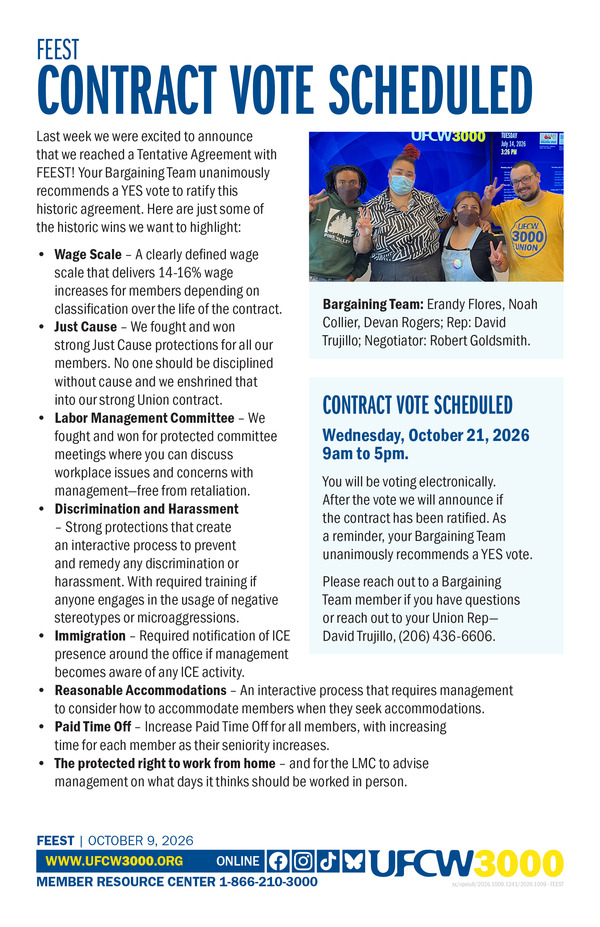
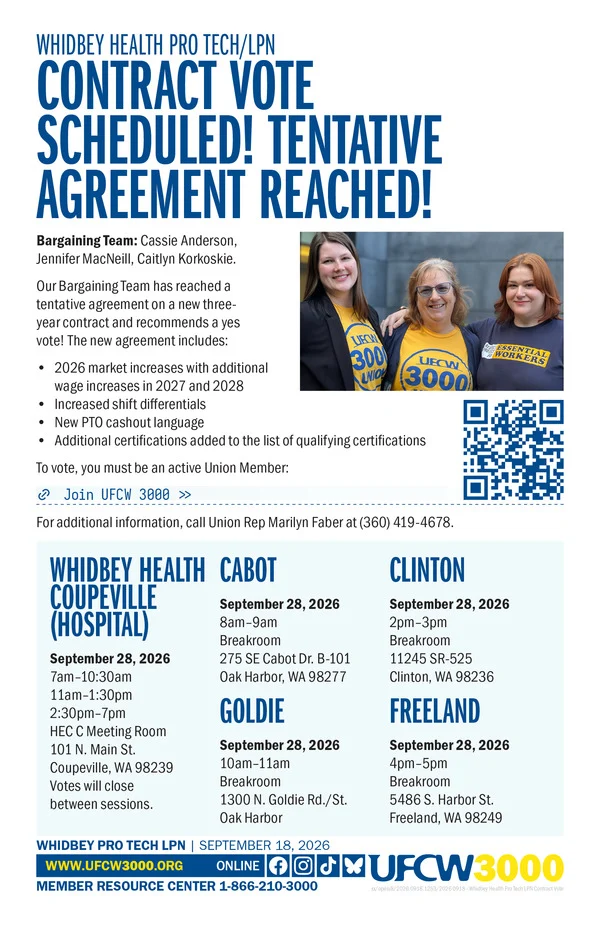
Read MoreAfter months of difficult negotiations, a powerful informational picket, and an overwhelming strike authorization vote, our Union Bargaining Team fought late into the night on October 8 and reached a tentative agreement on a new contract!
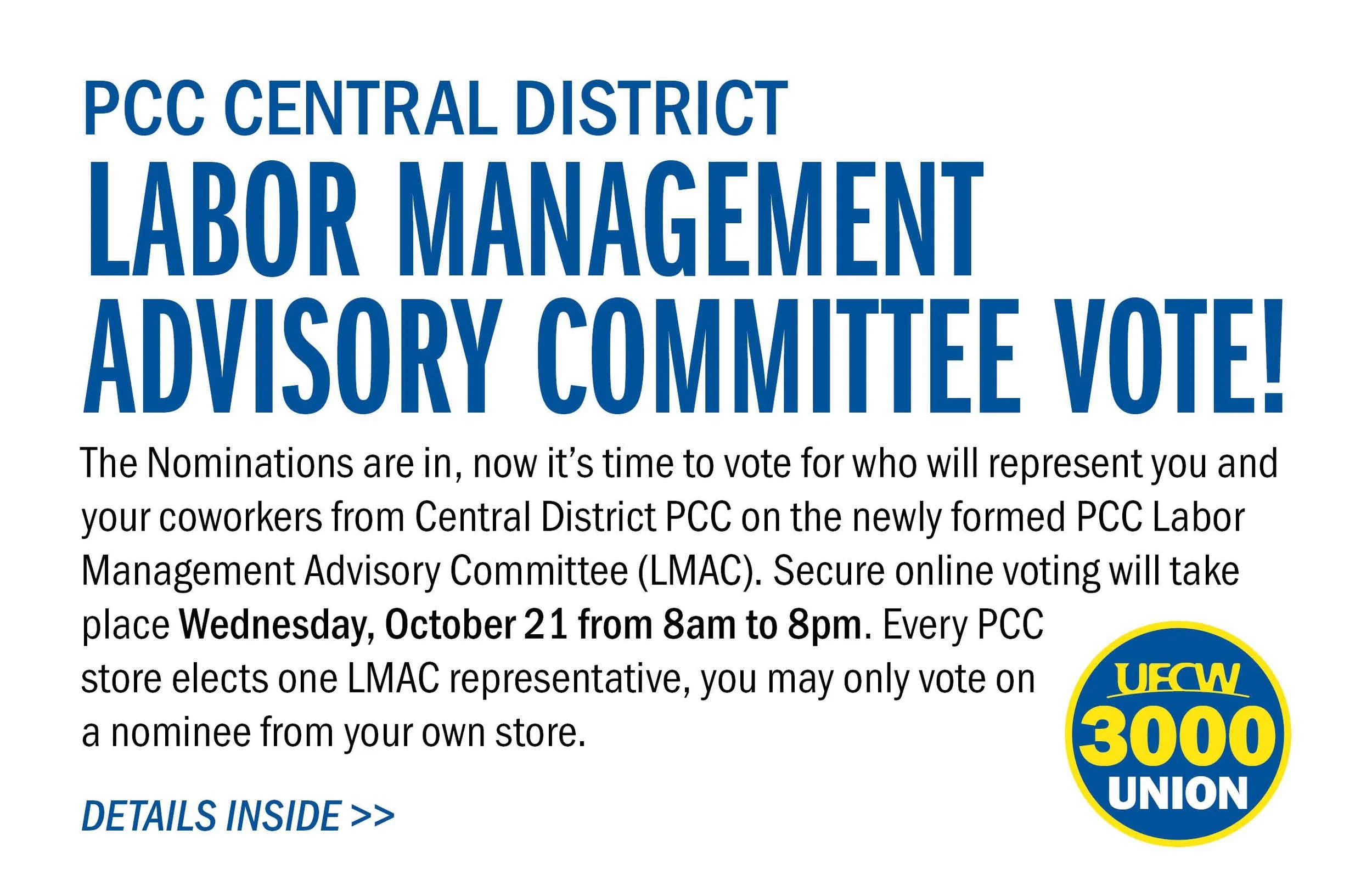
The Nominations are in, now it’s time to vote for who will represent you and your coworkers from Ballard, Central District, and Issaquah PCCs on the newly formed PCC Labor Management Advisory Committee (LMAC). Secure online voting will take place Wednesday, October 21 from 8am to 8pm. Every PCC store elects one LMAC representative, you may only vote on a nominee from your own store.
Following a series of highly attended vote meetings on Monday, October 5, union technical workers at St. Joseph Medical Center voted nearly unanimously to:
Reject CommonSpirit’s subpar contract offer
Authorize a STRIKE
“We set the stage and gave our comprehensive proposal letting the employer know that our priorities are to win wages that we deserve, improve our transportation benefits, win immigration protection language as well as ensuring the safety of our co-workers. We are eager to see what BDA’s response is on the 21. ” -Kota Owens, Bargaining Team Member
For the first time in history, on Tuesday, Sept 29, grocery store workers from across Washington State and North Idaho met at the same table to plan for our upcoming bargaining session with Kroger and Albertsons.
Our team met with the employer again today to continue bargaining. We have finally started discussing economics, focusing on health care and wages, which we know are our members’ top priorities. We've seen very little movement from the employer and know we need to start escalating.
Correcting the Record: Decades after Organizing Her Own Unit, Leslie Ball Is Still Fighting for Her Coworkers
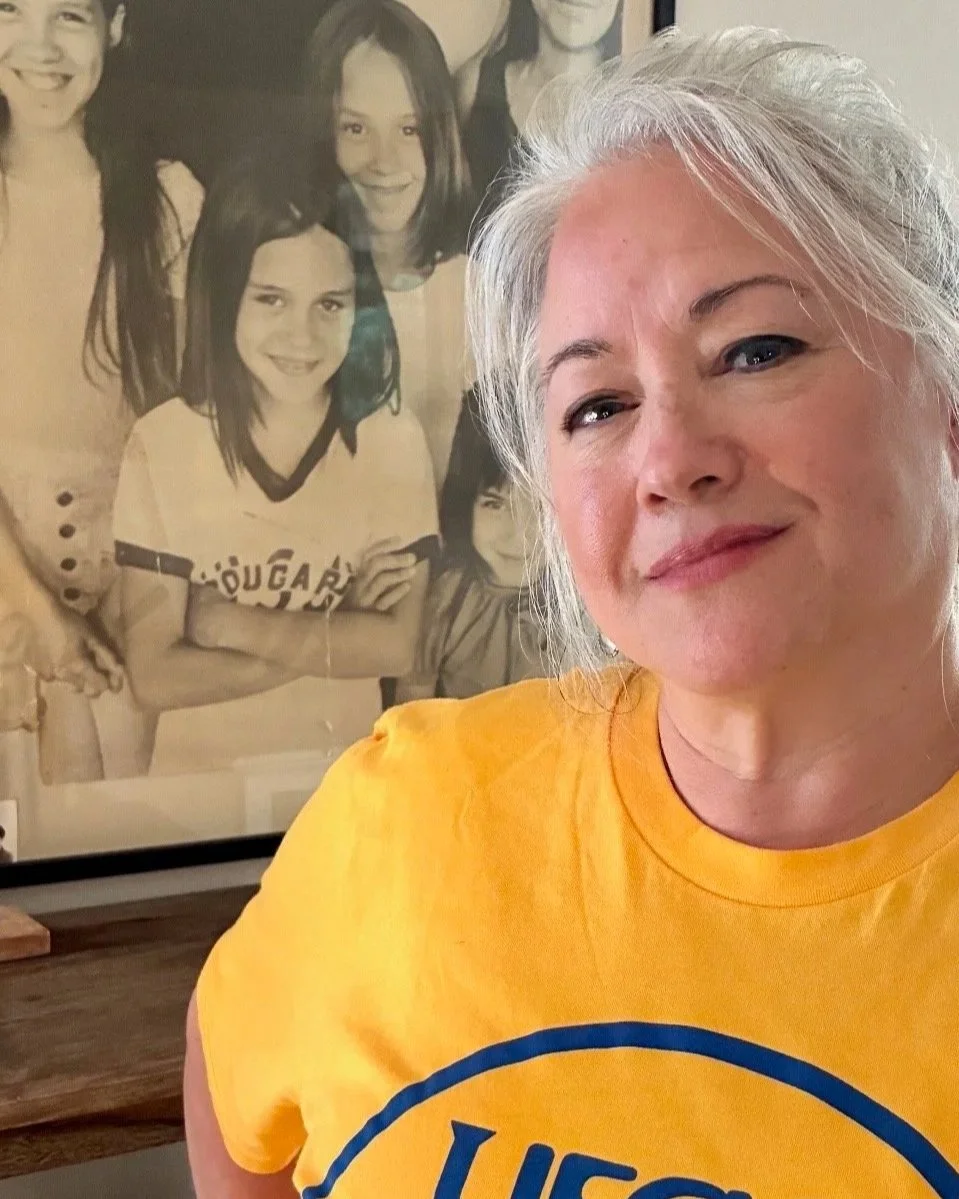
Leslie Ball, a certified surgical technologist at St. Joseph Medical Center in Tacoma and a longtime UFCW 3000 Union Steward, has spent decades standing up for herself and her coworkers.
Her fight for better working conditions began in the late 1990s, when she received a 30-cent wage increase, which ended up only being a five-cent raise after her employer reduced her shift differential by a quarter. With years of experience and a deep understanding of the value surgical techs bring to the table, she knew a nickel wasn’t going to cut it. So she and a coworker, Gail Miller, started organizing their colleagues at St. Joe's despite warnings that previous organizing efforts had failed.
Within a year, they helped Radiology, Respiratory Therapy, Pharmacy, Physical Therapy, and other departments form the hospital’s first Technical Unit, which ratified its first contract in 1999.
Please lookout for a vote notice once we can confirm when the ratification vote will take place. Members will all have a chance to review the vote documents and ask questions, we will also hold a meeting to discuss this historic TA very soon. Also, please thank your Bargaining Team! They worked very hard.
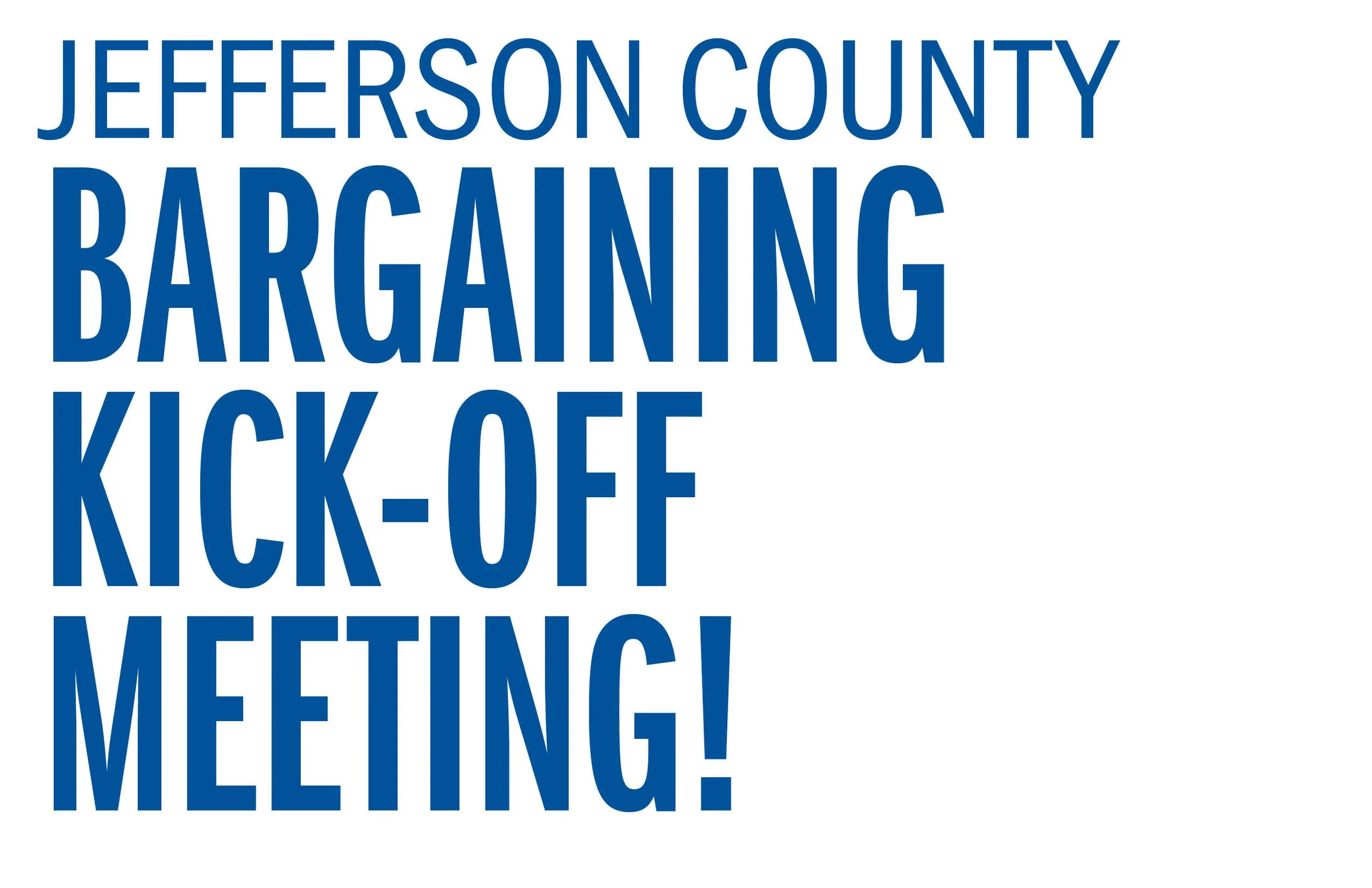
We’re getting ready to head to the bargaining table, and we want to hear from you!
Join our Union Bargaining Team for a Bargaining Kick-Off Meeting to talk about the upcoming negotiations, review bargaining priorities, discuss the bargaining process, and answer questions.
This is your opportunity to get involved, share what matters most to you, and help shape our priorities as we prepare for bargaining.
Meeting ID: 821 3753 7914 Passcode: 251390
Get Involved!
Strong contracts are built when members stay informed and involved. Join us as we kick off bargaining and make sure Jefferson County members’ voices are heard at the table.
We look forward to seeing you and hearing from you!
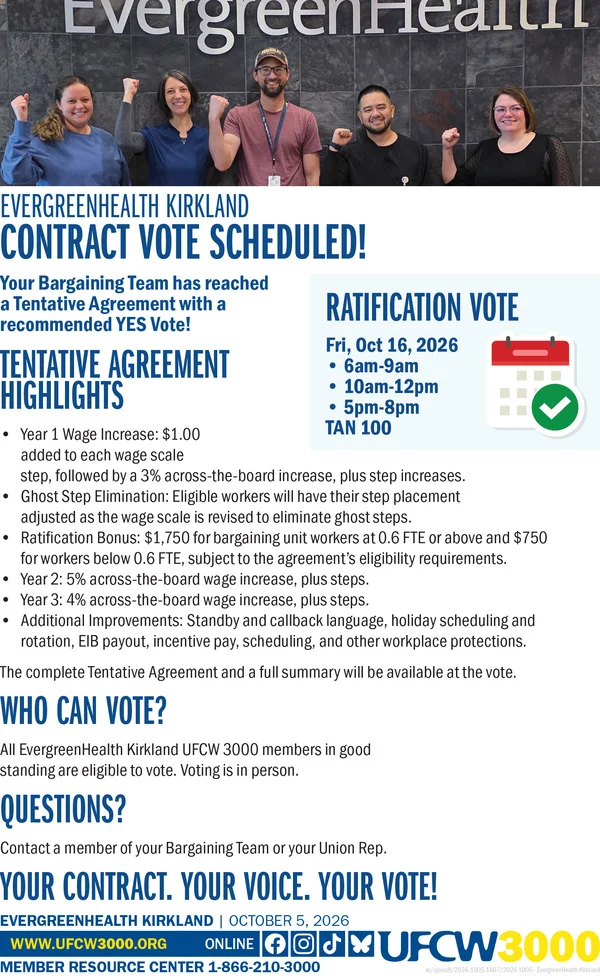
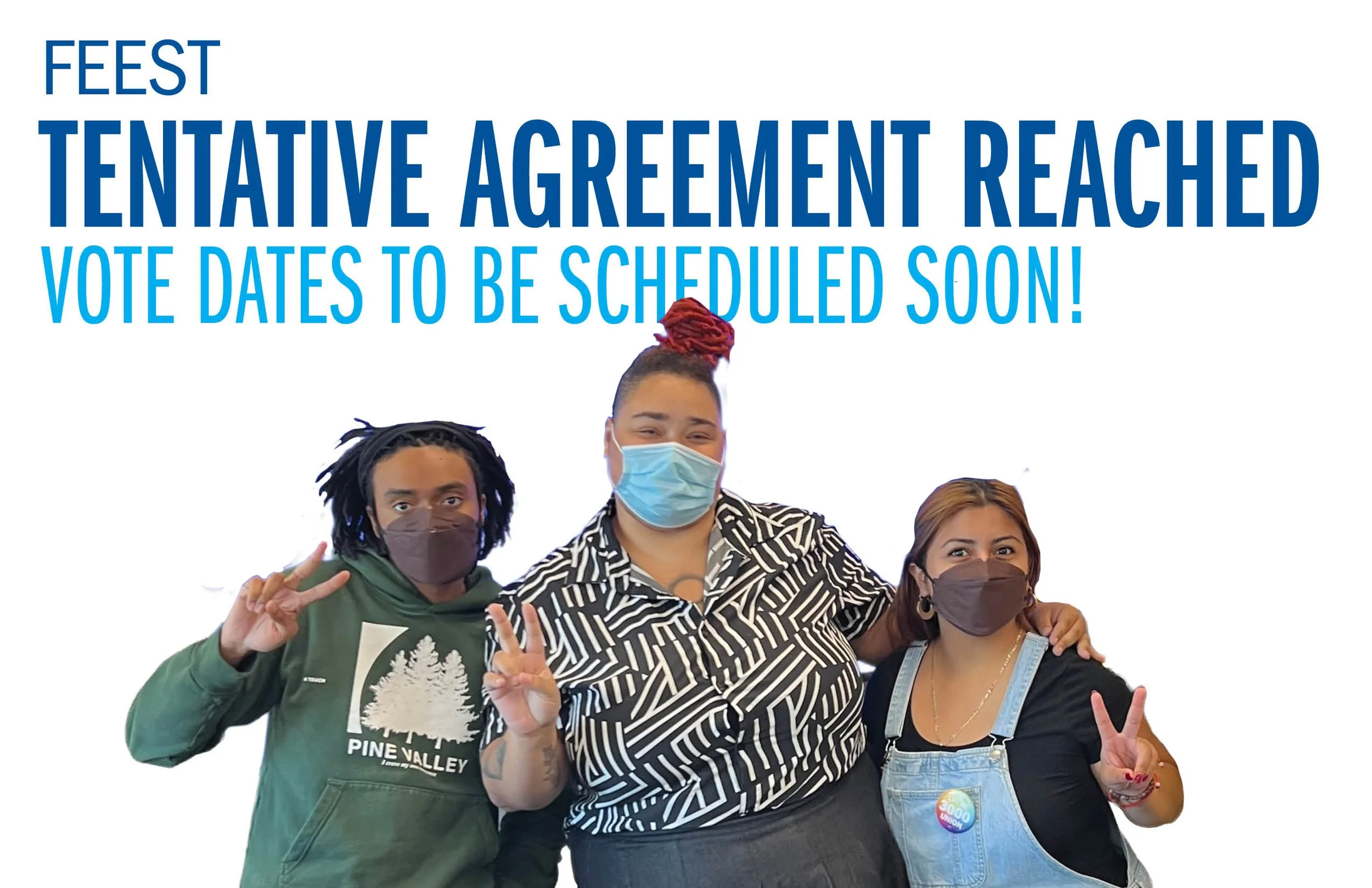
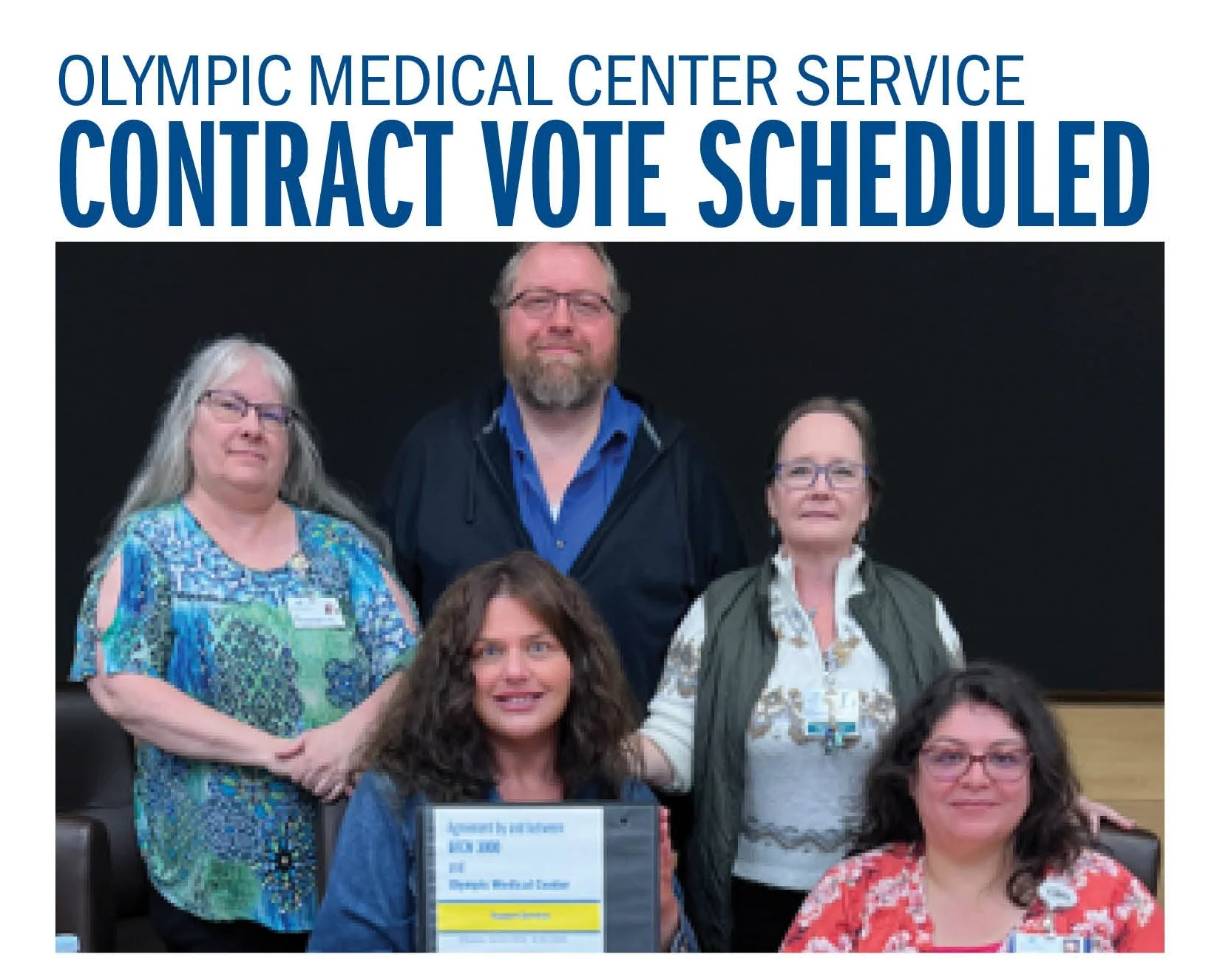
Our Union Bargaining Team has reached a Tentative Agreement with Olympic Medical Center and is recommending a YES vote!
After ten sessions across six months of negotiations, our union Bargaining Team reached the difficult but necessary decision to call for a strike authorization vote.
We’ve come to management with contract language addressing our positions being overstaffed by agency & traveler employees. Management have come to us rejecting this proposal.
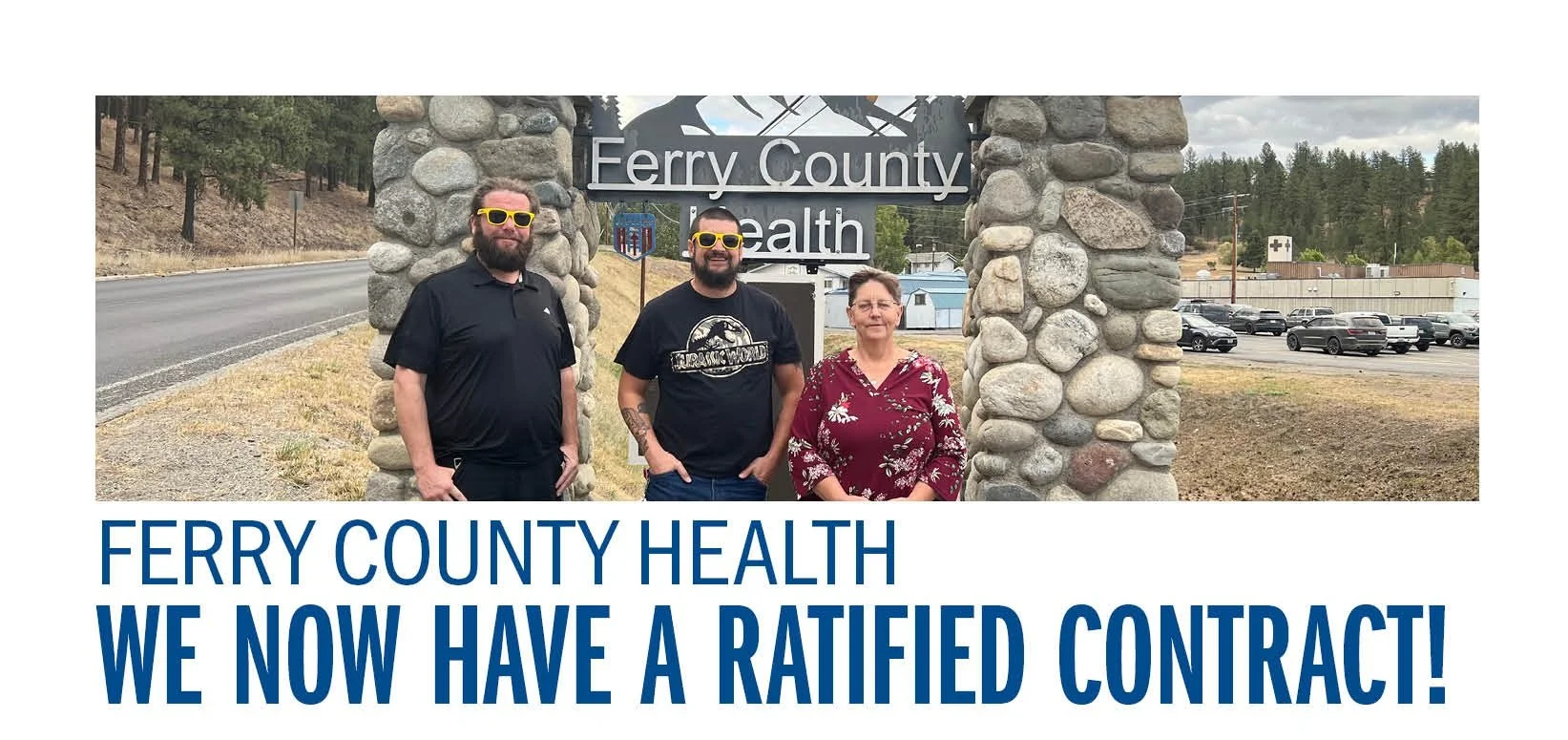
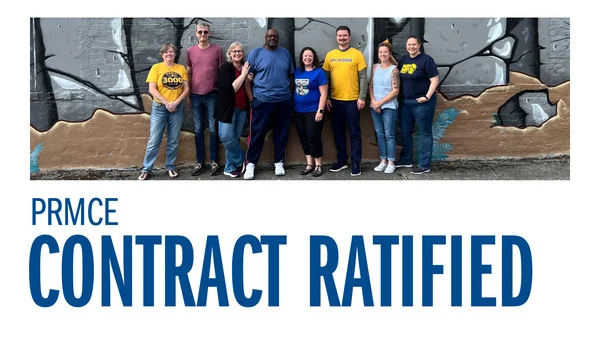
Our Bargaining Team is thrilled to announce that on September 22, 2026, an overwhelming majority of our members voted YES and approved the contract! We now have a ratified contract!
Our Union Bargaining Team has been working for several months on an agreement to transition Audiology Assistants and Pathologist Assistants into the existing UFCW 3000 Kaiser Permanente Pro Tech Optical Contract and we have reached a tentative agreement. The Bargaining Team fully recommends this agreement.
SEATTLE – Today the Seattle City Council passed Mayor Katie Wilson’s Fair Pricing and Transparency ordinance with no corporate amendments that open the door to algorithmic pricing or weaken enforcement, making Seattle home to the strongest ban on surveillance pricing in the country.
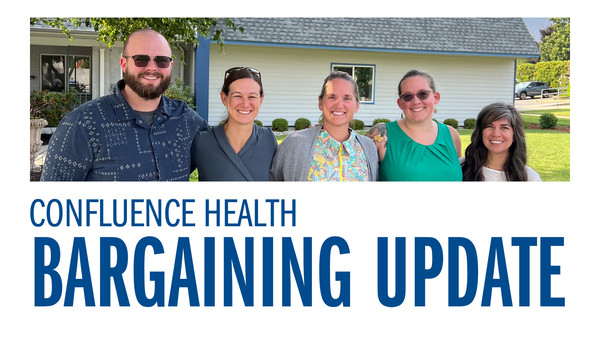
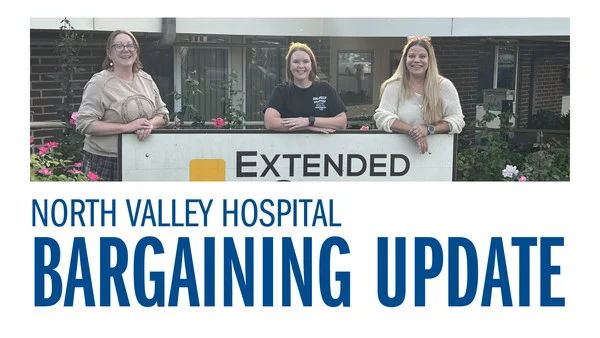
The employer joined us for two bargaining sessions on September 17 and 18. They have hired a new legal counsel who seemingly is trying to set a different, more collaborative tone with our union. We reached Tentative Agreements on several topics, including an Artificial Intelligence Memorandum of Understanding and an Inclusion Memorandum of Understanding to help protect some of our members who are part of marginalized communities.
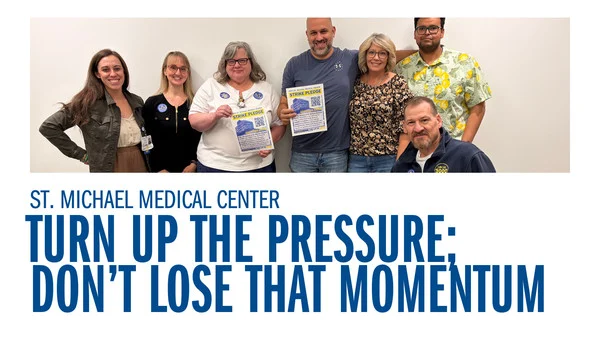
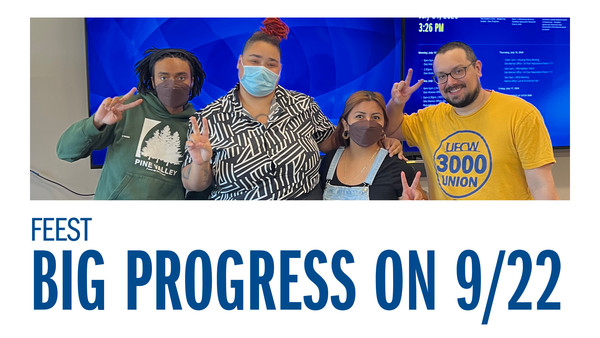
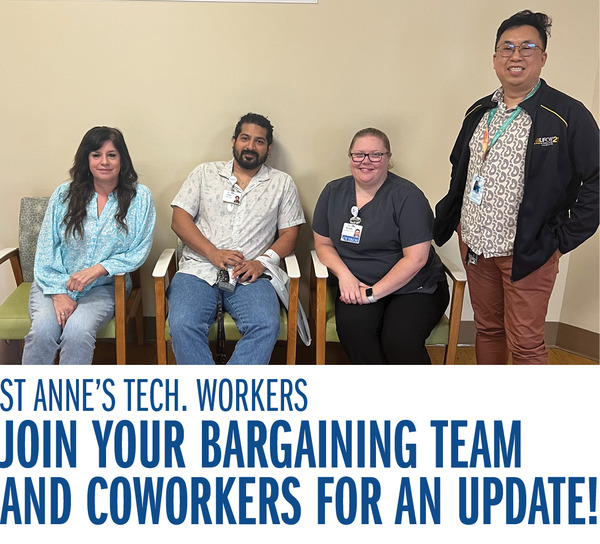
Join your Bargaining Team and coworkers for an update on the current bargaining campaigns on Tuesday, Sept 22, 5:30-6:30pm. We will give updates on the St. Michael and St. Joseph bargaining and how we can build power together. Please show your support for your bargaining teams by wearing your union swag with pride every day, but especially today, September 18, for our next bargaining session.
Any questions can be addressed to Charlie King at 360-409-0606 or a Bargaining Team Member.
As we navigate these adverse weather effects, please remember there are resources and rights through our union and through our communities that can help.
Read MoreUFCW 3000 is working with Providence to address the Meal Waiver situation. We consider the language in the meal waiver to be a direct negotiation with employees since Providence is asking you to waive rights outlined in our contracts. We want to ensure that you receive appropriate compensation for missed or late meal periods and that your contract is not negatively impacted.
For shifts of 11 hours or more: If your shift length is 11 hours or more, you are entitled to two 30-minute meal periods. If you are currently only receiving one 30-minute meal period and have not waived your second meal period, you may be entitled to compensation. Additionally, the employer may extend your shift based on the language in the CBA and past practices in order to accommodate your second meal period.
It is your right to waive the second meal period, but you may miss out on overtime pay for missing your second meal period if you choose to waive it. While we recommend not waiving your second meal period, the decision to do so is ultimately yours.
In the meantime, if you have any questions, please reach out to your union rep:
Anthony Cantu (Providence Everett RNs): 206-436-6566
Jack Crow (Providence Everett Pros and Techs): 206-436-6614
Madison Derksema (Providence St. Peter, Providence Radiant Care, and Providence Centralia): 206-436-6603
Lenaya Wilhelm (Providence Holy Family and Sacred Heart): 509-340-7369
Juanita Quezada (Providence Sacred Heart Techs and Providence St. Mary): 509-340-7407
Amy Radcliff (Providence Mt. Carmel and St. Joseph): 509-340-7370
| Shift Length | Rest Breaks | Meal Period |
|---|---|---|
| 4-5 hour shift | 10 min* x1 | 0 |
| 8-hour shift | 10 min* x2 | 30 min x1 |
| 10-hour shift | 10 min* x2 | 30 min x1 |
| 12-hour shift | 10 min* x3 | 30 min x2 |
| 16-hour shift | 10 min* x4 | 30 min x2 |
You must receive a paid rest break for every four (4) hours worked.
You cannot waive your right to a rest break.
A meal period cannot be substituted for breaks: Any employee who works more than four (4) hours gets their breaks as outlined above, and any scheduled meal period.
You are entitled to a 30-minute uninterrupted meal period when working more than five hours. The first meal period must be between the second and fifth hour worked. If you work 11 hours or more during the day, you must receive a second meal period no later than five (5) hours after the end of your first meal period.
Interrupted Mealtime: If you are required to stay on duty during a meal break you are still entitled to 30 total minutes of mealtime, excluding interruptions, plus 30 minutes of pay. Time spent performing the work task is not considered part of the meal period. The entire meal period must be paid no matter the number of interruptions. For example, if you received a 30-minute meal break but had to answer your work phone throughout then you should be paid 30 minutes for your meal period and receive a total of 30 minutes (non-consecutive) mealtime.
Late Mealtime: If you are not given time to have a 30-minute mealtime, you must be paid for your time worked plus 30 minutes. Paying employees 30 minutes for the meal period does not absolve the employer’s responsibility to give you a late 30-minute unpaid mealtime when practicable.
The above is a general guideline to meal periods and rest breaks. For more in-depth information please contact your union representative OR download the Health Care Guide to Meal and Rest Breaks >>
As a member of UFCW 3000 you have the right to enforce your Collective Bargaining Agreement (CBA). Your CBA is a legally binding agreement between your Union and the Employer.
Read MoreAs our region again faces wildfire season, wildfires and wildfire smoke may affect us in the workplace and at home. Below are important things to know to stay safe and enforce your rights at work. Here are the most important actions to care for yourself and your coworkers during wildfire season:
Report any safety concerns to your worksite safety committee & management right away, and get support from your Shop Steward and/or Union Rep if your concerns are not addressed.
Get accommodations if needed and exercise your rights—use your sick leave if you become unwell; speak with a health care provider and use FMLA or exercise your disability rights under the ADA if you have a health condition that makes you vulnerable to wildfire smoke.
If your home or work is affected by wildfire and financial assistance would help, speak with your Union Rep about the UFCW 3000 Membership Assistance Fund.
If your workplace, home, or family are evacuated, burned, or otherwise affected by active wildfires:
With a union contract, you have “just cause” protection, meaning you should not be disciplined at work for reasonably having to deal with a circumstance outside of your control like a wildfire that affects your home, work, or commute to work
Make sure to invoke your right to union representation if you are called into a meeting that could lead to discipline (we call these “Weingarten Rights” — read more here)
You have the right to a safe workplace, and if wildfire smoke makes your workplace unhealthy for you, you should be able to address that with your employer and get support from your Shop Steward and/or Union Rep.
You can wear a respirator mask at work that helps protect you against wildfire smoke.
Most masks we wear to protect against COVID do not actually protect against wildfire smoke. The right mask to protect against wildfire smoke is an N95 mask or other respirator with the same or higher level of protection. These respirator masks should have two straps and the word “NIOSH” and/or “N95” or “N100” printed on it.
When the air is smoky, your employer should allow workers to follow basic steps that will help prevent excessive exposure to wildfire smoke—that could include things like reassigning workers to less smoky areas or allowing for extra rest and water breaks away from smoky work areas.
If you or a family member gets sick because of wildfire smoke, you have the right to use Paid Sick & Safe Leave for illness
You may also be able to use your Paid Sick & Safe Leave if your child’s school or place of care, or your worksite has been shut down by a public official due to health-related reasons resulting from exposure to wildfire smoke
If you are vulnerable to smoky air due to an existing medical condition, talk to your health care provider about your workplace and see if they have recommendations for how to keep you safe from smoke exposure. Use FMLA if needed, or exercise your disability rights under the ADA.

How do you become a shop steward, anyway? Why should you bother getting training on your union rights? Why does a union workplace feel different than non-union ones? Michaela meets with UFCW 3000’s Education Director Marc to discuss all the ways members can get more involved in their union, take on leadership roles in the workplace, and get training and education that makes our union stronger.
UFCW 3000 union shop steward Michaela is always ready to answer fellow members’ questions about their union. She’s also a devoted murder podcast listener. Put those interests together, and she decided to start a union podcast to get all her coworkers’ questions and her own questions answered, and to meet as many people as possible who could share what it means to be a part of UFCW 3000. (No murder on this podcast, only solidarity!)
*The information shared on this podcast is offered by rank and file union member leaders of UFCW 3000. There may be inaccuracies or misstatements shared, as members will be speaking from the lenses of their perspectives and life experiences. While members are doing their best to share good information, we can make no claims to 100% accuracy and this podcast should not be construed as legal advice.
We are the Union. The members of UFCW 3000 are over 50,000 members working in grocery, retail, health care, meat packing, cannabis, & other industries across Washington state, north-east Oregon, and northern Idaho. UFCW 3000 is a chartered member of UFCW International with over 1.4 million workers in North America.
To build a powerful Union that fights for economic, political and social justice in our workplaces and in our communities.


Correcting the Record: Decades after Organizing Her Own Unit, Leslie Ball Is Still Fighting for Her Coworkers
Leslie Ball, a certified surgical technologist at St. Joseph Medical Center in Tacoma and a longtime UFCW 3000 Union Steward, has spent decades standing up for herself and her coworkers.
Her fight for better working conditions began in the late 1990s, when she received a 30-cent wage increase, which ended up only being a five-cent raise after her employer reduced her shift differential by a quarter. With years of experience and a deep understanding of the value surgical techs bring to the table, she knew a nickel wasn’t going to cut it. So she and a coworker, Gail Miller, started organizing their colleagues at St. Joe's despite warnings that previous organizing efforts had failed.
Within a year, they helped Radiology, Respiratory Therapy, Pharmacy, Physical Therapy, and other departments form the hospital’s first Technical Unit, which ratified its first contract in 1999.
Jenny C., a transporter at Providence Sacred Heart Medical Center in Spokane, knows what it looks like when management hopes a problem will just go away.
Jenny has watched the facility's transport elevators malfunction for more than a year, filing report after report after each incident she witnessed. Supervisors did not appear to take these complaints seriously.