Washington State: COVID-19 emergency rules that allow for expanded access to unemployment insurance.

UFCW 21 has been working closely with our elected officials and government agencies to ensure our members’ needs are considered as we respond to the COVID-19 outbreak. The Employment Security Department’s emergency rules allow for expanded access to unemployment insurance benefits have now gone into effect.

For example:

  • Workers may receive unemployment benefits and employers may get relief of benefit charges if an employer needs to shut down operations temporarily because a worker becomes sick and other workers need to be isolated or quarantined as a result of COVID-19.

  • Standby will be available for part-time workers as well as full-time workers, as long as they meet the minimum 680 hours.

  • Workers that are asked to isolate or quarantine by a medical professional or public health official as a result of exposure to COVID-19 may receive unemployment benefits and work search requirements could be waived, so long as they have a return date with their employer. The return to work date can be the date the isolation or quarantine is lifted.

  • If a worker falls seriously ill and is forced to quit, they cannot collect unemployment benefits while they are seriously ill but may be eligible once they recover and are able and available for work.

Click or tap image to download the PDF

Click or tap image to download the PDF

Learn more

Public Health Recommendations to Minimize the Spread of Novel Coronavirus (COVID-19) in Retail Food Establishments.

These are guidelines from Public Health – Seattle & King County for retail, food, and grocery businesses and workers. If you would like to report safety concerns at your workplace, please speak with your Shop Steward or Union Rep, or email safetyreport@ufcw21.org and include where you work, your safety concerns, and how best to contact you.


March 16, 2020

As of March 16, 2020, King County has updated their guidelines for retail and grocery stores as follows.

Please note: The “retail” guidance seems to have been incorporated into the general essential businesses guidance here: https://www.kingcounty.gov/depts/health/covid-19/workplaces/retail.aspx

The COVID-19 prevention measures and mandatory actions for retail establishments:

Based on CDC guidance and Governor Inslee's Proclamation these establishments must observe the following COVID-19 prevention measures.

Retail establishments must align with COVID-19 prevention measures as follows:

  1. Older adults and individuals with underlying medical conditions that are at increased risk of serious COVID-19 are encouraged not to attend (including employees).

    • Suggestion: Take specific steps to encourage older adults age 60 and above and those with underlying health conditions not to attend. For groceries, banks, and other essential establishments, consider implementing dedicated times exclusively available for highly vulnerable populations.

  2. Social distancing recommendations must be met (i.e., limit contact of people within 6 feet from each other for 10 minutes or longer).

    • Suggestion: Establishments should ask themselves: how close will people be and for how long? Ensure that your business is organized in such way to avoid close contact between people. Washington Department of Health advises that “being within 6 feet of a sick person with COVID-19 for about 10 minutes” constitutes close contact which could result in exposure.

  3. Employees must be screened for coronavirus symptoms each day and excluded if symptomatic.

    • Suggestion: Have a plan to screen employees or volunteers every day. CDC guidelines identify the key symptoms to watch for as fever, cough and shortness of breath.

    • Signage should discourage attendance for any person who has these systems.

  4. Proper hand hygiene and sanitation must be readily available to all attendees and employees.

    • Suggestion: Provide ready access to hand sanitizer and hand sanitizer stations and request employees and customers to abide by personal hygiene recommendations. CDC recommends that people wash their hands often, and if soap and water is not readily available, use hand sanitizer that contains at least 60% alcohol, and to avoid touching your eyes, nose and mouth with unwashed hands.

  5. Environmental cleaning guidelines from the U.S. Centers for Disease Control and Prevention (CDC) are followed (e.g., clean and disinfect high touch surfaces daily or more frequently).

    • Suggestion: Ensure a clean and sanitary environment. Have employees disinfect frequently-touched surfaces such as doorknobs, tables, desks, and handrails. CDC provides detailed environmental and disinfection recommendations.

Additional guidance that retail establishments must adhere to:

Based on CDC guidance, retail and service operators should adopt the following practices:

  1. Encourage staff who can to telework

  2. Consider the following measures to achieve social distances requirement

    • Spacing workers at the worksite

    • Staggering work schedules

    • Decreasing social contacts in the workplace (limit in-person meetings)

    • All break areas must accommodate distancing

    • Reducing the capacity of customers

  3. Strive for flexible leave policies for staff who need to stay home due to school/childcare dismissals.

  4. Place posters and other signage that encourage staying home when sickcough and sneeze etiquette, and hand hygiene at the entrance to your establishment and in other nearby areas where they are likely to be seen by customers and clients.

  5. Provide disposable wipes to ensure frequently used surfaces are cleaned.

  6. Each retail establishments must have a lead employee to ensure compliance with this guidance.

Specifically in grocery stores:

  • Apply the social distancing recommendations to any lines that form inside or outside of the store

  • Prohibit self-serve foods, including hot bars, cold bars and buffets.

  • Prohibit product sampling

  • Appoint a designated sanitation worker at all times to continuously clean and disinfect frequently touched surfaces and meet the environmental cleaning guidelines set by the CDC.


March 5, 2020

Food has not been identified as a likely source of COVID-19 infection at this time; however food businesses can play an important role in both protecting their employees and their customers from coronavirus infection by following the below personal and environmental hygiene practices.  

  • Stay home when you are sick with fever, coughing, and sneezing. 

  • Wash your hands thoroughly with soap and warm water for 20 seconds upon first arriving to work, after using the restroom, before and after eating and frequently throughout the day.  Avoid touching your eyes, nose or mouth. 

  • Provide alcohol based (60%) hand sanitizers for use for both employees and customers by placing them at convenient/accessible locations.

  • Use sanitizing solution (i.e., one teaspoon of unscented household bleach in a gallon of cool water) to frequently sanitize commonly touched surfaces and objects such as electronics, door knobs, faucet handles, counter tops, cash machine key pads, dining tables frequently throughout the day. Change the sanitizing solution at least once every four hours.

  • Consider temporarily limiting self-serve operations.  Examples of such operations include; salad bars, buffets and dispensers.  Replace utensils frequently (approximately hourly) during peak use hours for self-serve style operations.

  • Ensure dishwasher and/or three –compartment sinks are used properly and have the appropriate level of sanitizer for final rinse (50-100 PPM chlorine based sanitizer, follow product label for other approved sanitizers).

  • Ensure sneeze guards are in place where required.

  • If you have food employees at higher risk for coronavirus with underlying health conditions, such as people 60 or older, people with underlying health conditions (heart disease, lung disease, or diabetes) or those with weakened immune systems or those who are pregnant: consider temporarily assigning them to non-public-contact duties.

If you are a food business owner or a food worker and have questions related to your operation please reach out to your Health Investigator or call 206-263-9566 to speak with office staff.  For the latest information, please visit the following site: https://www.kingcounty.gov/coronavirus


March 6 update: Unions Representing Health Care Professionals Call on CDC to Reconsider Protections During Coronavirus Outbreak

FOR IMMEDIATE RELEASE: March 6, 2020

CONTACT:
Abraham White, 202-341-1899, awhite@ufcw.org
Tom Geiger, 206-604-3421, tgeiger@ufcw21.org

Unions Representing Health Care Professionals Call on CDC to Reconsider Protections During Coronavirus Outbreak

WASHINGTON, D.C. – Today, the United Food and Commercial Workers International Union joined the Service Employees International Union and the American Federation of Teachers in calling on the Centers for Disease Control to strengthen protections for first responders fighting the coronavirus outbreak. These unions represent thousands of these health care workers in Washington who are on the front lines of COVID-19 response.

“Health care workers represented by UFCW are bravely stepping up to help so many communities confronting the coronavirus,” said UFCW International President Marc Perrone. “Keeping our patients and families safe starts with strong leadership. UFCW’s 1.3 million members and workers across the country are calling on the CDC and both parties – Republicans and Democrats – to work together to take the bold steps needed to strengthen the government’s response to this crisis, before it’s too late.”

“Our members are displaying extraordinary courage and dedication at the front lines of this outbreak in Washington State, and both the safety of our community and the integrity of our health care system depends on their ability to do their work safely,” said UFCW Local 21 President Faye Guenther in Seattle. “By caring for patients with COVID-19 health care workers are putting themselves at higher risk, and they deserve the highest level of protection.”

“The Trump administration has left healthcare workers in the dark by spreading misinformation, delaying the release of guidelines and best practices developed by public health experts, and is putting the health of the stock market above the health of people,” said Service Employees International Union President Mary Kay Henry. “Nurses, lab techs, environmental service workers, dietary aides, caregivers and doctors in our hospitals, nursing homes and communities are in direct contact with patients, meaning these workers are at high risk of contracting or spreading illnesses. In the face of a health emergency, it is more important than ever to ensure these workers are prepared with the right equipment and ready to take action—not left wondering how to keep themselves, their patients and their families healthy.

“Furthermore, everyone on the frontlines of care—from hospital workers to home care workers—must have affordable healthcare and paid sick time they can count on. No one should have to go to work sick because they are worried about being penalized or missing a day’s pay; and no one should have to postpone or forgo treatment because they can’t afford the bill,” SEIU’s Henry added. “The Trump administration, the CDC and OSHA must put worker and patient safety—not cost reduction —first. As the largest union of healthcare workers, SEIU will continue to push the Trump administration to improve its response. This situation shows the power that working people have when we join together in unions, and it is a good example of why every worker should have the opportunity to join a union—no matter where they work.”

“Nurses, doctors, respiratory therapists and the other workers supporting patient care are at ground zero of this public health crisis, and their voices must be a key part of developing a national plan. Failing to provide adequate protection to healthcare workers increases the risk that those workers themselves will spread the infection and failing to protect them weakens our response,” said AFT President Randi Weingarten. “Unfortunately, both the CDC and OSHA have done little thus far to engage with workers, and to make sure they’re clear on the protocols for respiratory protection and exposure to infectious disease. That, coupled with these rollbacks, is a troubling sign of our government’s ability to manage this threat this our communities.”

“As frontline caregivers, we are the experts in keeping our patients safe. Not providing adequate protections for healthcare workers not only puts caregivers at risk but puts patients at risk as well,” said SEIU 1199 Executive Vice President Jane Hopkins, RN. “We are calling on the CDC to make the safety of healthcare workers, and thus our patients, the first priority.”

“Nurses, doctors, and other healthcare workers stand ready to respond to this crisis, but they should not have to sacrifice their own health, or risk infecting their loved ones.  The CDC has not heard from these frontline workers who will carry out the work, who need assurance from the federal government that they’ll be protected. We are calling on the CDC to rationally target the supply of respirators and use other controls to reduce the risk of infection in healthcare workers, knowing that our professionals are at the highest risk of infection,” said Washington State Nurses Association Executive Director Sally Watkins.

“The federal government should do all in its power to increase the supply of N95 respirators., which includes releasing the national stockpile and targeting that stockpile to areas where the outbreak has already occurred; incentivizing US-based companies to produce more N95s; and promoting the use of powered air purifying respirators (PAPRs) in healthcare settings. Healthcare professionals also need training in real time on how to properly use the respirators, with opportunities to ask questions and practice,” WSNA’s Watkins added. “The CDC should also do more to promote other key controls, such as isolation protocols, adequate nurse staffing, delaying unnecessary procedures, telemedicine, and improved air ventilation to reduce the presence of viral particles in the air. This crisis requires vigilance from all of us.”

###

Olympic Home Health Contract Vote

2020 0305 Olympia Home Health vote.jpg

Olympic Home Health has reached an agreement The Committee fully recommends a “YES” vote

On February 26, the home health bargaining committee reached a tentative agreement with Management. We won across-the-board increases and market adjustment increases for half of the unit, including nurses and therapists. In addition, we won improvements to current contract language like: grievance process, required per diem work, and preceptor pay. Also due to the implementation of the new WA Paid Family Medical Leave program which everyone has access to 12 weeks of paid leave, OMHH will be changing the short term disability plan. In order to explain the changes precisely, we encourage everyone to attend the ratification vote. The full details of the tentative agreement will be made available on the ratification vote day. If you have any questions please contact your union representative: Aimee Oien (360)662-1981.

Ratification Vote

Wednesday, March 11, 2020

OMHH Port Angeles (inside the conference space) 7am-11am

Olympic Medical Center Sequim (inside the office space ) 7:30am-11:30am

March 6: Join the Health Care Workers Virtual Town Hall

Health Care Workers Virtual Town Hall on Coronavirus/COVID-19

Join state and county public health officials, union leaders, and fellow health care workers to exchange information, learn the latest updates, and understand the unions’ role in ensuring workplace safety. 

TOMORROW, FRIDAY MARCH 6
11:00 am – 12:30 pm

To join the town hall:
Visit https://zoom.us/j/419635168
Or call-in by dialing (408) 638-0968 — Meeting ID: 419 635 168
 
All health care members are invited to participate.
This call is co-hosted by UFCW 21, WSNA, and SEIU 1199NW.

March 5 Update: Message to members from the President and Secretary Treasurer of UFCW 21:

We have reached out to all members today about the recent outbreak of respiratory disease caused by a new coronavirus, COVID-19, here in Washington State. As many of you have seen in the news or at your workplace, this is a contagious illness with confirmed cases in our area, including at some health care facilities where UFCW 21 members work.

Here’s what we’re doing so far: We have already made comprehensive information requests of our health care employers so we can have a full picture of how they plan to keep people safe at work. This includes information about trainings, protocols, and personal protective equipment. We encourage all health care workers to stay up to date on the Centers for Disease Control’s interim guidance for health care workers to help ensure employers are following these guidelines in your work sites at all times.

We are also regularly in touch with state and local agencies so we can make long-term plans for member safety as this continues, and to advocate for benefits for members who are affected by COVID-19, including those who may be quarantined or otherwise must miss work. We are working together with other health care unions so that we are all sharing information and supporting each other. And we are working directly with other employers as well, to ensure all our members have safe workplaces and access to sick leave during a viral outbreak.

One of the most important ways we can all prevent the spread of this illness even outside health care settings is to stay home from work if you are feeling ill. Our members have fought hard for access to paid sick leave and family leave, and bargained for other leave in our contracts. It is important to know your contract, know the law, and keep yourself, your coworkers, and your community safe. Health care workers and the public will rely on things we have fought for, like access to meal and rest breaks and affordable health care for our families.

If you feel ill, especially if you have a fever, cough, or shortness of breath, you should contact your health care provider to see if you should go in for care. You can also call the Washington State Department of Health coronavirus hotline at 1-800-525-0127, and press #.

You should reach out to your Shop Steward or Union Representative as soon as you can if you have any questions about your rights, concerns about staying home when you are feeling sick, if you feel your workplace is unsafe or you are asked to do something unsafe at work, if you face any discipline related to the impacts of this outbreak, or if you experience a change in your working conditions. You can also report workplace safety concerns to safetyreport@ufcw21.org. If you do so, please include detailed information about where you work, your safety concerns, and how best to contact you.

Much of our union family is on the front lines of this outbreak, whether it’s providing high-quality patient care, offering compassionate customer service, keeping groceries and supplies stocked for the public, or safely cleaning our workplaces and health facilities. Let’s continue to do so without discrimination. As we are sure you’re all aware, there is no basis for assessing a person’s coronavirus risk just because of a their race, ethnicity, language, or nationality, and stigma will only hurt our ability to deal with this outbreak.

Please know that we are committed to ensuring your safety and dealing with the effects of this outbreak for as long as it lasts. Don’t hesitate to be in touch with your rep with any questions or concerns.

In solidarity,

UFCW 21 President Faye Guenther

UFCW 21 Secretary Treasurer Joe Mizrahi

Macy’s Downtown Closure Severance update

2020 0304- Macys Closure Update.jpg

On February 20, we signed an agreement with Macy’s over severance for workers laid-off from the Downtown Seattle location. The agreement includes one week of pay for every full year of service with a cap at 26 weeks. Macy’s has begun sending severance paperwork to associates via mail and email that includes the full language of the agreement as well as general release language. In order to receive your severance check, you will need to sign and return this paperwork within 45 days of receiving it. We retain the ability through our union to challenge any miscalculations or issues with payment of severance.

We are also aware that there were schedule changes during the final weeks of February that resulted in a loss of hours for multiple associates. We have an active grievance to remedy the issue.

If you have any questions about the calculation or payment of your severance or vacation cash out, please contact your union representative, Regan McBride at 206-436-6579

March 3 update for Members on Coronavirus

UFCW 21 President Faye Guenther with PCC members Atsuko and Jeanett in Edmonds to talk about their upcoming bargain and discuss how the Novel Coronavirus outbreak is impacting members at work.

UFCW 21 President Faye Guenther with PCC members Atsuko and Jeanett in Edmonds to talk about their upcoming bargain and discuss how the Novel Coronavirus outbreak is impacting members at work.

  • We are in active communication with state and county officials to get the most up-to-date information we need to help keep members safe.

  • We have filed information requests with our health care employers to ensure they are following guidelines to keep members safe at work.

  • We are in discussions with other employers about best practices for public health and workplace safety to ensure all members are safe at work.

  • We are identifying any areas we need to demand to bargain over the impacts of this outbreak, and are making plans for long-term effects of an outbreak in our workplaces.

  • UFCW 21 President Faye Guenther visited members this morning to answer questions and discuss how the coronavirus is impacting workplaces.

Remember: utilize the leave language and health care you’ve bargained for, and contact your Shop Steward or Union Rep for any support you need to stay safe and keep your workplace safe, including if you face any discipline related to the impacts of this outbreak.

More information and resources:

UFCW 21 Update for Members on the Coronavirus Outbreak

UFCW 21 Update for Members on the Coronavirus Outbreak

As you have likely heard in the news, there is an outbreak of respiratory disease (COVID-19) caused by a new coronavirus in several countries, including the United States. King County has some confirmed cases of this disease, including at health care facilities where UFCW 21 members work. You can find updated information about the virus at the Washington State Department of Health and the national Centers for Disease Control and Prevention (CDC). If you have questions about what is happening in Washington, how the virus is spread and what to do if you have symptoms, please call the Washington State hotline at 1-800-525-0127 and press #. (This hotline can experience high traffic, so try calling back later if it is temporarily unavailable.)

If you are in King County and believe you were exposed to a confirmed case of COVID-19, or if you're a healthcare provider with questions about COVID-19, contact our novel coronavirus call center: 206-477-3977. The call center will be open daily from 8 AM to 7 PM PST.

One of the most important ways we can prevent the spread of this illness is to stay home from work if you are feeling ill. If you have any questions about your right to stay home from work, contact your Union Rep or the Rep of the Day immediately. You can look up your contract and your Union Rep here. Our office number is: 1-800-732-1188.

We are communicating the importance of following the CDC’s public-health guidelines to our employers, which include actively encouraging sick employees to stay home, being flexible with sick leave policy, educating workers about respiratory etiquette and hygiene, providing resources including tissues and hand sanitizer, and routinely cleaning the workplace.

More information is below:

  1. Basic Information about the coronavirus

  2. What to do if you feel sick

  3. What to do if you work in health care (patient care and EVS)

  4. What to do if you work with the general public (grocery, retail, pharmacy, others)

  5. Information for employers

BASIC INFORMATION:

At this time (March 2, 2020) King County says the risk of exposure is increasing for people who live in our area, though it is still relatively low. Those at elevated risk of exposure are:

  • Health care workers caring for patients with COVID-19

  • Those who have had close contact with persons with COVID-19

  • Travelers returning from affected international locations where community spread is occurring

The symptoms of COVID-19 appear to be fever, cough, and shortness of breath. The CDC has instructions for preventing the spread of this virus, which include staying home when you are sick, avoiding close contact with people who are sick; avoiding touching your eyes, nose and mouth; frequently washing your hands with soap and water for at least 20 seconds, and more basic prevention measures.

King County Department of Health has prepared a Novel Coronavirus Factsheet in multiple languages:

If you have further questions, call the state hotline at call 1-800-525-0127 and press #.

IF YOU FEEL SICK:

  • If you feel sick, especially if you have a fever, cough, or shortness of breath, stay home and contact your medical provider or the state Department of Health hotline, 1-800-525-0127, and press #.

  • If you are sick with COVID-19 or suspect you are infected with the virus, follow the CDC’s steps to help prevent the disease from spreading to people in your home and community.

  • Most workers in Washington are covered by the state law mandating access to paid sick days, and you may be eligible for more sick leave depending on your union contract.

  • We also have a Paid Family Medical Leave program in Washington, so there is much less need to save up sick time for chronic or extended illness or upcoming parental leave.

  • If you do not have paid sick leave left but will not be out long enough to qualify for extended leave, work with your manager and your Union Rep to stay home so you can protect yourself, your coworkers, and your community.

IF YOU WORK IN HEALTH CARE:

The Centers for Disease Control and Prevention has a coronavirus website with lots of updated guidance for health care workers, including EVS workers, at the CDC’s Coronavirus website. These include:

If you or a coworker are quarantined, please contact your Union Rep as soon as you can. We are talking with state offices right now about your potential access to benefits during a quarantine.

The Department of Health is reminding everyone that stigma will not help fight this illness—we do not make determinations of risk based on race, nationality, or ethnicity.

If you or a coworker need this information in another language, please contact your Union Rep.

IF YOU WORK WITH THE GENERAL PUBLIC

  • It is important that you stay home if you feel sick, especially if you experience illness with fever, cough, or shortness of breath.

  • Follow the CDC’s guidelines to prevent the spread of this illness.

  • Grocery, retail, and pharmacy workers may see or have already seen a run on supplies like hand sanitizer, disinfecting wipes, and bottled water.

IF YOU ARE AN EMPLOYER:

The CDC is offering very clear public-health guidelines for employers during this outbreak, including:

  • Actively encouraging sick employees to stay home

  • Ensuring that your sick leave policies are flexible

  • Not requiring a doctor’s note for employees who are sick

  • Routinely cleaning all frequently touched surfaces in the workplace

  • Emphasizing good respiratory etiquette and hand hygiene and providing supplies like tissues and hand sanitizer

Providence St. Joseph and Mt. Carmel Contract Vote

2020 0225 - Providence Mt Carmel and St Joseph Contract Vote.jpg

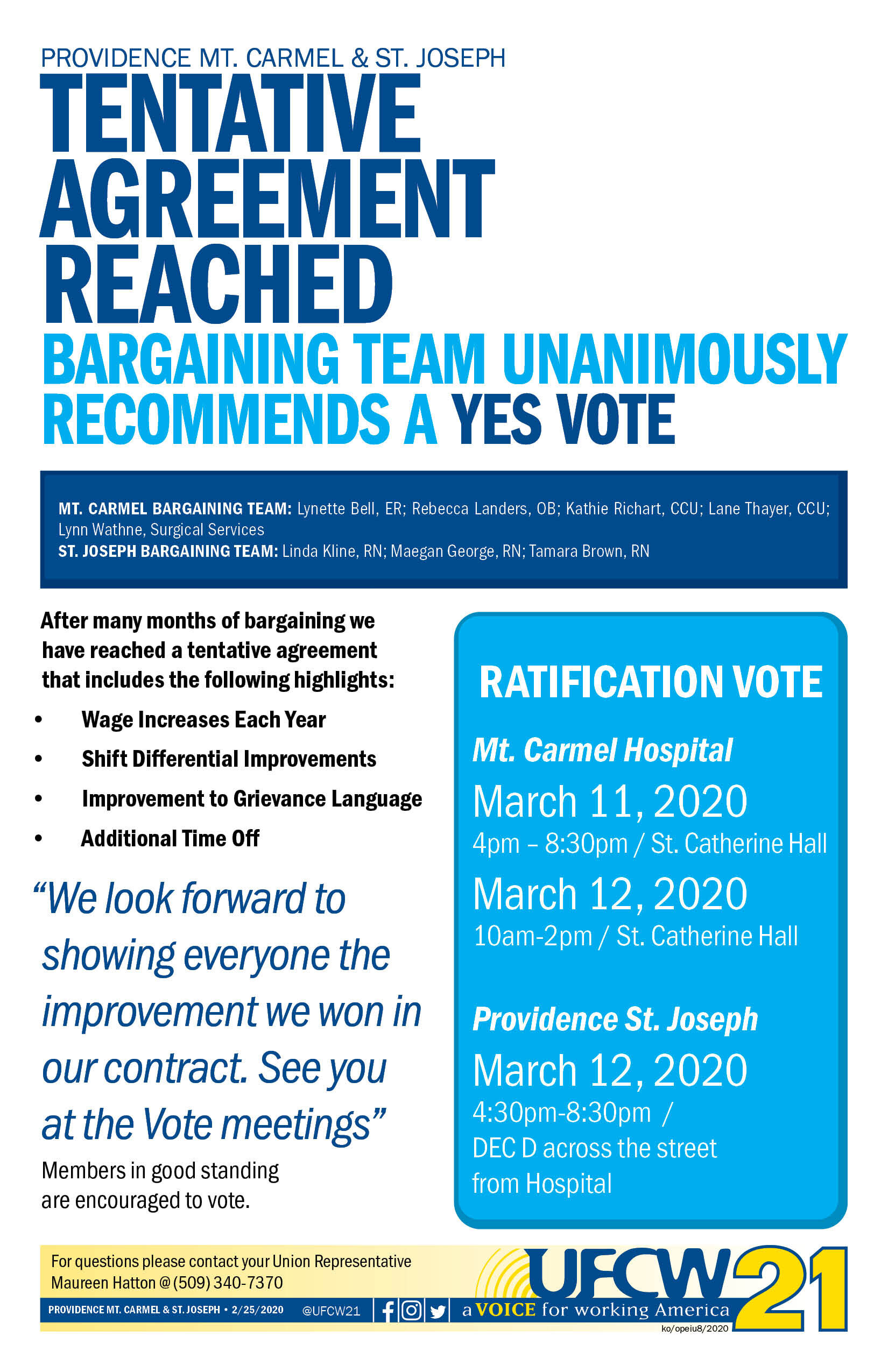
Tentative Agreement Reached Bargaining Team Unanimously Recommends a YES Vote

Mt. Carmel Bargaining Team: Lynette Bell, ER; Rebecca Landers, OB; Kathie Richart, CCU; Lane Thayer, CCU; Lynn Wathne, Surgical Services St. Joseph Bargaining Team: Linda Kline, RN; Maegan George, RN; Tamara Brown, RN

After many months of bargaining we have reached a tentative agreement that includes the following highlights: Wage Increases Each Year Shift Differential Improvements Improvement to Grievance Language Additional Time Off “We look forward to showing everyone the improvement we won in our contract. See you at the Vote meetings” Members in good standing are encouraged to vote.

Ratification Vote

Mt. Carmel Hospital
March 11, 2020 4pm – 8:30pm / St. Catherine Hall
March 12, 2020 10am-2pm / St. Catherine Hall

Providence St. Joseph
March 12, 2020 4:30pm-8:30pm / DEC D across the street from Hospital

UFCW 21 Statement on Amazon’s Newest Cashierless Grocery Store

February 25, 2020
Press Contact: Joe Mizrahi, jmizrahi@ufcw21.org

UFCW 21 Statement on Amazon’s Newest Cashierless Grocery Store

Our customers aren’t clamoring for more checkout robots and fewer human staff around to assist them. In fact, local union grocery PCC removed self-checkout kiosks last year because customers value their relationships with their checkers. We know this industry, like many, is changing as technology changes, but we believe workers should have a say in that change and that new tech should be focused on customer experience, not just corporate profits.

It’s too bad that Amazon continues investing vast sums in technology that is just a solution in search of a problem nobody is facing. Instead of creating overly automated stores, which are unlikely to be economically viable for simple grocery items, Amazon could choose to invest in their workers with fair wages and benefits so workers can support their families and live in our community.

Grocery store workers in our region have fought hard to set high standards in our industry, including the right to bargain over our wages and working conditions. Union grocery store workers here have affordable family health care, a secure pension in retirement, and a voice on the job. We invest in our communities and we’re committed to our customers. And we know our community values good jobs all the way through the food chain. Amazon, on the other hand, is most notorious in the industry for unilaterally slashing health benefits for thousands of Whole Foods workers last year and having their workplaces constantly compared to dystopian science fiction.

UFCW 21 is working to build a powerful union that fights for economic, political and social justice in our workplaces and our communities. We represent over 46,000 workers in retail, grocery stores, health care, cannabis, and other industries in Washington State. When workers are ready to form a union, give UFCW 21 a call.

Cascade Valley Hospital - Proposal Vote Scheduled

2020 0220 - Cascade Valley Vote Proposal Meeting.jpg

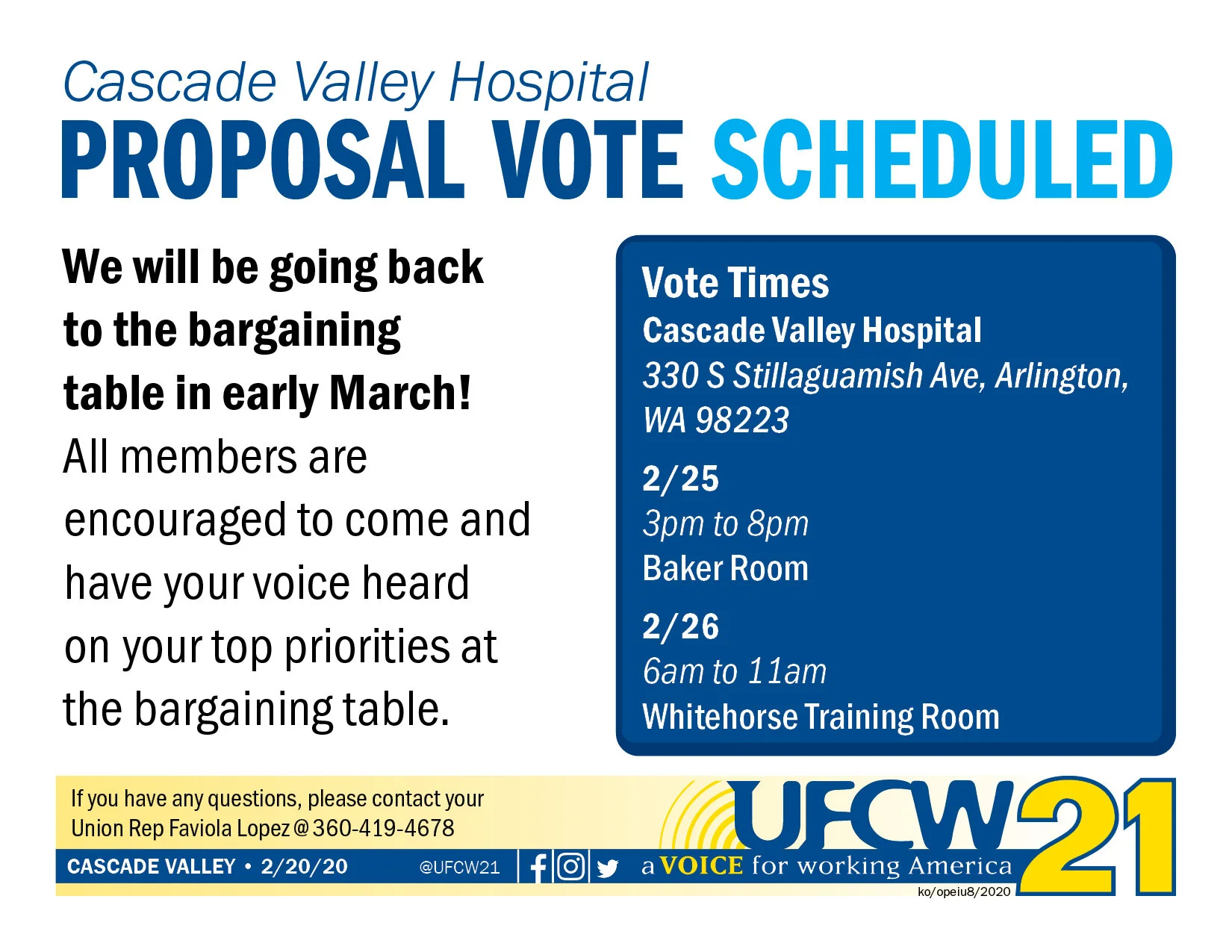
We will be going back to the bargaining table in early March! All members are encouraged to come and have your voice heard on your top priorities at the bargaining table.

Vote Times
Cascade Valley Hospital
330 S Stillaguamish Ave, Arlington, WA 98223

2/25
3pm to 8pm
Baker Room

2/26
6am to 11am
Whitehorse Training Room

Sanders and Medicare for All Could Improve Workers’ Power

Sanders and Medicare for All Could Improve Workers’ Power

Faye Guenther and Sue Wilmot

It is not surprising that a majority of democratic primary voters have identified Health Care as their top issue in the upcoming election. One of the most significant drivers of working people’s economic trouble is health care costs and related stress. This is central to why UFCW 21, the state’s largest private sector union, has endorsed both Medicare for All as well as Senator Bernie Sanders for President.

There are four key reasons why a large union, with many members who have negotiated strong health care plans for themselves, supports Medicare for All.

One: Employers try to get rid of our union-negotiated health plans or increase the costs nearly every time we go into contract negotiations. A few years back, 30,000 Puget Sound-area union grocery store workers nearly went on strike to prevent their employers from cutting health plans for workers and their families. While this was an immense show of worker power and community support, grocery store workers were fighting to keep what we had, not make the proactive improvements we needed. This dynamic is all too common, where health care coverage is a major obstacle during bargaining. Medicare for All would remove that challenge, and we as workers could focus our negotiations on other essential topics, like wages and working conditions.

Two: Linking a worker’s health care to their job, as is often the case for union workers with health care, makes us too dependent on our employer and limits our freedom to move from one job to another. Even now, when there is very low unemployment, worries about losing health care coverage can cause us to stay at one job instead of moving to another that would be better for our career, pay higher wages, or work better with our family’s schedule. Medicare for All would solve that problem.

Three: If all workers had access to quality, affordable health care coverage, independent of their employment, it would remove one of the reasons why workers without a union are fearful about trying to organize one in their workplaces. Why? They wouldn’t have to stress about the very real risk of not being able to afford coverage if their employer retaliated against them for their unionizing efforts. A bully employer might try to intimidate you out of building a union at work, but those threats would no longer concern your family’s access to health care coverage. Medicare for All would provide insurance for everyone as a universal right, as is the case in almost every other nation on earth.

Four: By passing Medicare for All, we would see a national shift in the inflation of health care costs. We at UFCW 21 have shown that a smartly run health plan can avoid the runaway cost increases that have become all too common for many working people. The health plan we have negotiated for tens of thousands of our members has avoided large increases in premiums, out-of-pocket costs, deductibles, prescriptions and other health care costs by negotiating with providers on a massive scale and incentivizing workers to be more invested in their own health. For the economy as a whole, when our nation stops spending hundreds of billions of dollars a year to pay for increasing health care costs that make insurers, health care conglomerates, and drug companies rich, we as a nation will be able to spend those resources on health for the many instead of wealth for the few.

We applaud Senator Sanders and our representative Congresswoman Pramila Jayapal for their long-time support of Medicare for All and feel their records show a commitment to doing this policy right for working people in our country.

###

ABOUT UFCW 21

UFCW 21 is working to build a powerful union that fights for economic, political and social justice in our workplaces and our communities. We represent over 46,000 workers in retail, grocery stores, health care, cannabis, and other industries in Washington State.


Faye Guenther is President of UFCW 21. Sue Wilmot is a long-time UFCW 21 member and workplace leader at Safeway.

Macy’s - Downtown Closure Bargaining Update 2/14/20

Today we met with the employer with our bargaining director in attendance. Macy’s has not moved from their original proposal and has given us their last, best, and final proposal that is less than the Northgate and Everett agreements:

  • Cap on severance at 26 weeks—Northgate/Everett severance was capped at 52 weeks

  • Macy’s is only willing to cover the employer portion of COBRA for 3 months—Macy’s paid 100% of COBRA for 3 months at Northgate/Everett

We’re meeting with our legal team to explore all options to secure a fair severance for the Downtown Macy’s workers.

If you have questions, please contact your union representative, Regan McBride, at 206-436-6579

In Solidarity, your Member Bargaining Team, Susan Hedman, Patrick Keating

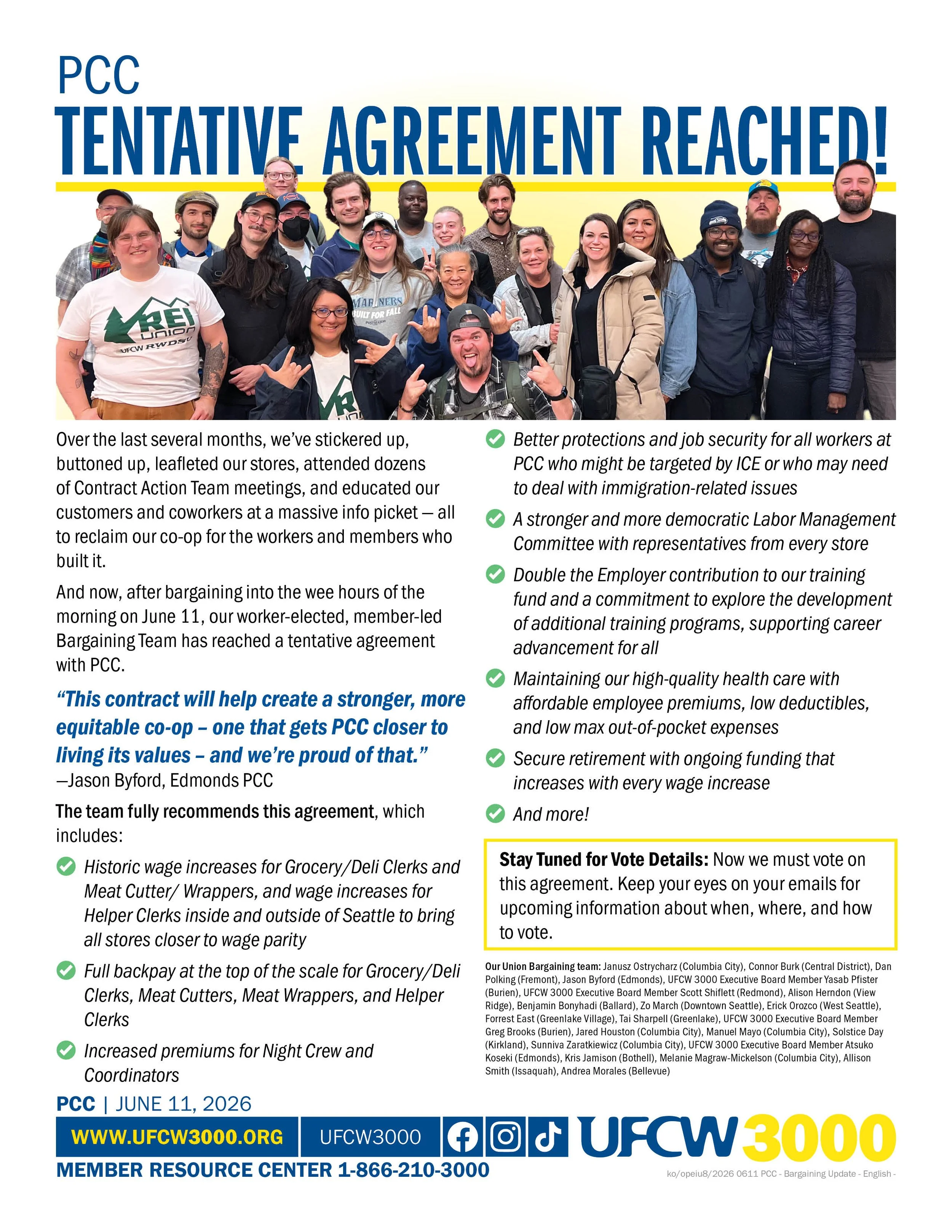
PCC Bargaining Update: Meet our Bargaining Team

On Monday, February 3 our PCC Bargaining Team met together for the first time. From the hundreds of bargaining surveys we received from members to set our bargaining priorities, by a wide margin, members are most concerned with better wages, secure retirement, dependable health care, increasing safety and training in our stores, and raising transparency and worker voices in the governance of PCC as a co-op. As a team we are committed to negotiating a contract we all can be proud of. Our next negotiation sessions will take place in early March. Stay involved, be sure we have your most updated information to stay connected and informed throughout the bargaining process.

Update you Contact Information

The Power of Unity

2020 winter newsletter welcome UNITY vigil.jpg

Our unity is what got us here, we can’t forget that our united strength against the third largest healthcare corporation in the nation is how we will win!

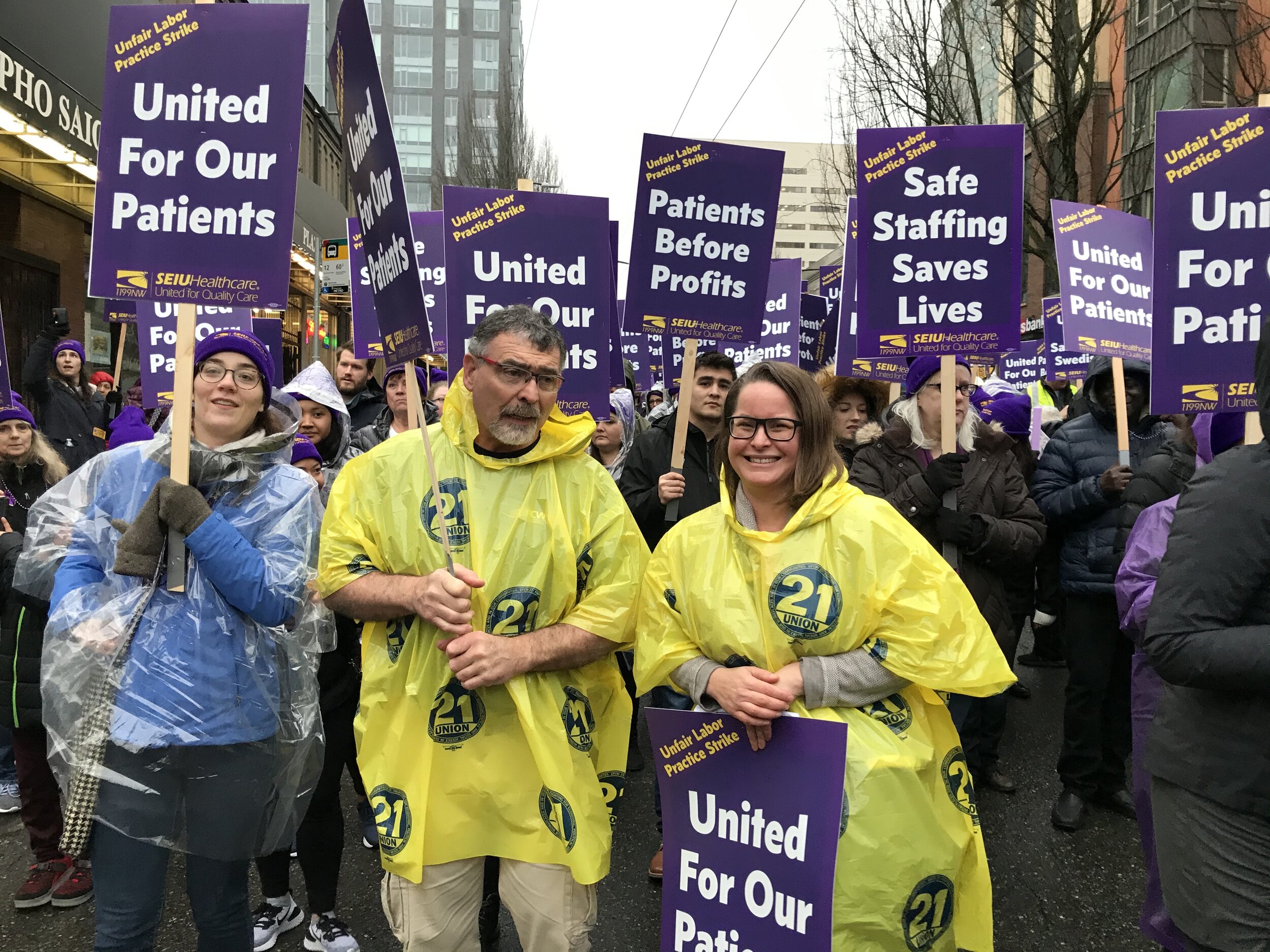
Across the state, health care workers had been in hard negotiations with Providence Health for over a year at some hospitals and were making little headway. At every turn Providence was using intimidation, surveillance, unlawful polling, and threatening lockouts against health care workers. Progress at the bargaining table was also frustrating: Providence proposals failed to adequately address safety, staffing and other workplace concerns raised by employees. At the same time, they continued to insist on a massive takeaway of hard-earned benefits that some workers have been earning for decades. Jose Hernandez, a member of UFCW 21, summed up many workers’ frustration: “As an Emergency Room Assistant at Sacred Heart, I see patients and their families in times of greatest need. They are counting on Providence to provide the highest quality care, but too often Providence is putting profits first. I am ready to strike for my patients and ensure their health is always our top priority.”

15,000 health care workers from UFCW 21, WSNA, and SEIU Healthcare 1199, the state’s largest unions at Providence knew that by standing together and acting in coordination we could stand up to Providence. The three unions, for the first time ever, signed a historic unity commitment, a pledge to stand as one in coordination and solidarity. Workers of all three unions voted in overwhelming numbers to authorize a strike and started joint actions across the state with the support of our community partners, neighbors, patients, and elected leaders. Our coalition fight for a fair contract at Providence was even picked up by national presidential candidates and news outlets across the state and country.

Our unity paid off; hours before our planned 10-day notice to strike, Providence agreed to take their drastic cuts off the table—creating a pathway to win strong contracts at all of our Providence locations. We will continue to stand with our partners until we all win strong contracts at Providence and we remain committed to building strong coalitions with SEIU and WSNA—and throughout the labor movement—to fight for stronger jobs and communities. We showed that through unity, and a commitment to our patients and each other that we could win a fair contract that is better for patient care and safety, better for staffing and better for the future of our hospitals.

UFCW 21 scholarships still available!

2020 winter newsletter welcome Scholarship Applications.jpg

scholarships available

Full-time Student Scholarships: $2,000
Health Care Profession Scholarships: $3,000
Four-Year Scholarship of $4,000/year for 4 years
First in Family Scholarships: $2,000
Marilyn Savage, RN Memorial Scholarship: $3,000

Application Deadline: March 6, 2020

Apply now!

The community remembers Dr. Martin Luther King Jr.

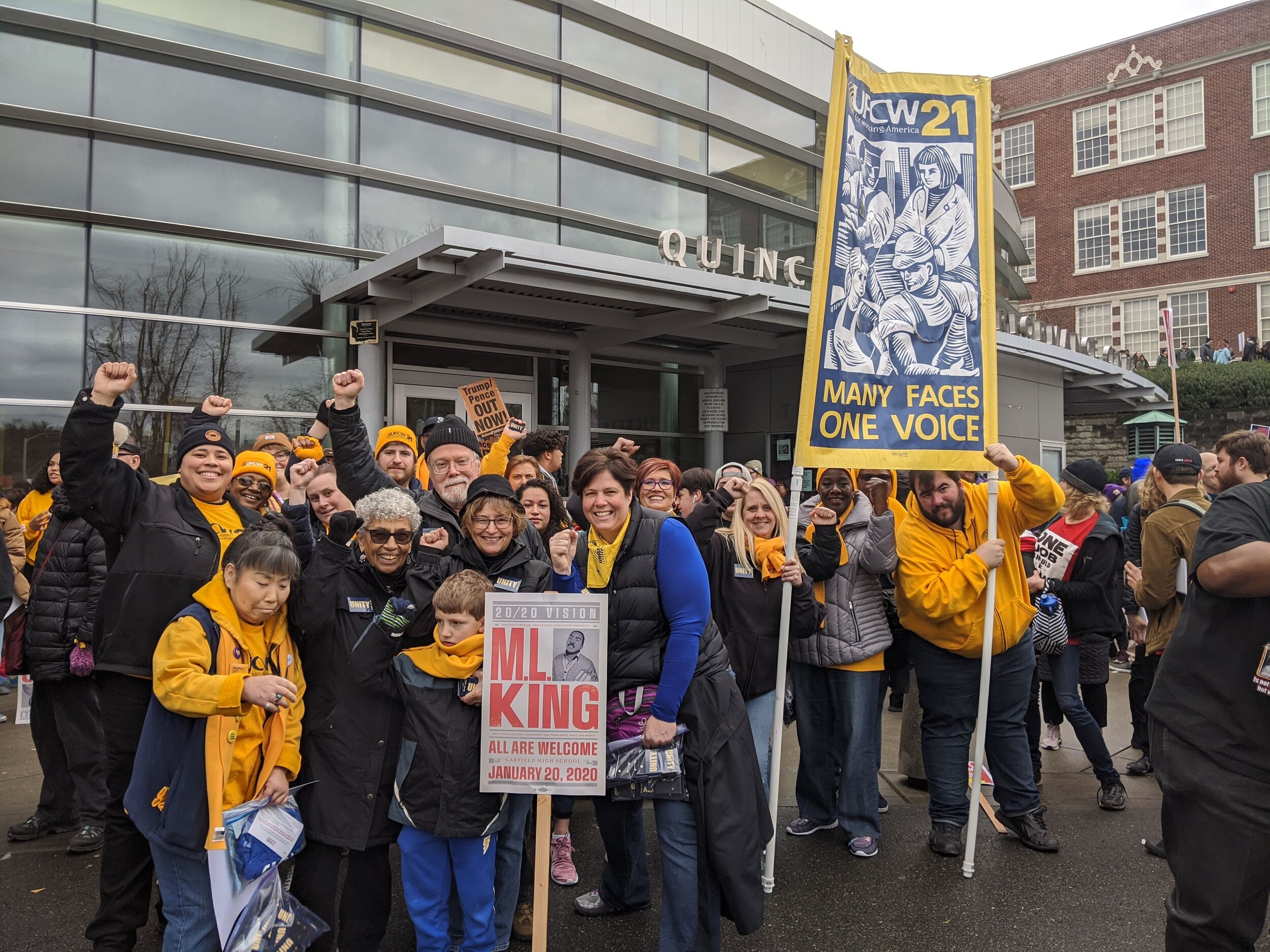
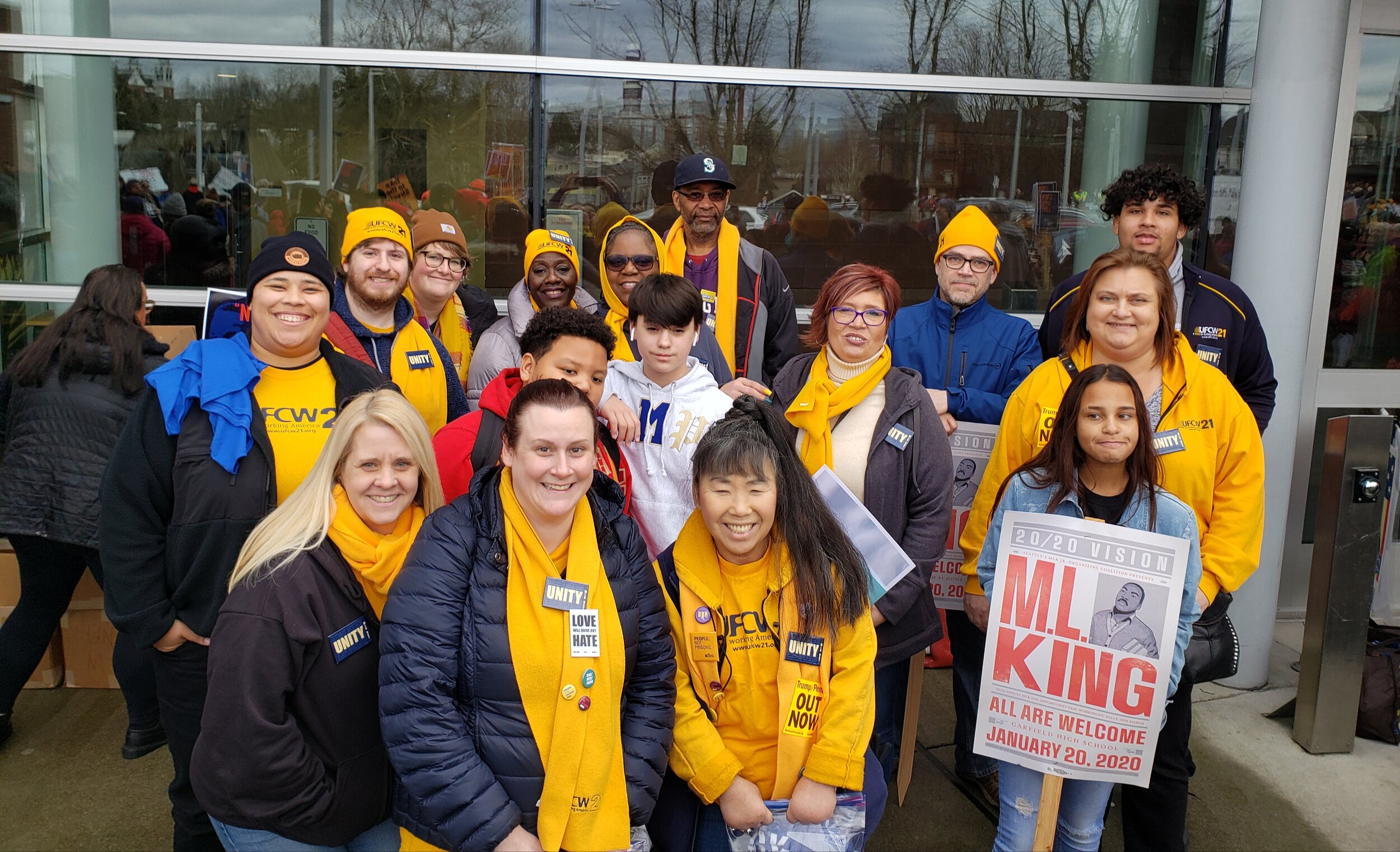
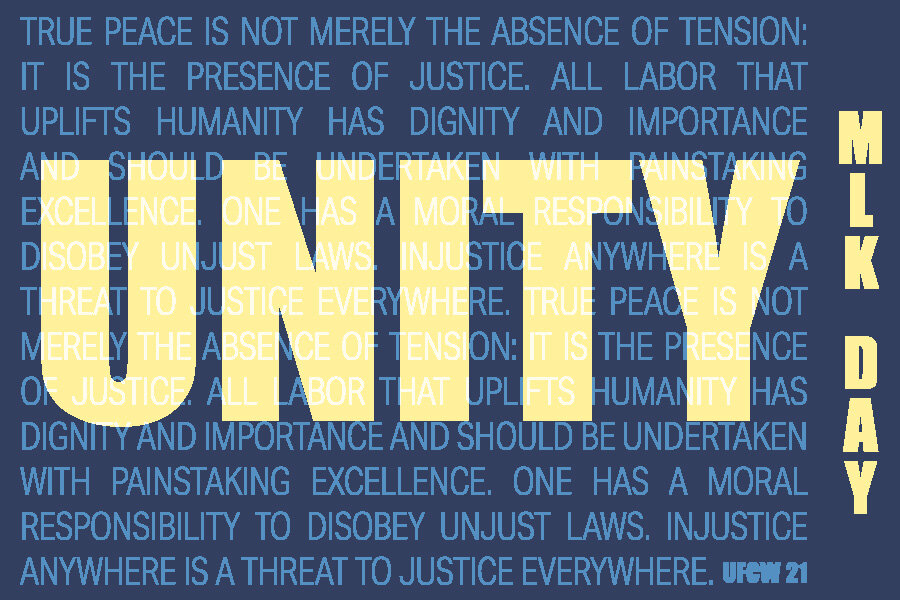
The community remembers Dr. Martin Luther King Jr. on January 20, 2020, as families and friends unite and rally in Seattle’s Central District. Dr. King’s courage to stand up against oppression and resist hate through nonviolent direct action was his legacy that will continue to live on for generations to come. If you would like a commemorative button in honor of Dr. King, please contact your Union Rep.