
PRESS RELEASE: Kroger to Close Two Additional Fred Meyer Stores in Puget Sound Region

*** FOR IMMEDIATE RELEASE ***

August 19, 2025
Kroger to Close Two Additional Fred Meyer Stores in Puget Sound Region
Contact: Rich Smith, UFCW 3000 Communications Director
rsmith@ufcw3000.org / 816-289-4520

No, this is not the same press release our union issued yesterday.

Kroger, the Ohio-based corporation that owns QFC and Fred Meyer, plans permanently to close two additional Fred Meyer stores in the Puget Sound region on October 17 and 18, affecting 343 workers.

The stores currently serve Lake City (13000 Lake City Way NE; 175 workers affected) and Redmond (17667 NE 76th St; 168 workers affected).

The company claims that those facilities represent some of the region’s lowest performers in terms of sales.

Today's announcement comes one day after the corporation announced plans to close Fred Meyer locations in Kent and Everett. All told, the closure of these four stores affects 703 workers.

In July, the company also announced plans to close a Tacoma Fred Meyer and the Mill Creek QFC. The announcement today raises the number of Kroger-store closures in our region to six.

We will sit down with the company to bargain over these changes in the coming days.

Our union contracts stipulate that Kroger must offer workers placement in equivalent positions at nearby stores, in accordance with their union seniority.

These closures apparently align with Kroger’s plan to shutter stores in low-sales areas and open stores in potentially high-sales areas, with new Kroger stores scheduled to open in 2026.

This strategy raises serious concerns about food access for working class communities. Three out of the four stores Kroger plans to close are located in zip codes with incomes that rank below their respective county’s household median income.

“In this era of mass consolidation, many of the workers we represent have come to expect this kind of callous, out-of-touch corporate management style from Kroger, but staggering store closure announcements that impact hundreds of workers and thousands of our neighbors over the course of two days is really something else,” said Faye Guenther, UFCW 3000 President.

She added: “Kroger’s closures put profit over people, plain and simple. This corporate strategy might please Wall Street investors, but we know it’ll create food deserts in our neighborhoods and disrupt the lives of hundreds of workers already displaced by a housing affordability crisis now ten years in the making. Without a doubt, these issues will lead our agenda when we return to the table with Kroger and Albertsons in 2027. In the meantime, our union strongly encourages elected leaders to prioritize policies that increase access to fresh, affordable food for all.”

In response to statements from Kroger attributing closures to crime, Bryan Gilderoy, a produce clerk who has worked at the Fred Meyer in Kent for 15 years, said: “From what I can tell in the store, crime has calmed down since COVID. Kroger added security after we demanded it, and things have gotten way better. As a matter of fact, a regular customer came in just yesterday and told me she comes to this store because she feels safest here.”

Washington State Governor Bob Ferguson said, “My office is watching this closely. The closure of six grocery stores in the Puget Sound region creates a lot of uncertainty for the workers and communities who depend on these stores to feed their families. In the coming months, we will be talking to workers and communities about their needs and build on the work we've been doing to make housing and food more affordable in Washington.”

Seattle Congresswoman Pramila Jayapal said, “Food deserts aren’t a natural phenomenon—giant grocery store corporations create them when they put their bottom lines over the health and well-being of our communities and workers. Closing stores will put people out of work and make it harder for families to put food on the table – all for the benefit of corporate shareholders and even as CEOs take home millions in pay every single year. I founded the Monopoly Buster’s Caucus in Congress to fight back against this exact kind of treatment of working-class people – consumers and workers – and we’ll be fighting to ensure that everyone has access to quality, affordable food.”

Background

On a June 20, 2025 earnings call, Kroger Interim CEO Ronald Sargent explained the context of the closures this way: “Unfortunately, today, not all of our stores are delivering the sustainable results we need. It's also important to note we paused our annual store review during the merger process ... We usually evaluate individual store performance on an annual basis, and we continue to do that, but we deferred closing any stores due to the merger process.”

Between 2022 and 2024, Kroger spent more than $1 billion in an attempt to merge with Albertsons, which owns Safeway and Haggen, among other banners.

After UFCW 3000 grocery store workers launched a campaign to stop that merger, judges blocked the $25 billion deal in December of 2024. That same month, Kroger announced $7.5 billion in stock buybacks.

Following the failed merger, C&S Wholesalers sued Kroger, claiming Kroger owed the company $125 million. Kroger settled that suit last week on August 11, 2025.

In 2024, Kroger saw a 77% higher net income and 63% higher operating income than they did in 2019, according to company filings (London Stock Exchange Group).

After authorizing a strike in June of 2025, this July grocery store workers in the Puget Sound region ratified a new contract that won first-in-the-nation language to address staffing issues, secured our union healthcare and pensions, and gained some of the largest average annual wage increases we have seen.

UFCW 3000 is the largest private-sector union in Washington State, representing more than 55,000 workers in grocery, healthcare, cannabis, retail, food packing and processing, and textiles and laundry, among other industries. We represent nearly 30,000 grocery workers in Washington, eastern Oregon, and north Idaho.

Puget Sound Allied Grocery Stores - Haggen Meat - Tentative Agreement Reached—Contract Vote Time Scheduled!

Attend and Vote! MEMBERS OF THE BARGAINING TEAM RECOMMENDED A YES VOTE!

Your vote is important. During this vote we will be voting on contract ratification and taking strike authorization. It is your decision if we ratify the contract or prepare for strike. Your bargaining team is recommending YES to ratify the contract and NO to strike.

After months of leafleting, info-picketing, and petition-signing, our bargaining team harnessed the power of thousands of grocery and meat workers to fight and win a fair contract. All that organizing helped win:

  • First-of-its-kind staffing language

  • Strong Journey wage increases

  • Health and pension funding that sees no benefit cuts

  • Contract alignment with Snohomish Grocery and Spokane-area grocery/meat, uniting nearly 30,000 grocery workers across Washington State in a unified fight

From June 12 to 15, our team bargained for nearly 60 hours straight, fighting down to the last nickel.

Some other highlights include:

  • Training Up: Major investment in a Meat Apprenticeship WeTrain program to help strengthen our industry for years to come

  • Premium Increases: Doubling the Meat Manager pay from $1 above Journey to $2 above Journey, the first increase to manager pay in years

  • Largest Journey Increase: Largest average increase to our Journey wages over the contract we have ever won

Our union member bargaining team reached a Tentative Agreement and recommends a YES vote to accept the proposal from the employers.

"We're fired up to return to the table sooner than ever—and this time with thousands more workers with us"

— Kyle Doherty, Haggen Meat

These votes are open to all active members of UFCW 3000 Haggen Meat in King County.

Members in good standing are eligible to vote at the following location and date.

Contract Ratification Vote

  • Friday, August 22, 2025

  • 9:00 AM - 3:00 PM

  • Haggen Woodinville: Breakroom

  • 17641 Garden Way NE, Woodinville, WA 98072

For questions, please contact your Union Representative, bargaining team members, and stewards for updates. If you are unable to connect with your union rep, steward, or bargaining team member you may call the MRC at 1-866-210-3000 for more information.

Puget Sound Allied Grocery Stores: Camano Island Meat Contract Vote Scheduled!

Puget Sound Allied Grocery Stores: Camano Island Meat Contract Vote Scheduled!

After months of leafleting, info-picketing, petition-signing, and winning a 97% strike authorization vote, our bargaining team harnessed the power of thousands of grocery and meat workers to fight and win a fair contract. All that organizing helped win: 

Read More

UFCW 3000 Member Speaks Out: “Our Communities Benefit When People Are Fed and Healthy”

UFCW 3000 Member Speaks Out: “Our Communities Benefit When People Are Fed and Healthy”

Earlier this month, UFCW 3000 member Richard Talbot, a grocery worker at Fred Meyer #25 in Bellingham, joined Washington Congresswoman Suzan DelBene and a group of SNAP recipients, food bank staff, educators, and community advocates at the Arlington Community Food Bank to talk about the devastating cuts to nutrition assistance in the so-called “Big Beautiful Bill” (BBB).

Read More

Puget Sound Allied Grocery Stores Contract Ratified!

Puget Sound Allied Grocery Stores Contract Ratified!

Just a few weeks ago, we voted overwhelmingly to authorize a strike. The success of that vote armed our member-led bargaining team with the power to win an agreement that fixed the low-ball, takeaway offer from Kroger and Albertsons that prompted the strike vote in the first place.

Read More

Puget Sound Allied Grocery Stores Tentative Agreement Reached—vote times scheduled!

Puget Sound Allied Grocery Stores Tentative Agreement Reached—vote times scheduled!

Our union member bargaining team reached a Tentative Agreement and recommends a YES vote to accept the proposal from the employers.

“This is the ninth time I’ve sat at this table—this contract allows us to majorly build our power in the region” —Jeff Smith, Fred Meyer GM

Read More

Puget Sound Allied Grocery Stores We Reached a Tentative Agreement

Puget Sound Allied Grocery Stores We Reached a Tentative Agreement

This tentative agreement pioneers new staffing language, establishes first-ever staffing programs at our stores, secures strong wage increases, fully funds our healthcare plan with no benefit cuts, provides a pension we can count on, adds a major investment into our apprenticeship and training fund, and significantly boosts our bargaining power in the region and in the western U.S.

Read More

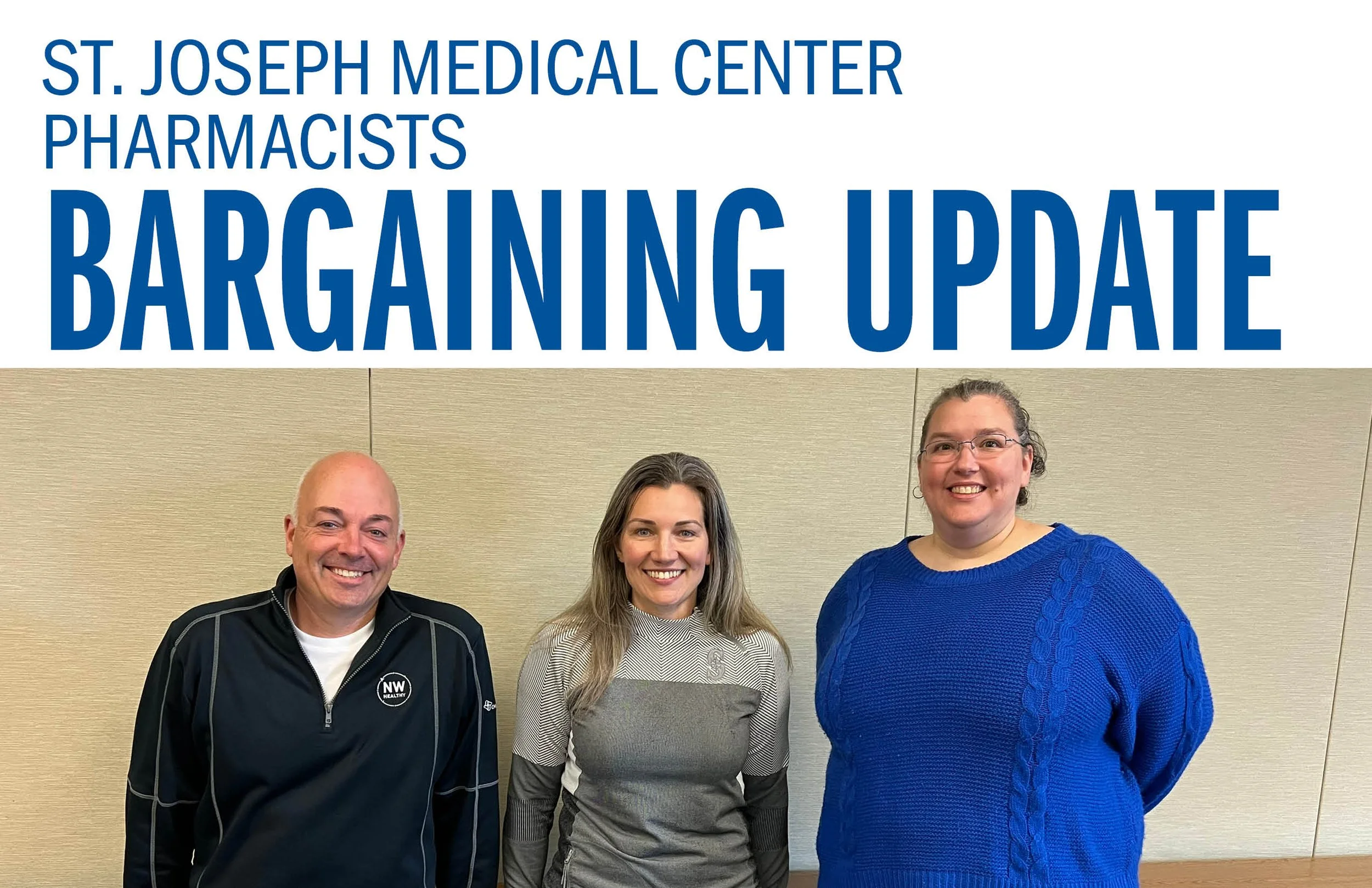
Puget Sound Allied Grocery Stores - Puget Sound Grocery Store Workers Overwhelmingly Reject Contract, Approve Strike!

After three days of voting across the Puget Sound area, grocery store workers at Fred Meyer, QFC, Albertsons, Safeway, Haggen and Saars voted to reject the latest contract and to authorize a strike by over 97%.

Our union’s overwhelming support for a strike should serve as a wake-up call to these corporations as we continue to fight for better wages, better staffing, and better stores. As these results show, we’re past tired of waiting.

"Corporate is about to have 60,000 problems on its hands,"

— Kevin Flynn, Marysville Albertsons, referencing the workers impacted by strike authorization votes taking place in Colorado and Southern California this week.

Our member-led bargaining team returns to the table late next week, June 12 and 13.

Now is the time to prepare for a strike.

Review your budget and look for ways to save.
Contact your steward or union rep and learn how to become a strike captain.
• Keep your eyes peeled for strike schedules and W9s to make sure you qualify for strike benefits.

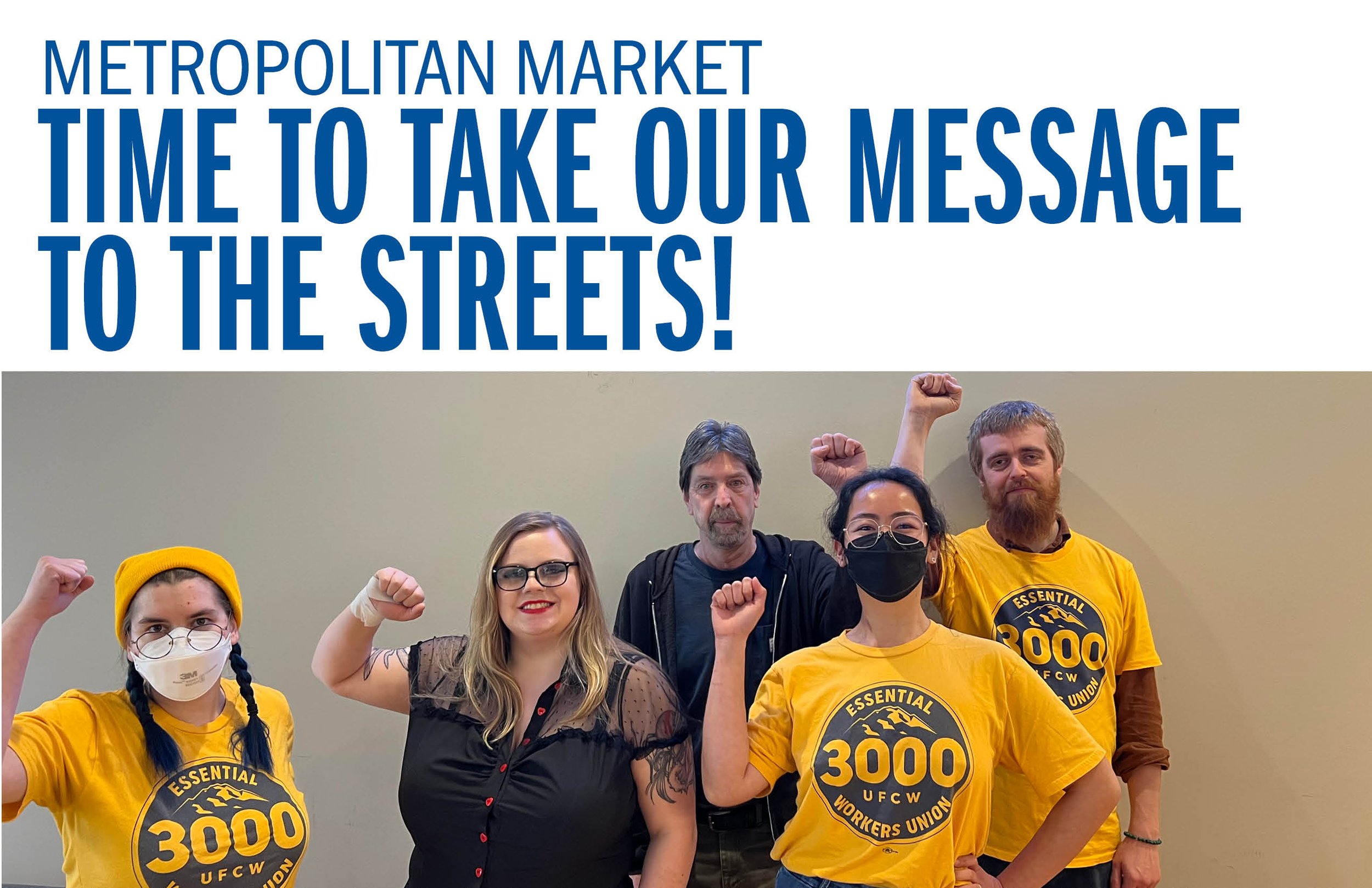
Teamsters 38 & UFCW 3000 Fred Meyer General Merchandise, Town & Country, Metropolitan Market and All Stores Under Interim Agreements We Stand in Solidarity

Teamsters 38 & UFCW 3000 Fred Meyer General Merchandise, Town & Country, Metropolitan Market and All Stores Under Interim Agreements We Stand in Solidarity

Though some of our contracts don’t expire until later this year— including those of us in Fred Meyer GM and in Teamsters 38— and though many of us are covered under interim agreements, our fellow grocery workers at Kroger and Albertsons will take strike authorization votes following a disappointing final bargaining session with the employers from May 19 to 21.

Read More

Puget Sound Allied Grocery Stores Vote YES to Authorize a Strike & NO on a Bad Contract!

Puget Sound Allied Grocery Stores Vote YES to Authorize a Strike & NO on a Bad Contract!

As the time to reach a deal came down to the wire, the companies acted with no urgency. They made our team wait for hours between proposals, and when they did pass something back, they only moved an inch here and there. Their posture at the table spoke volumes: They don’t value our work, and they don’t think we’re ready to fight for what we deserve. We’re happy to prove them wrong.

Our bargaining team unanimously recommends a NO vote on the contract and a YES vote to authorize a strike so corporate knows they can’t push us around.

Read More

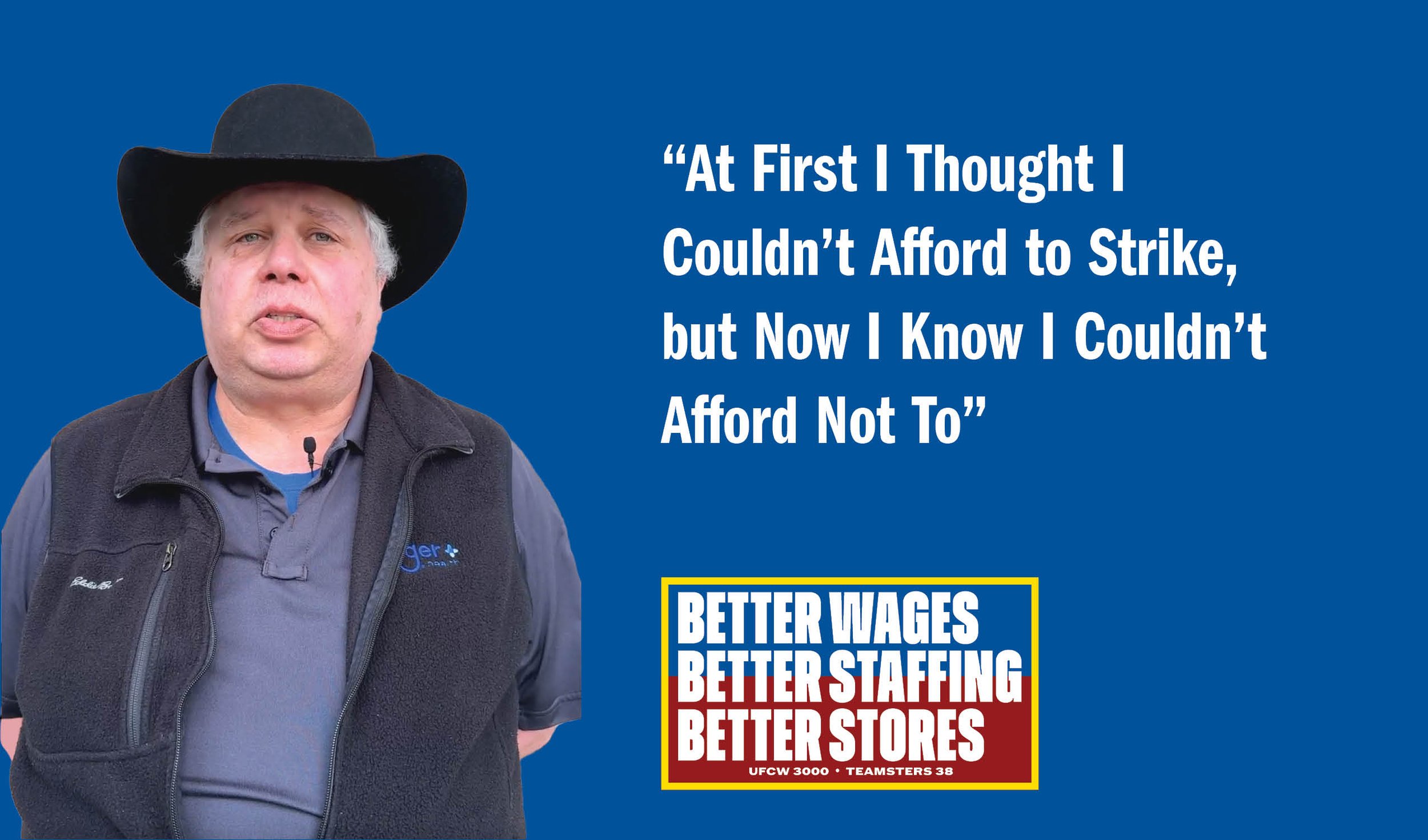
At First I Thought I Couldn’t Afford to Strike, but Now I Know I Couldn’t Afford Not To


Bargaining Team Member Todd Heuer on a Background of UFCW 3000 Blue with the quote “At First I Thought I Couldn’t Afford to Strike, but Now I Know I Couldn’t Afford Not To” in white and “The Better wages, Better Staffing, Better Stores” logo in the bottom right corner

By Todd Heuer

When you’re living paycheck to paycheck, the word “strike” can send chills down your spine. You can’t even afford to pay rent and put food on the table—how can you even think about not working?

At this point, I’ve worked at Fred Meyer for 17 years. I’m a vice president on the executive board for UFCW 3000, and I’m sitting across the table from Kroger and Albertsons on the bargaining team right now.

I support doing whatever we can do as a union – up to and including a strike – to get the contract we deserve. But I wasn’t always like that.

Back when I first got the job, the word “strike” scared the hell out of me.

Like many of my co-workers, I was working part-time, couldn’t afford the rent, and was weeks away from eviction. At that time, I felt like I couldn’t support a strike in good conscience.

But then I started talking to other workers about it.

My co-workers told me the union has a strike fund that pays benefits out to workers who walk the picket lines, helping us support ourselves and our families.

On my way into the store one morning, I was chatting with a bus driver, and he said their union and others would stand with us and support our strike.

Then I talked to the truck drivers, and they said they wouldn’t deliver food to striking stores. How long could the CEOs keep the stores open when the supply lines dry up?

Then I talked to customers, and many of them said they’d honor our line. Because – look, we all know this – the customers don’t keep coming back because they want to fatten corporate pockets – they keep coming back because of the customer service we provide.

But we can’t provide that customer service if the bosses run skeleton crews, cut pay, gut health care, and fire people for no reason.  

Without a strike-ready union, that’s our future.

As a matter of fact, at a bargaining session last month, Kroger and Albertsons proposed a pay and benefit package that would have amounted to a pay cut and worse health care.

But with a strike-ready union, we can fight back.

Join me and our bargaining team and thousands of other grocery store workers, sign the strike pledge, become a strike captain, and support your coworkers in our fight  for us all to have a better life.