Grocery Store Worker Contract Negotiations Update

Contract Action Team meetings will be held the last week of March. RSVP to a CAT meeting today by contacting your Rep or workplace leader.

The next telephone town hall call is scheduled for Monday, March 21 at 5PM. We will discuss our plan to win better pay, safety and respect on the job. If you do not receive a call Monday at 5pm you can join the town hall call by calling 888-652-0386 and entering the meeting ID 6691.

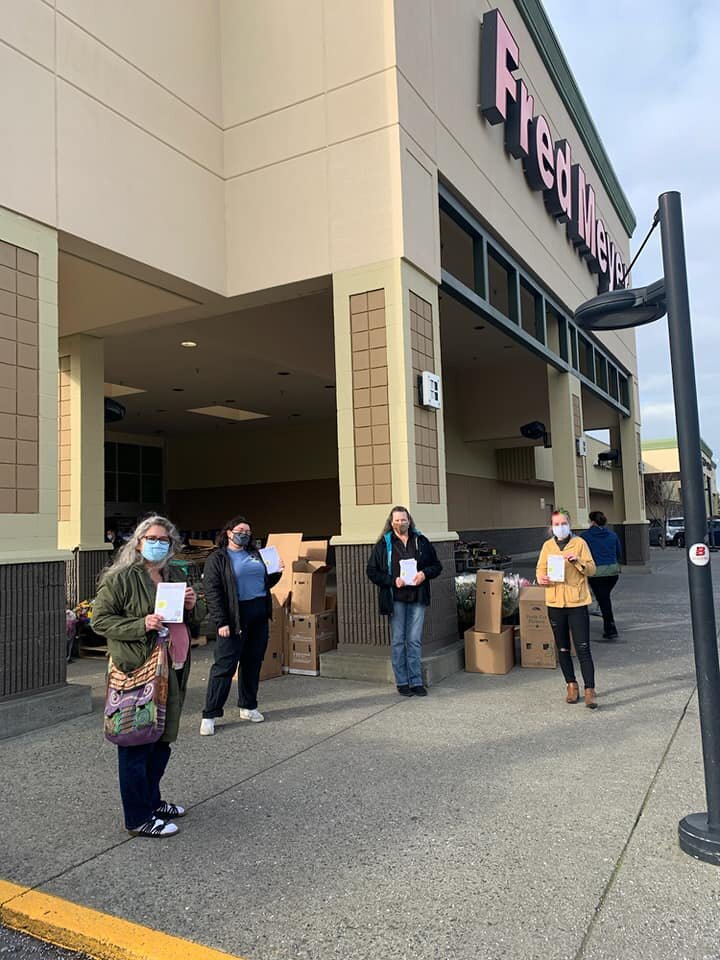
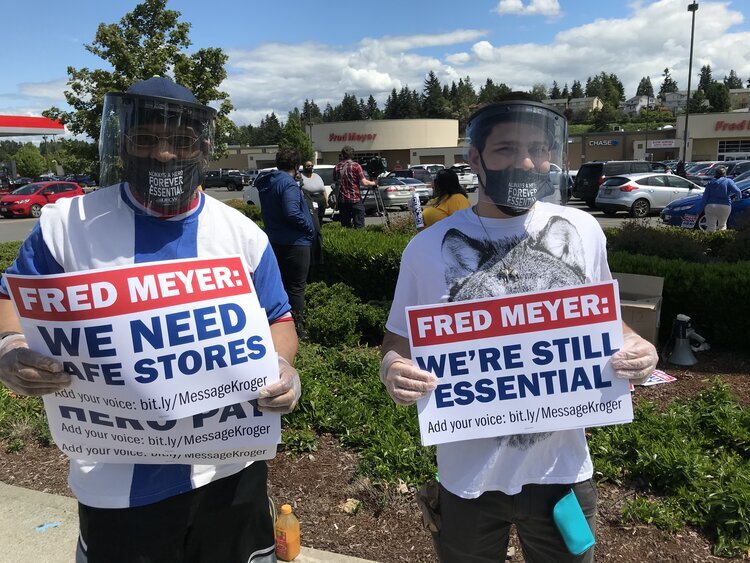
We continue to sign strike pledge cards and remain committed to taking action to win a good contract by leafleting customers outside stores and asking them to support workers in the upcoming bargain. If you would like to organize an action at your store, contact your union Rep!

Southern California Locals are scheduled to take Unfair Labor Practice (ULP) Strike Authorization Votes next week. Our worker-led Bargaining Committee will meet with the Employers April 4-8.

How you can help in the fight for a good contract:

Grocery Store Worker Contract Negotiations Update

UFCW 3000 grocery negotiations update

Our worker-led union Bargaining Committee met on March 8 to discuss and finalize our initial proposal. They then spent the remainder of the day in stores asking members to sign the Strike Pledge Card. We have secured bargaining dates with the employers for April 4-8. The next round of Contract Action Team meetings will be held in the last week of March.  

Join our next Telephone Phone Town Hall call on scheduled for March 21, where we will discuss our plan to win better pay, safety and respect on the job. 

Members continue to sign Strike Pledge Cards, committing to do whatever it takes to win a good contract.  

How you can help in the fight for a good contract:  

Our Bargaining Team meets to discuss bargaining priorities!

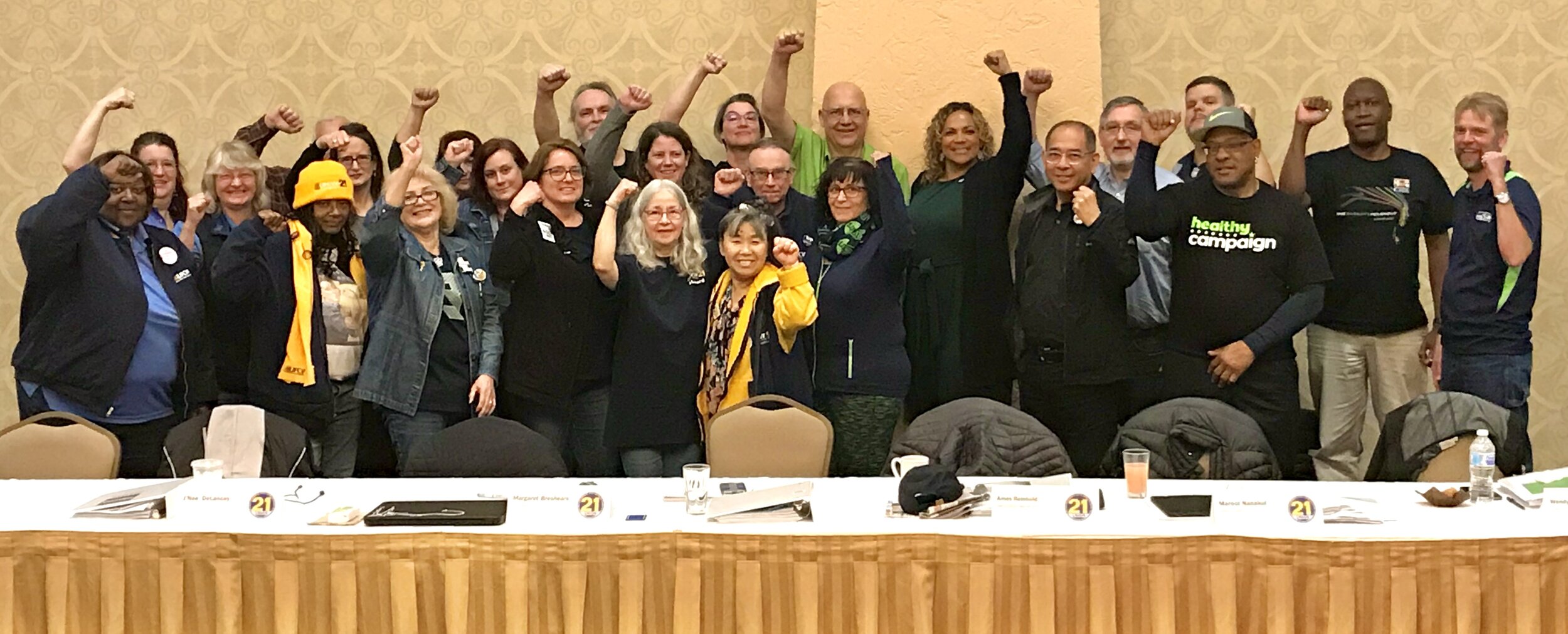
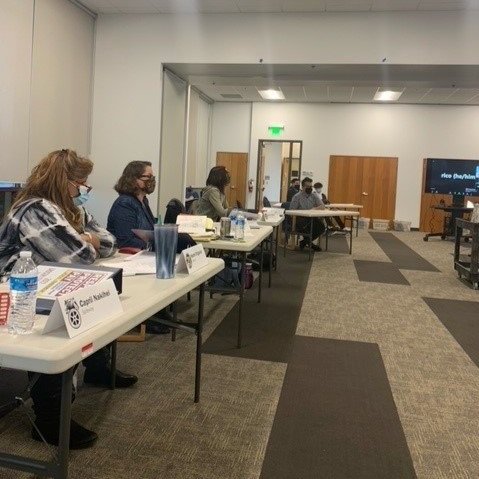
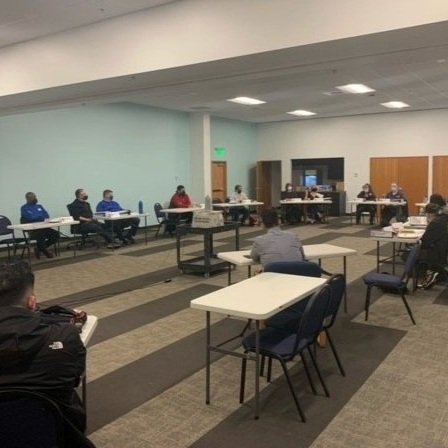
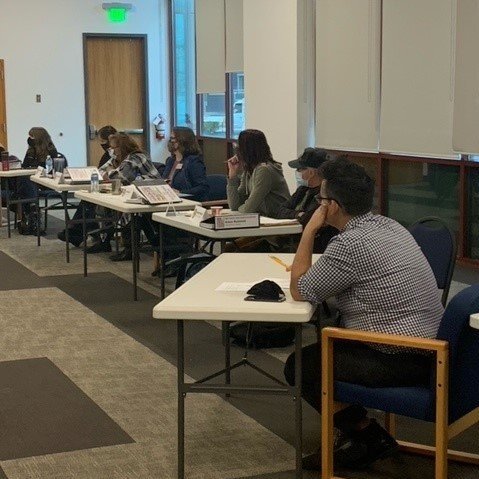
Our Bargaining Team met yesterday in person to discuss the path forward for a strong, successful, and united grocery store negotiation and further develop our initial bargaining proposals. In the room was a diverse group of members from different job classes, work locations, employers, and backgrounds. Our team is hands on and experienced, they understand the importance and gravity of the issues we all face and how we are stronger when we work together.

Our union Bargaining Team continued to focus on the priorities identified by thousands of members in the bargaining survey while they worked on our initial bargaining proposals. At the top of our discussions were wage increases―especially for those at the top of the scale, safety, staffing and scheduling, and how we can lift essential grocery store workers up through our contract negotiations. Top priorities include:

  • Win higher wages, especially at the top of our pay scales

  • Create more equity in pay between departments

  • Protect our high-quality, low-cost health care plan

  • Keep our pension funded and secure

  • Improve store safety and training

  • Improve recruitment and retention so we have the proper staff to help us get the work done

In 2019, successful contract negotiations resulted in the largest wage increases in our union’s history, improved safety language, stronger scheduling language, new workforce development and training language, maintained our health care benefits with no increase in costs, and perhaps the biggest win of all: secured and improved our retirement pension.

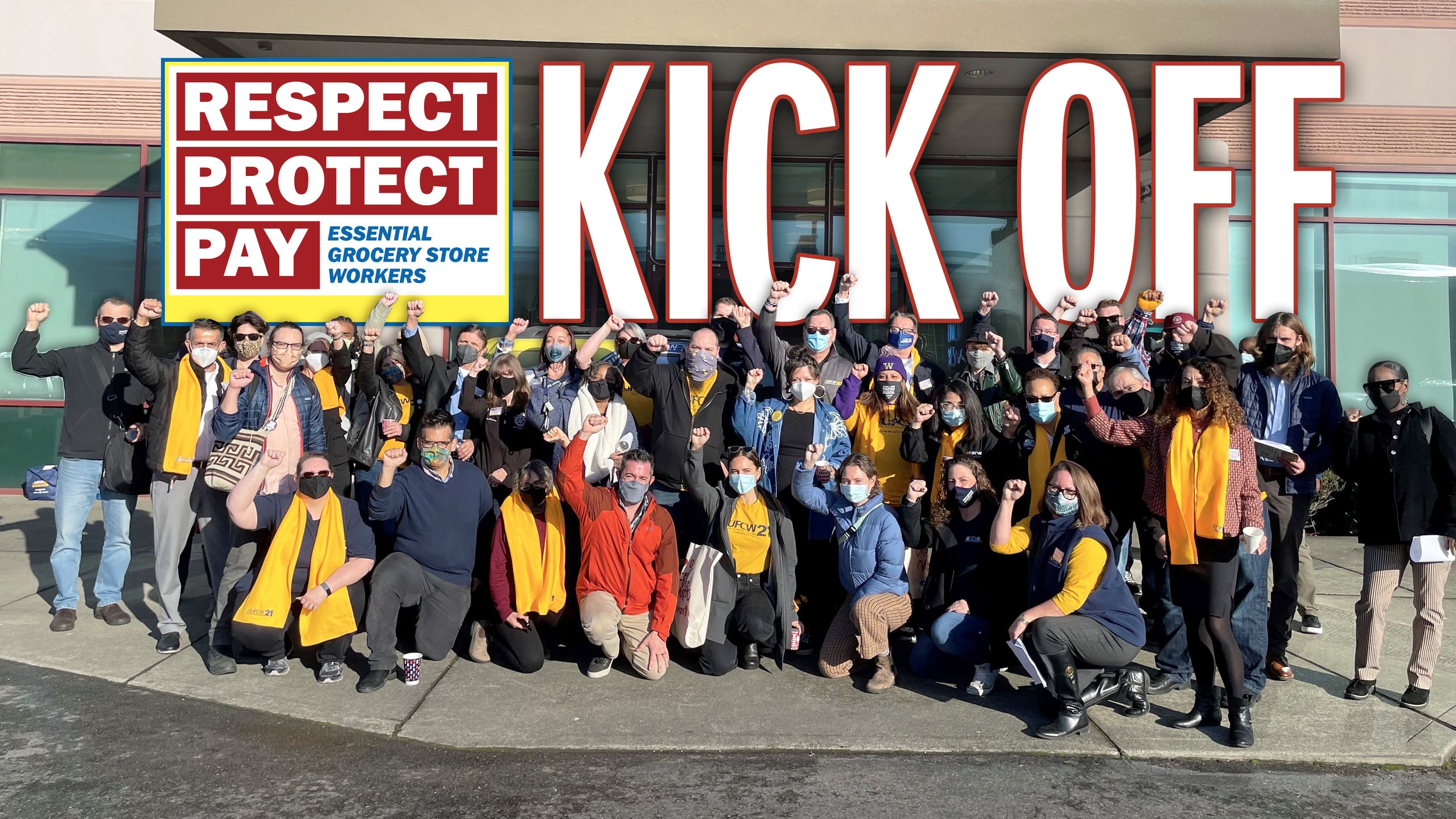
Thank you everyone for participating in an amazing bargaining kick-off! 

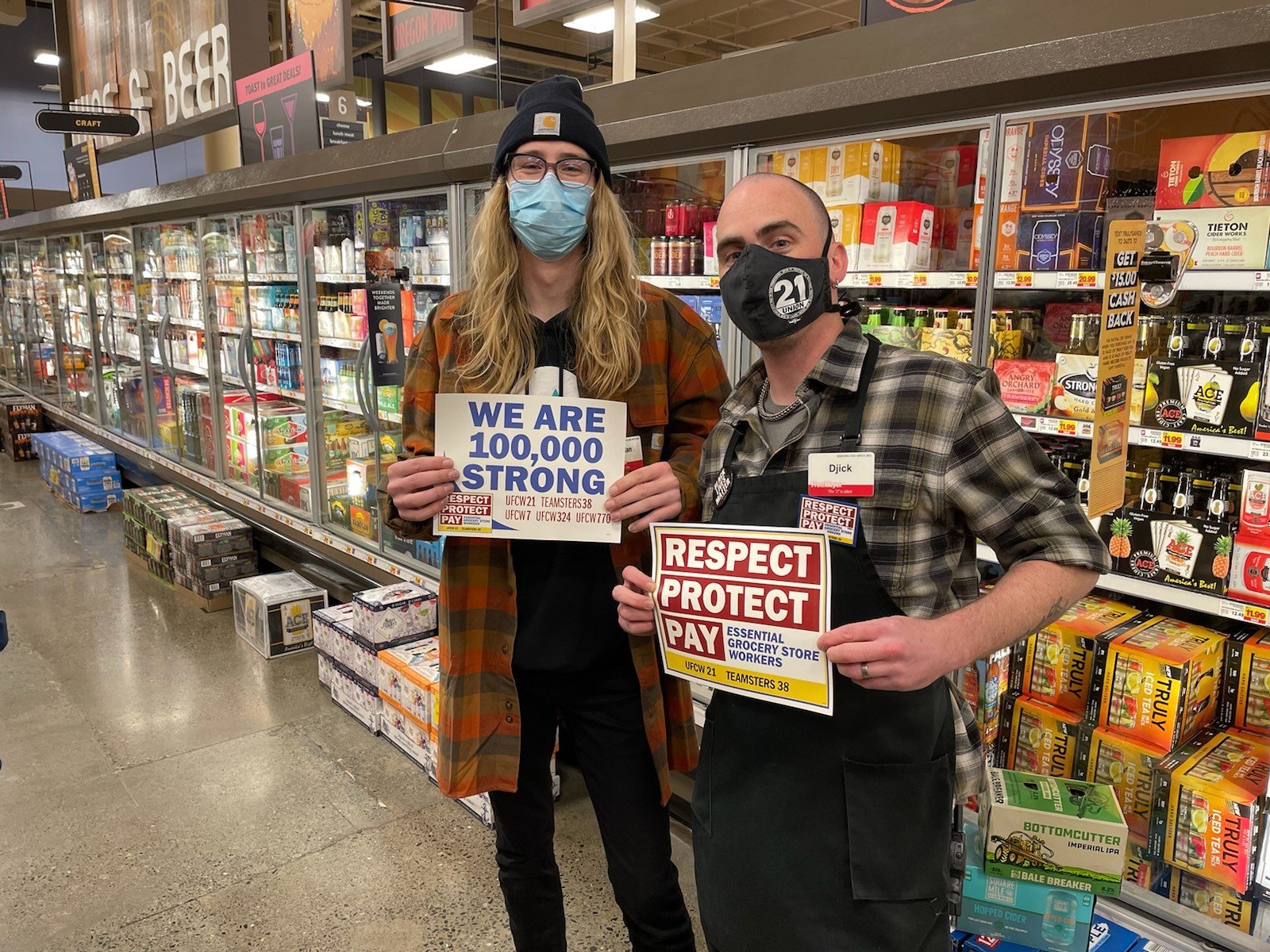
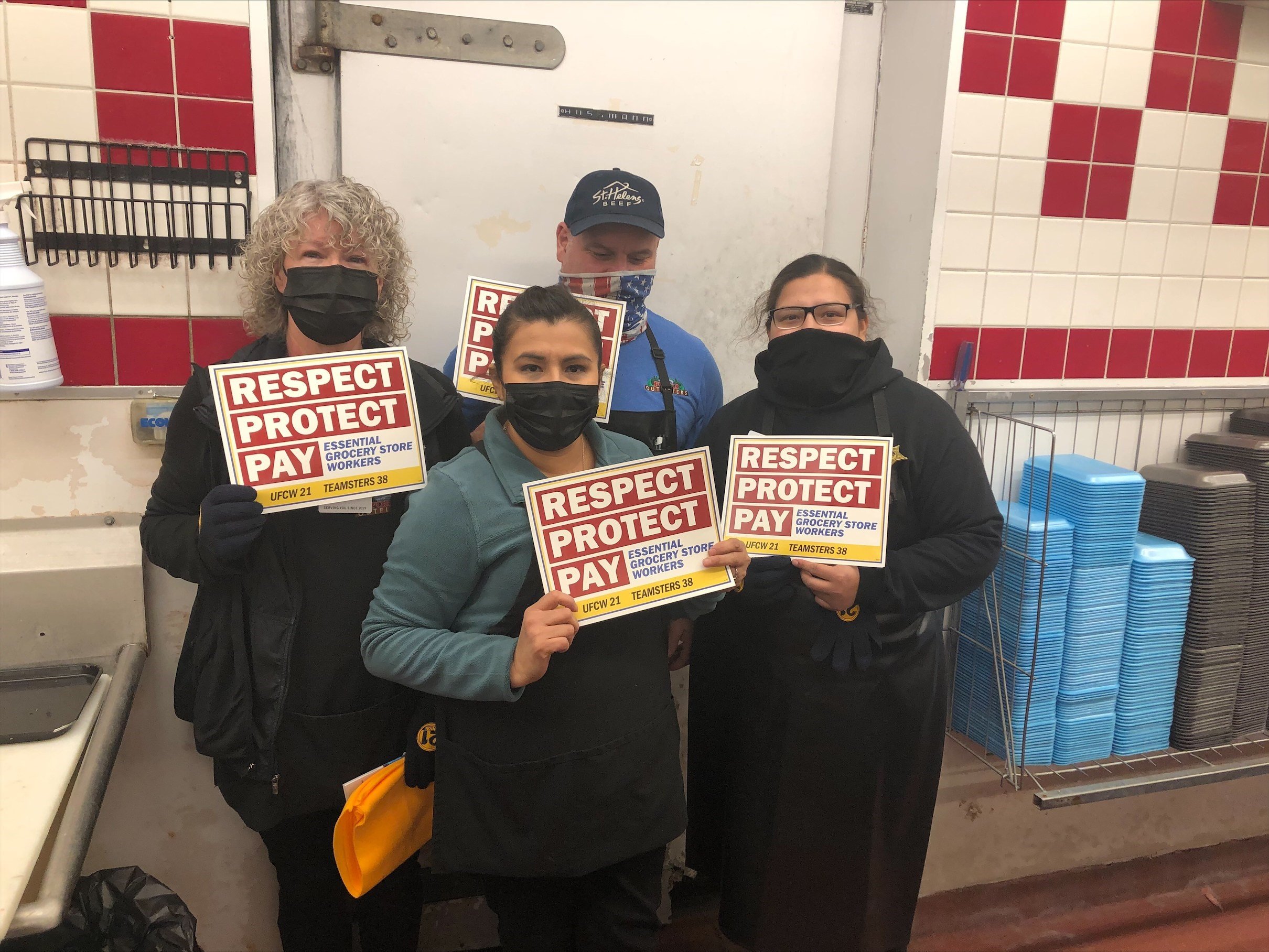
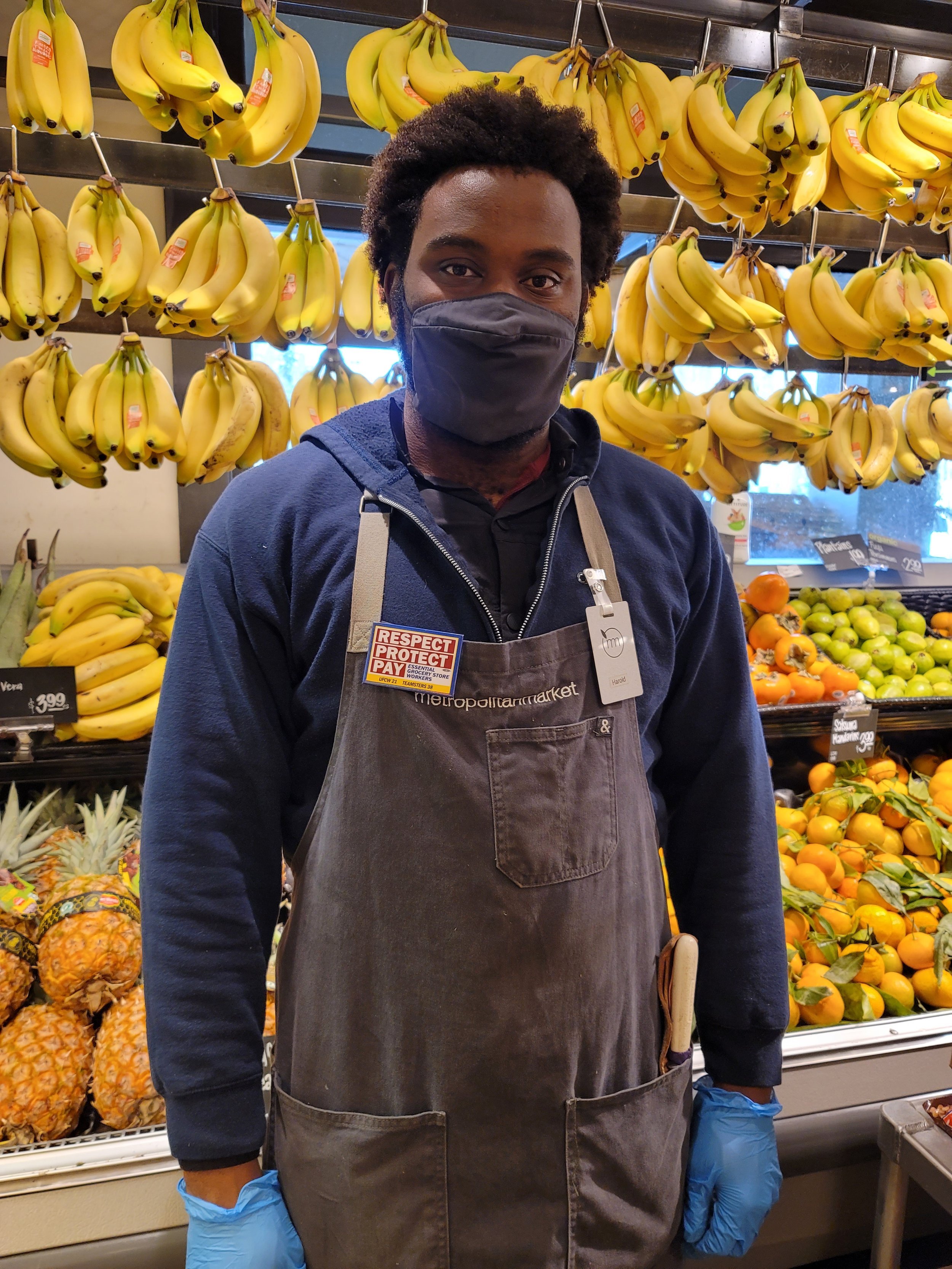
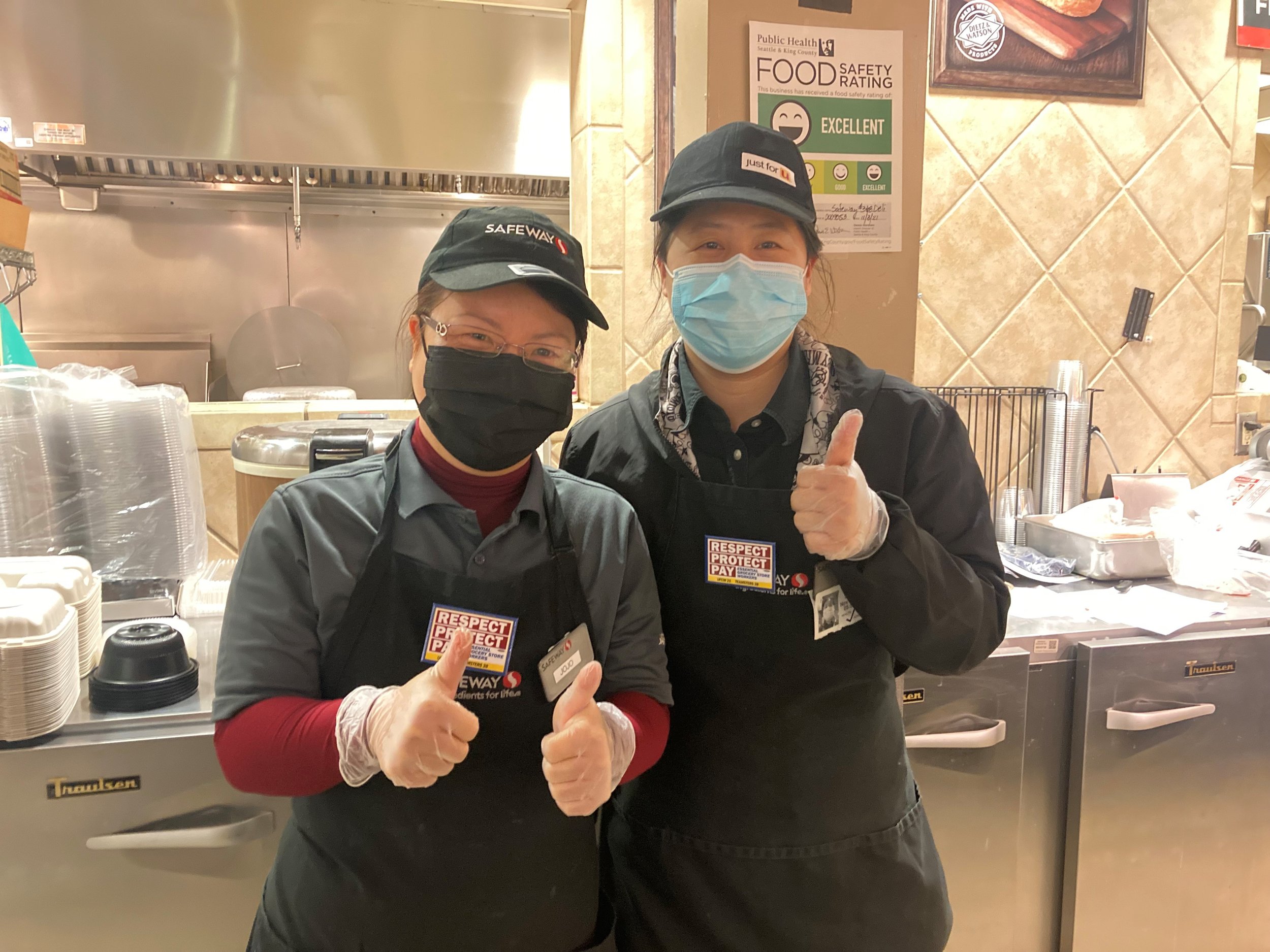
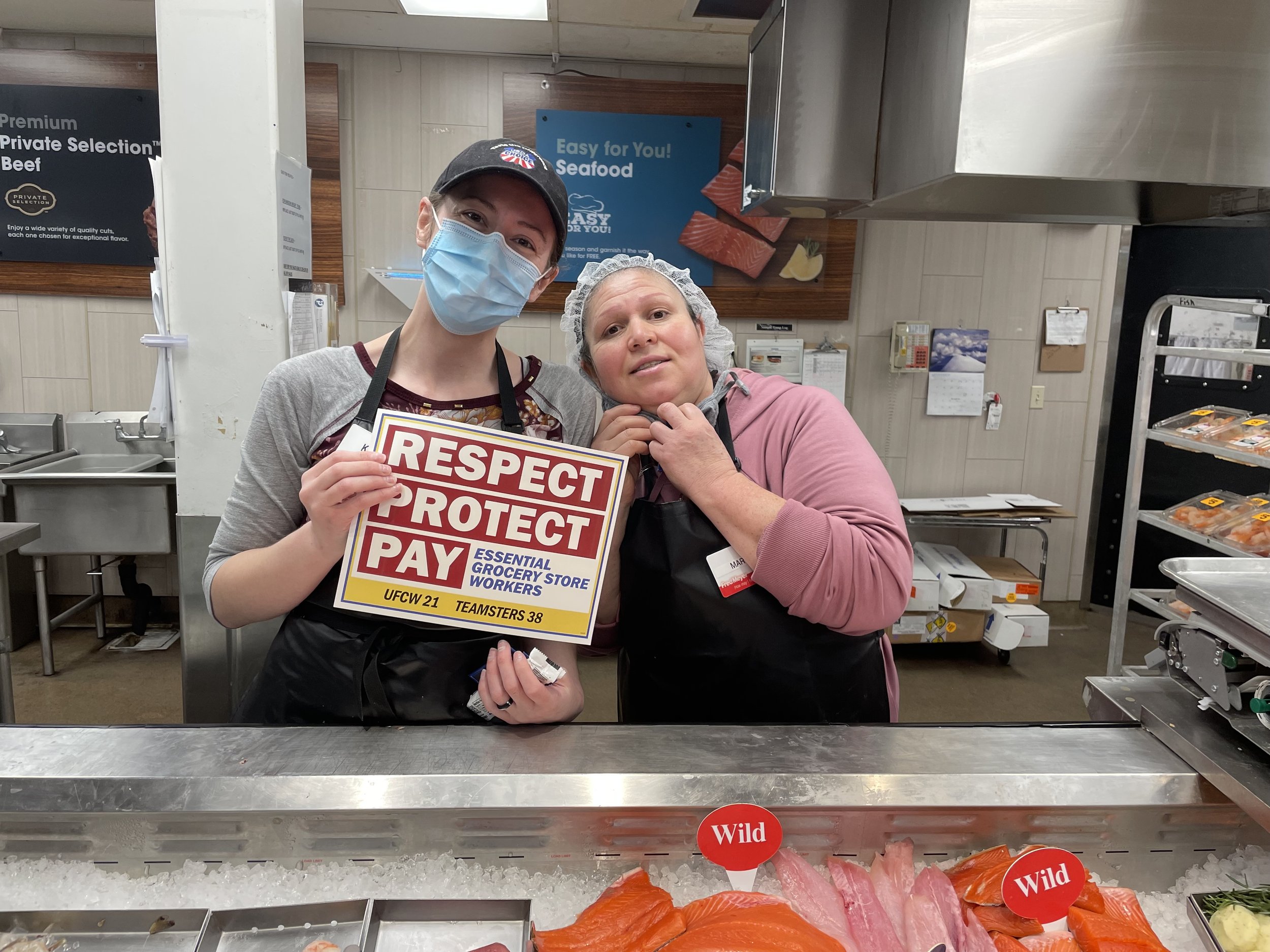
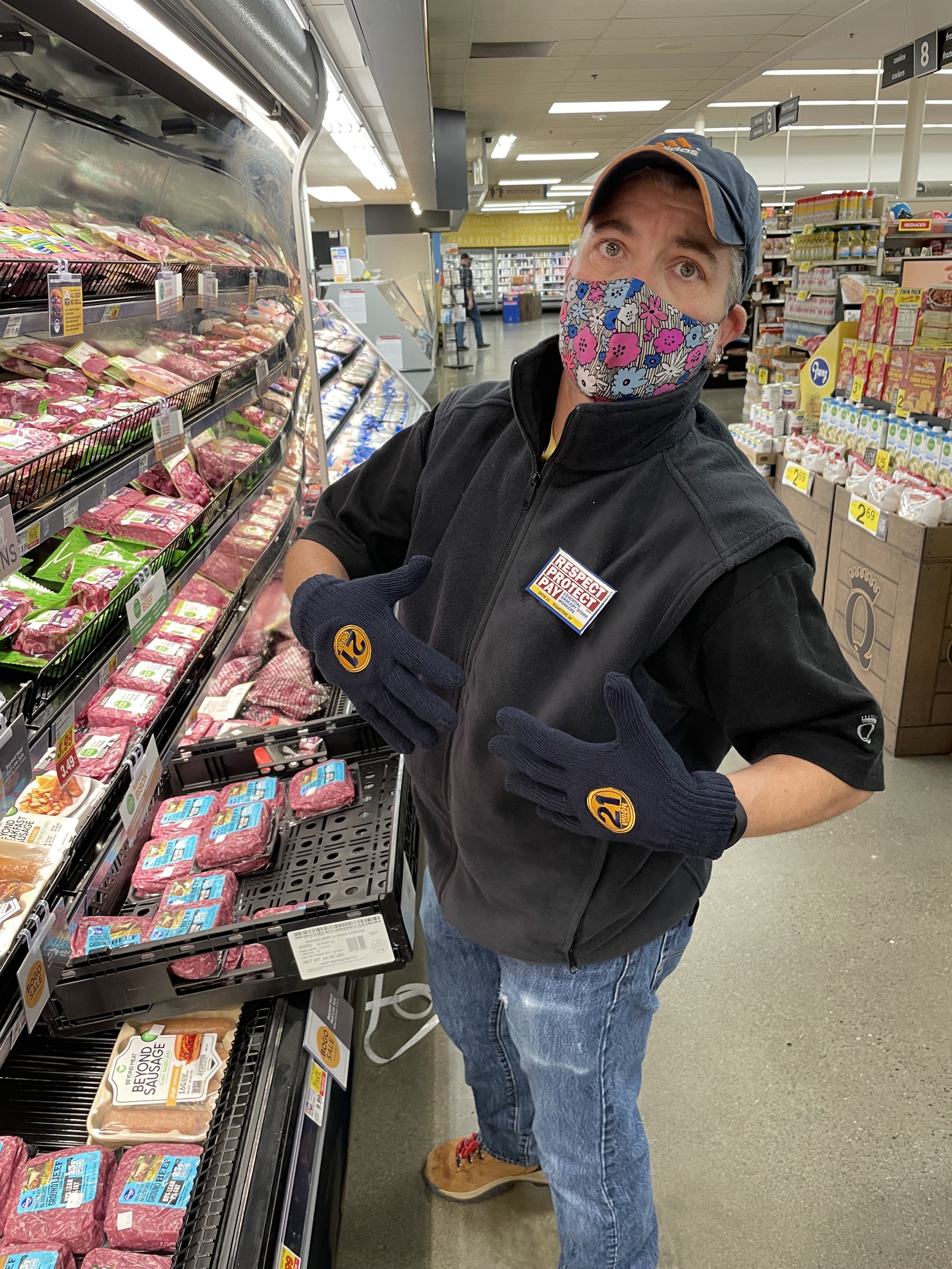
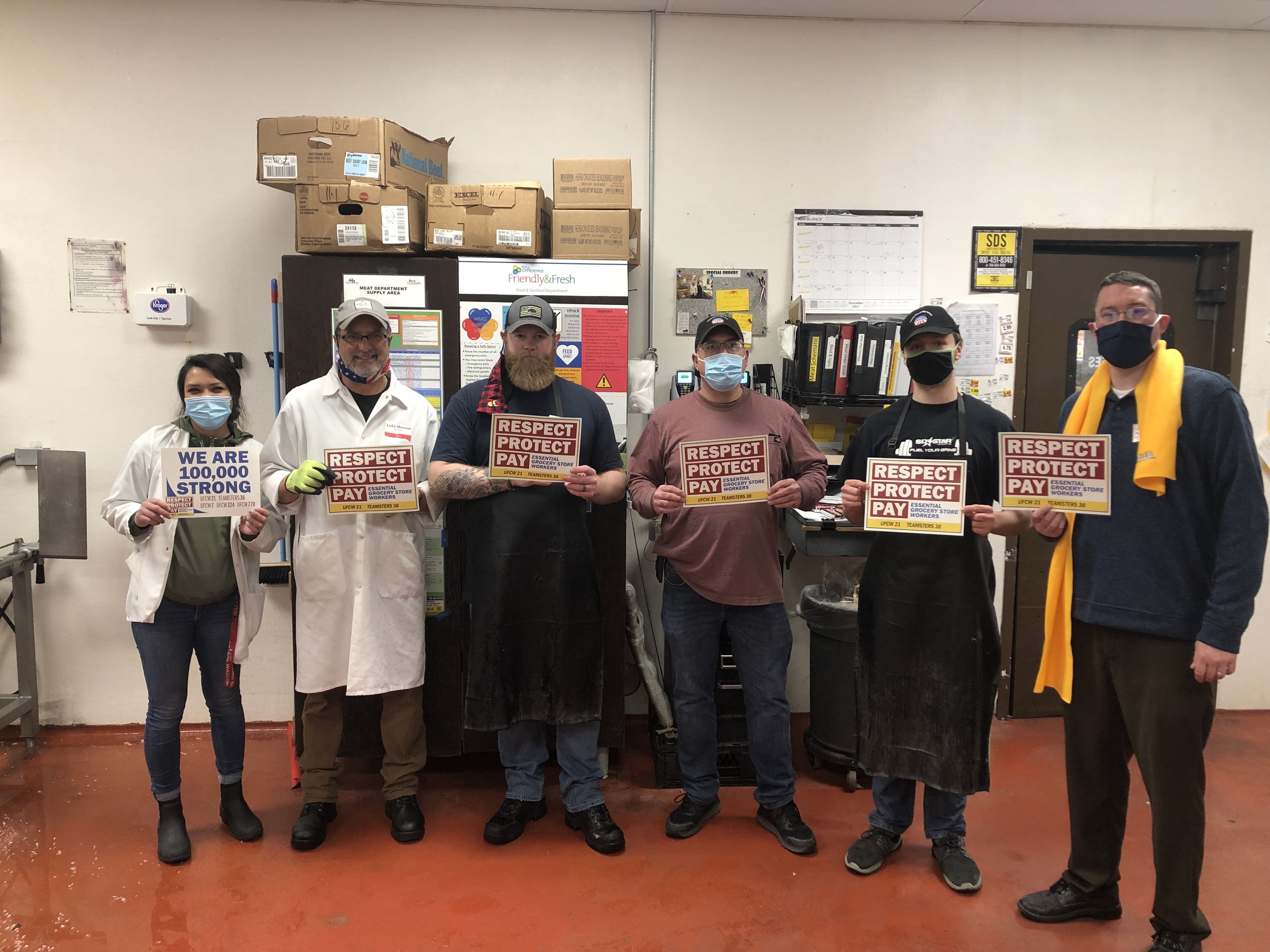
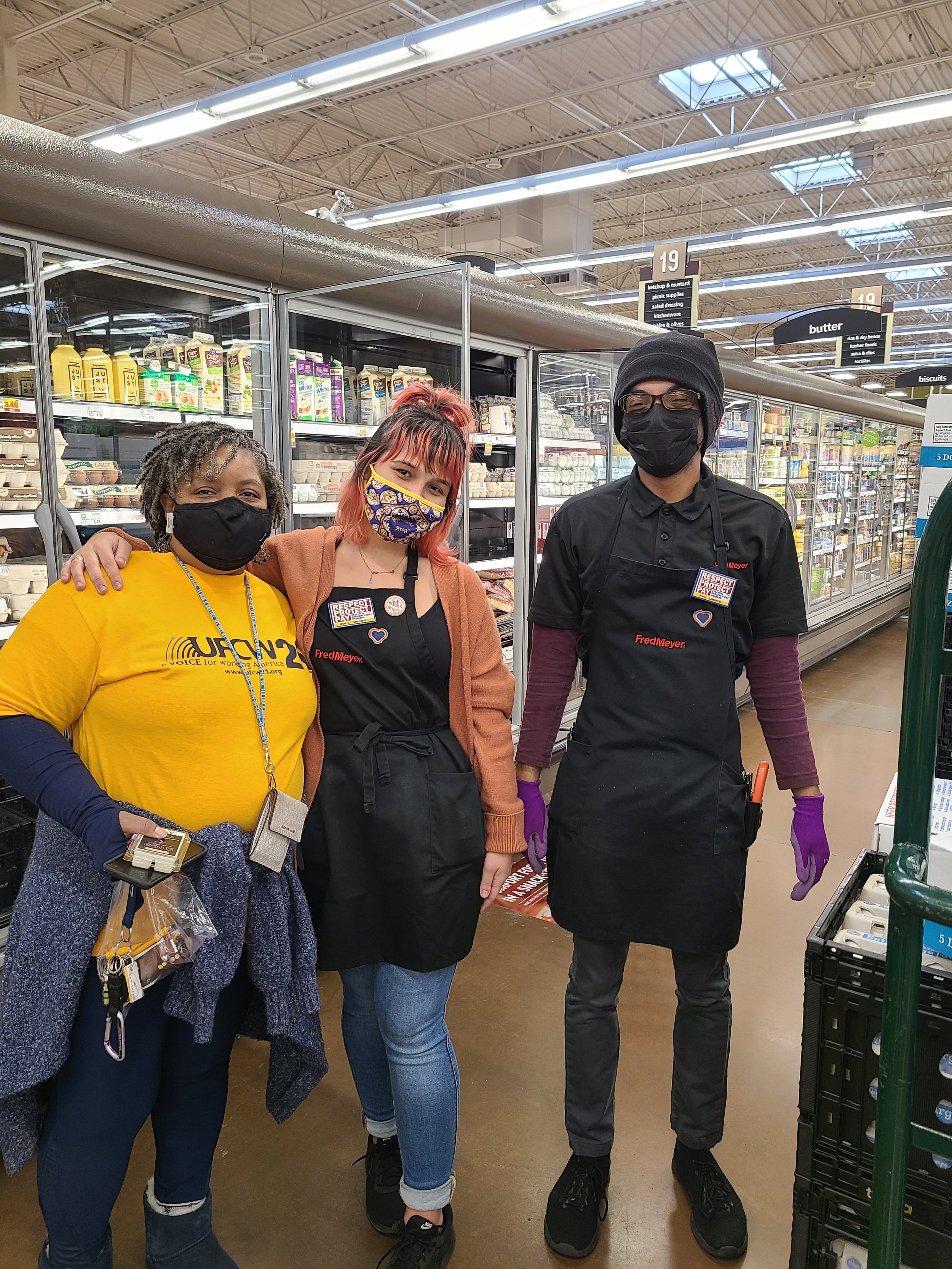
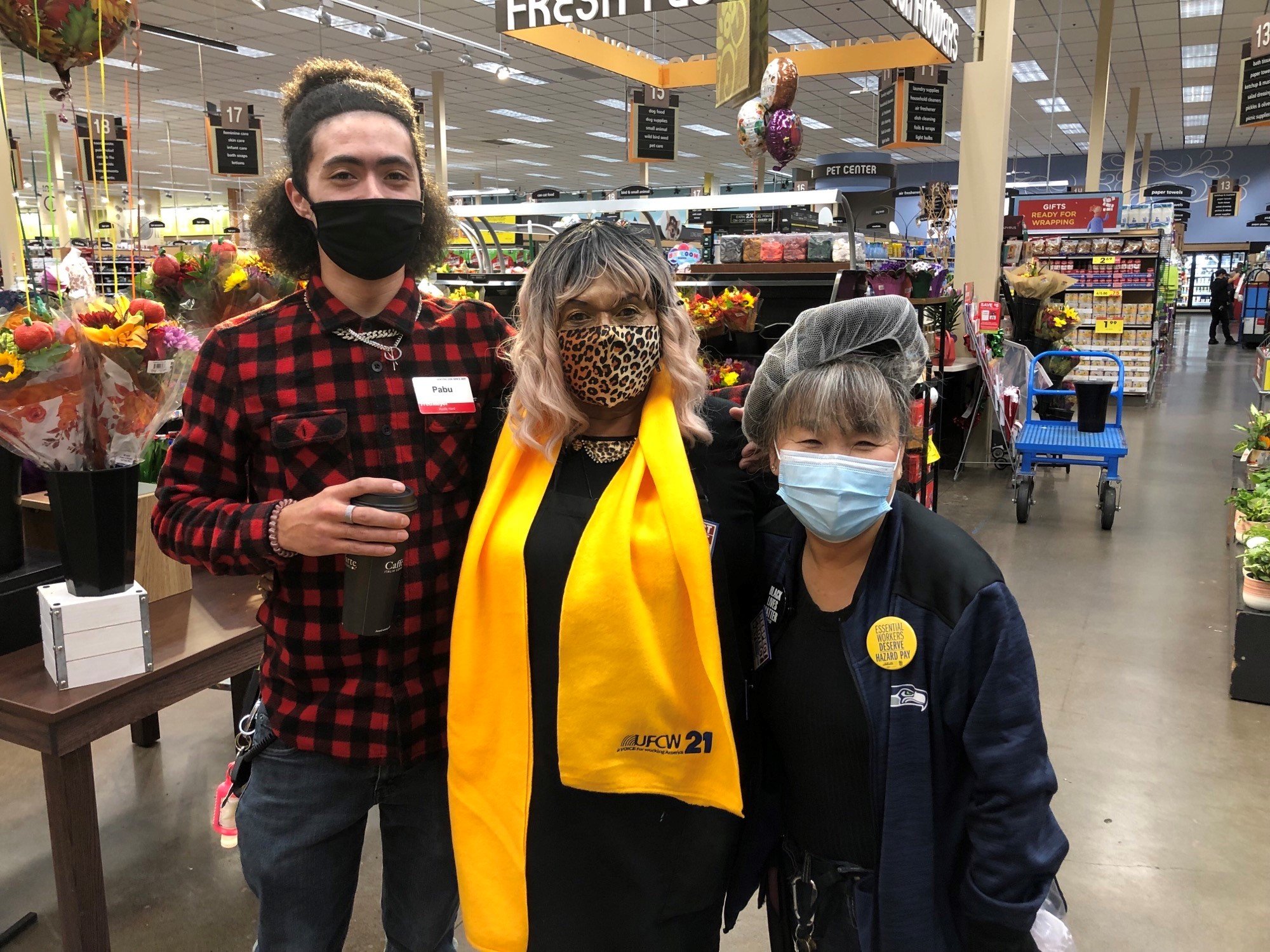
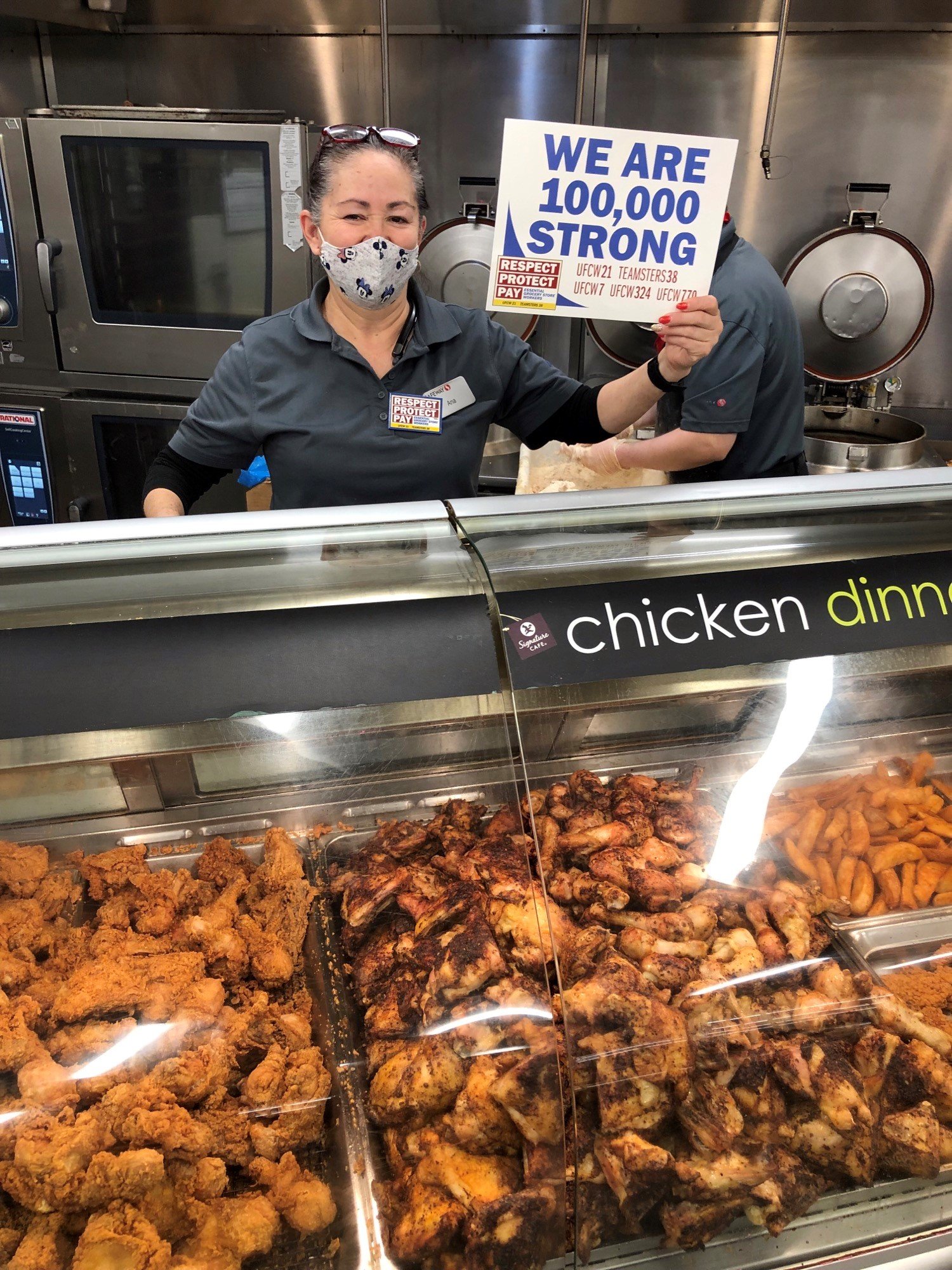
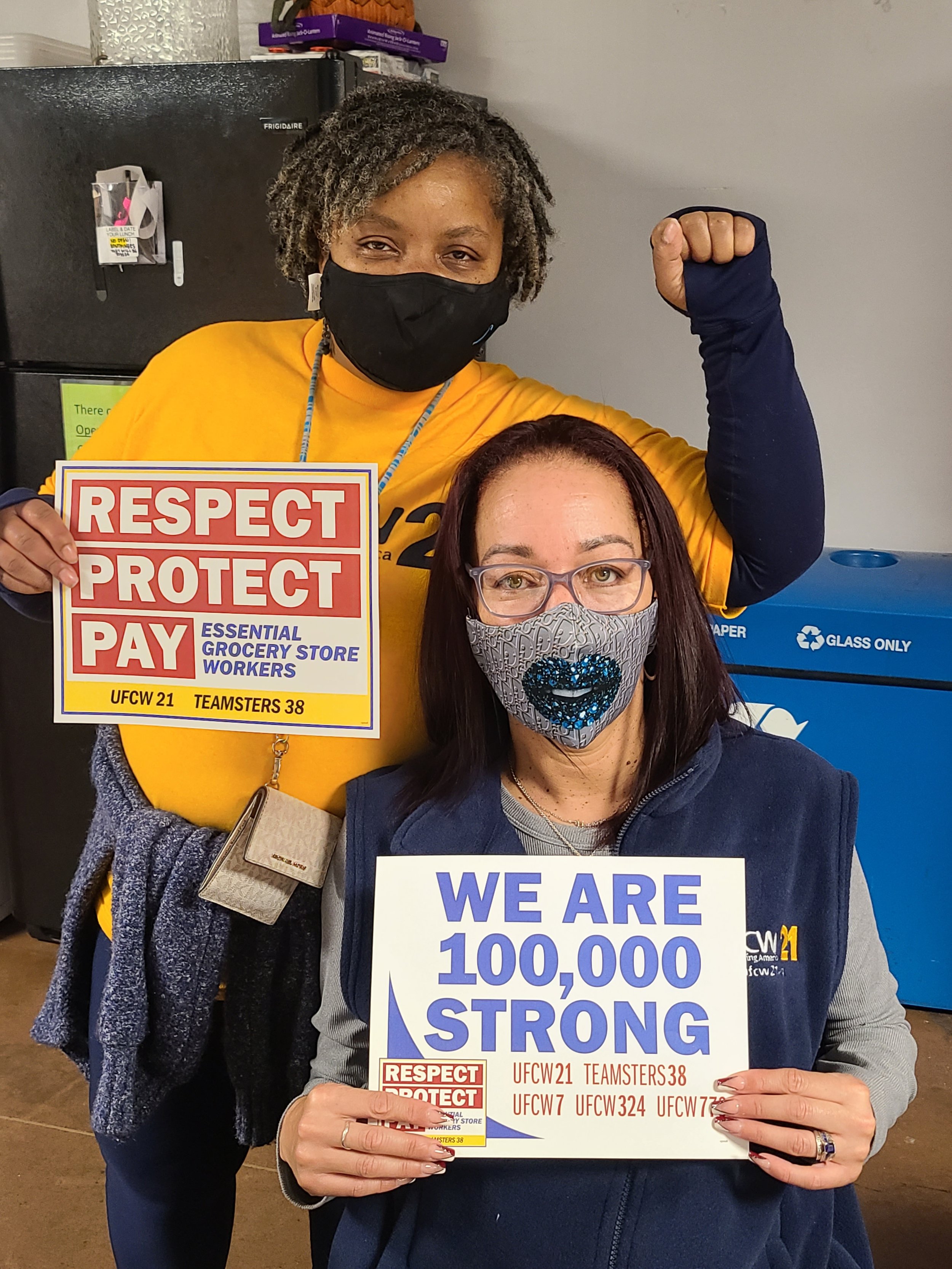
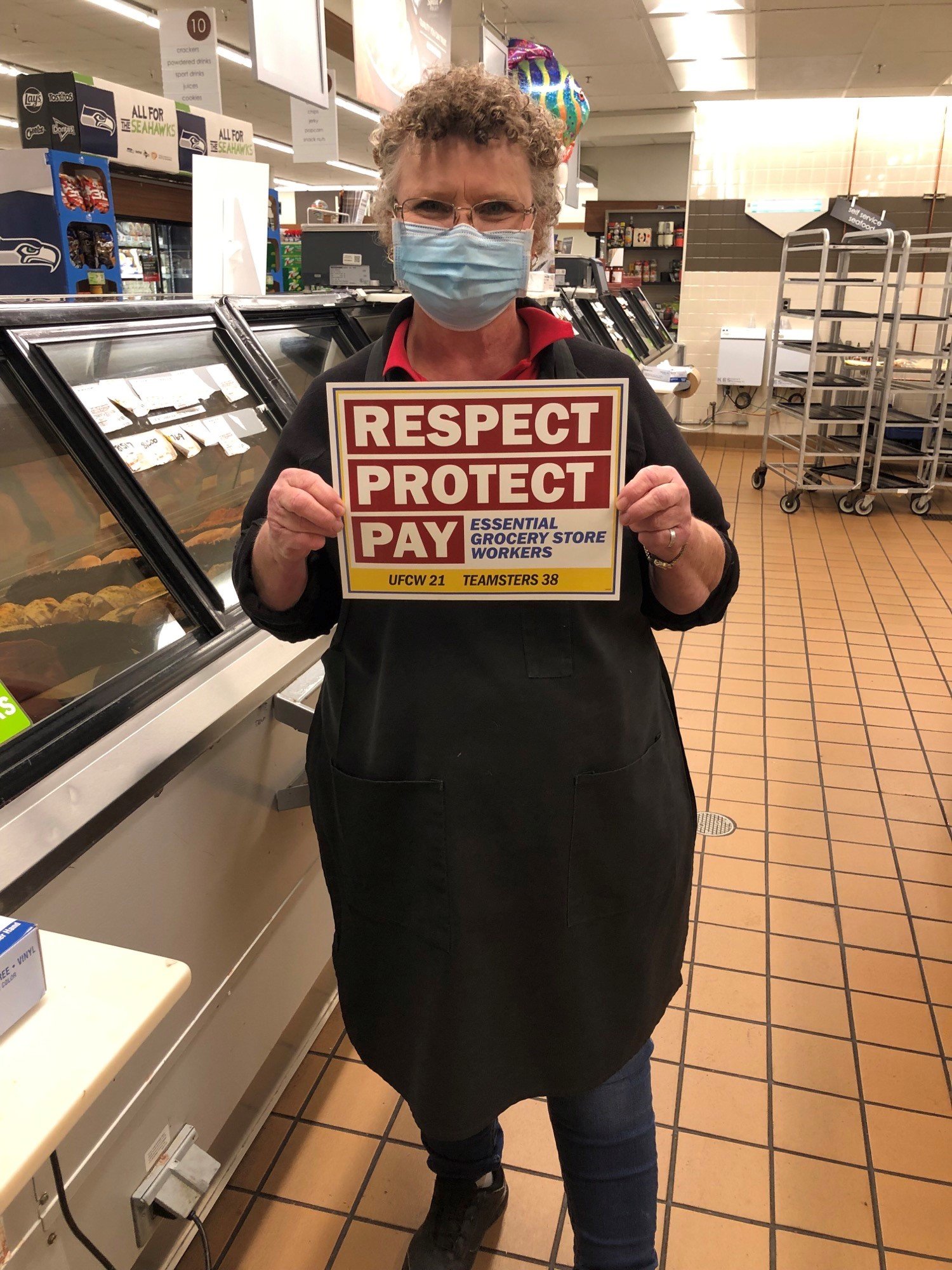
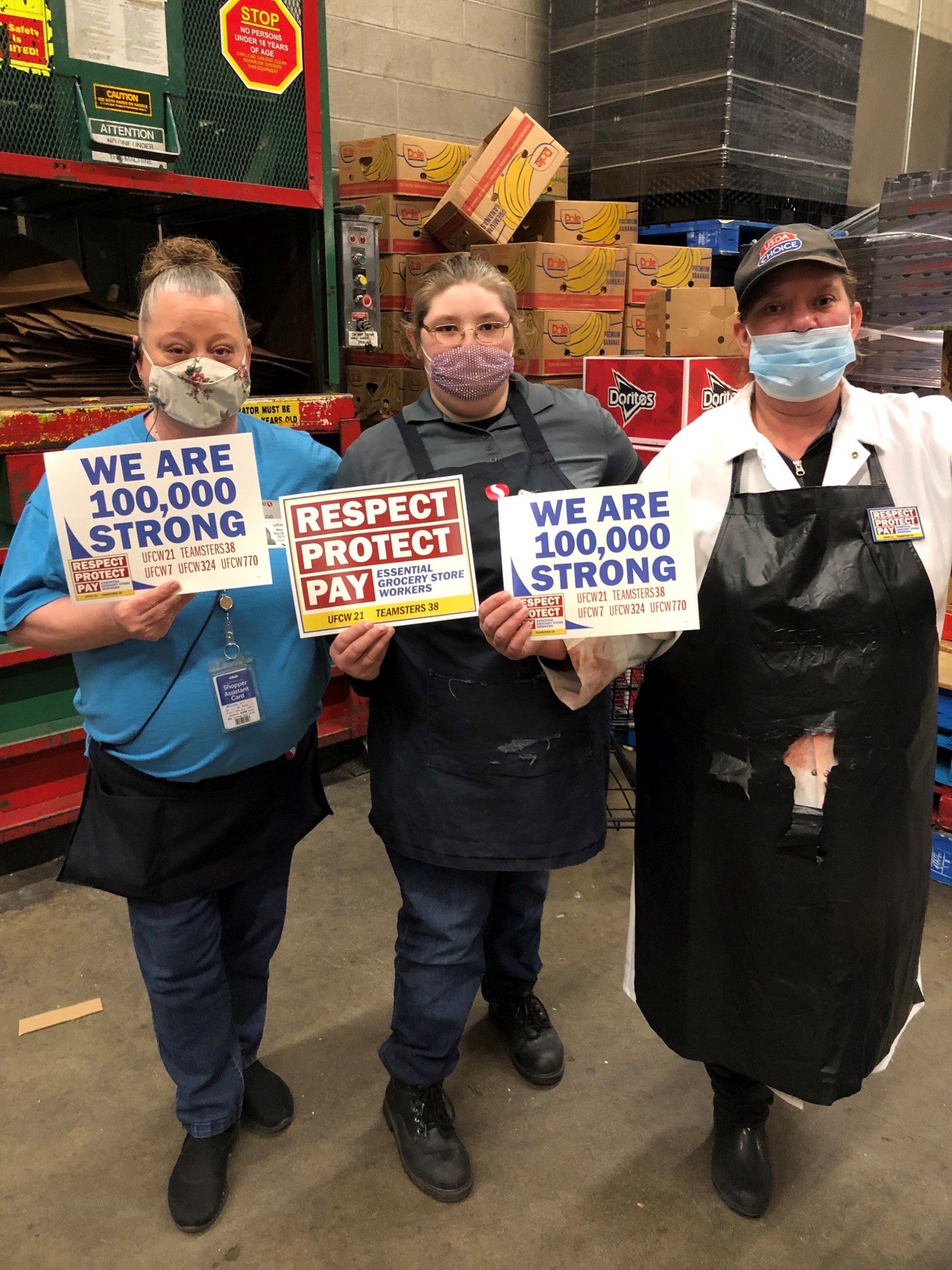
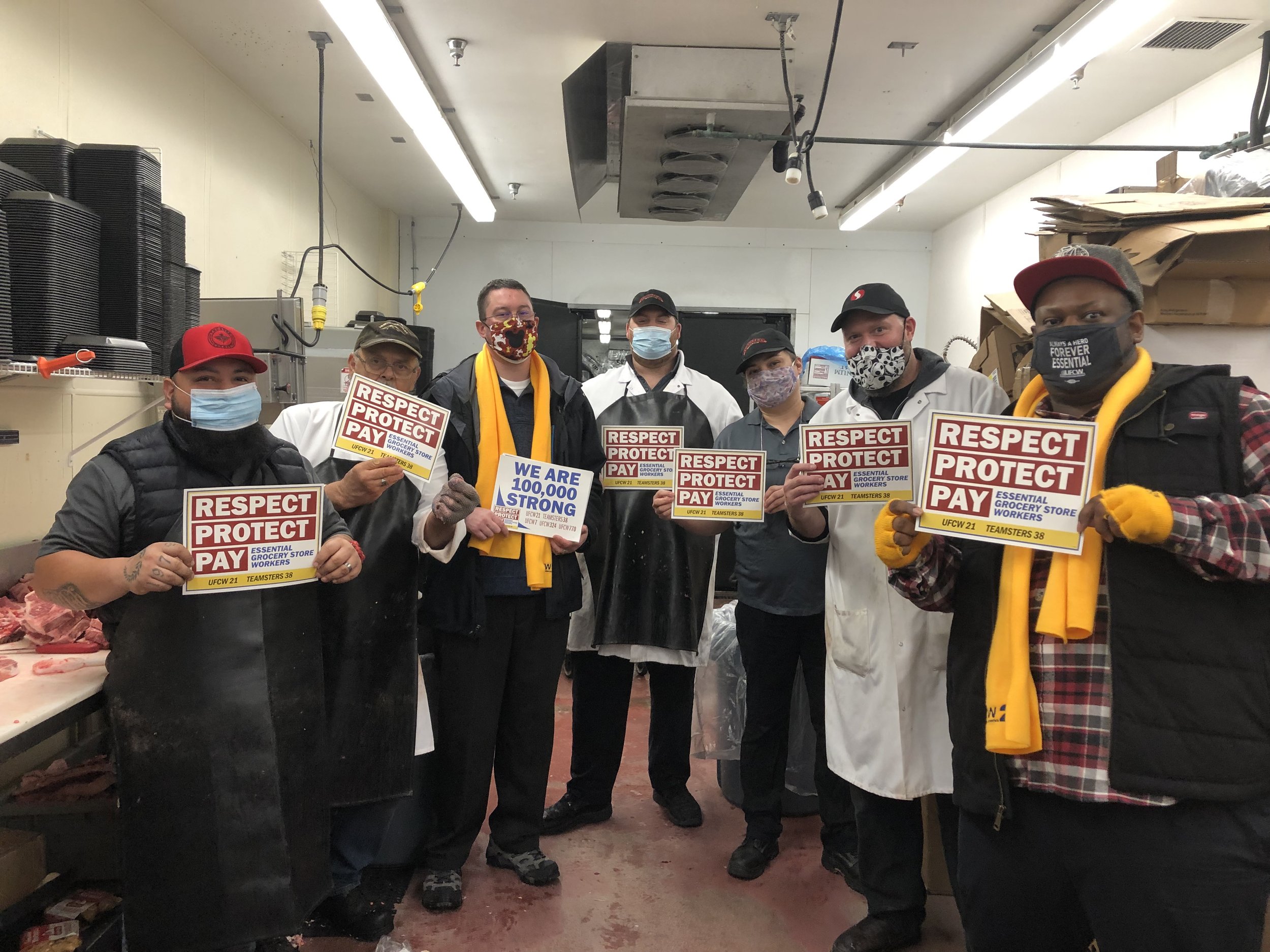
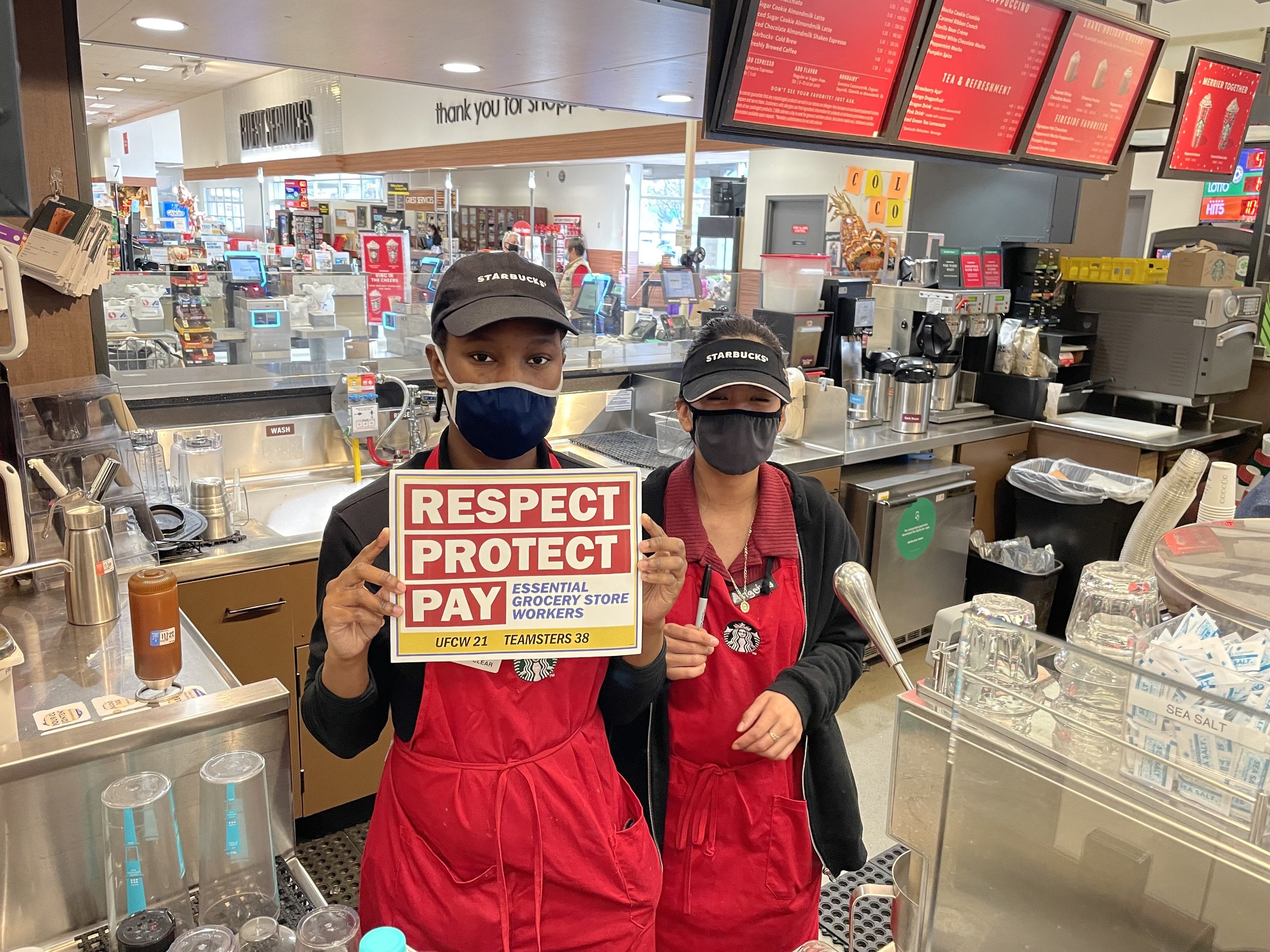
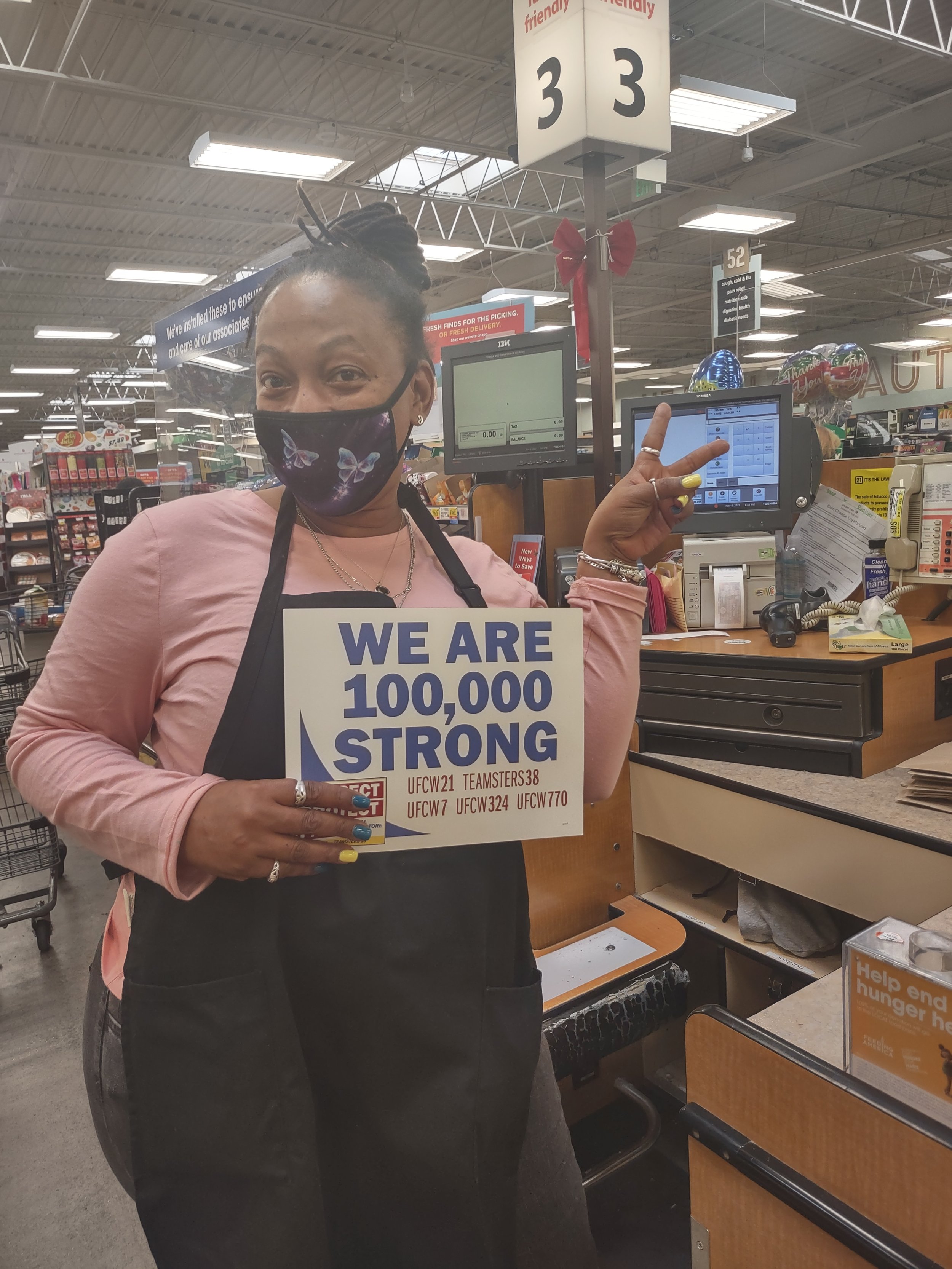
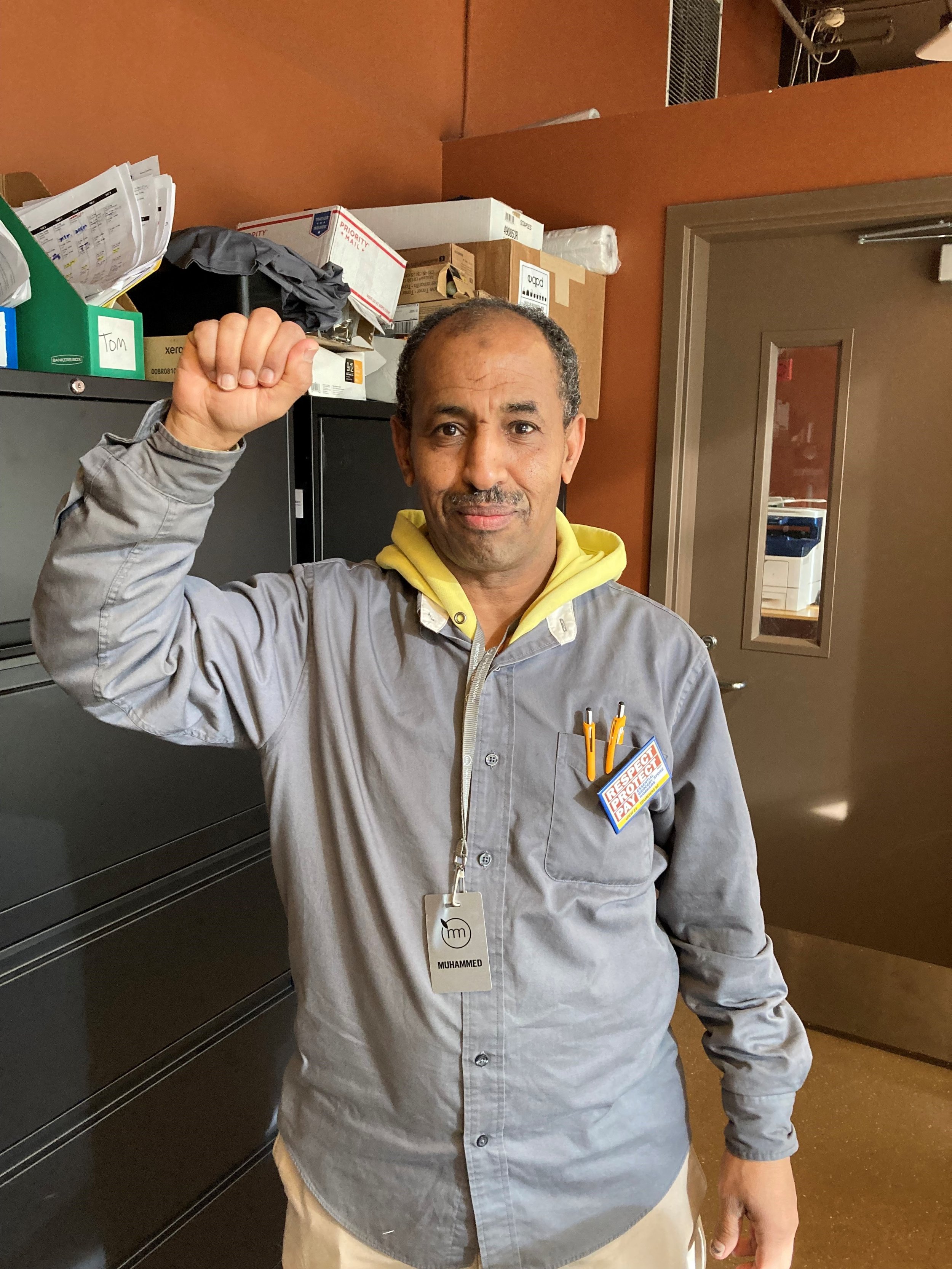
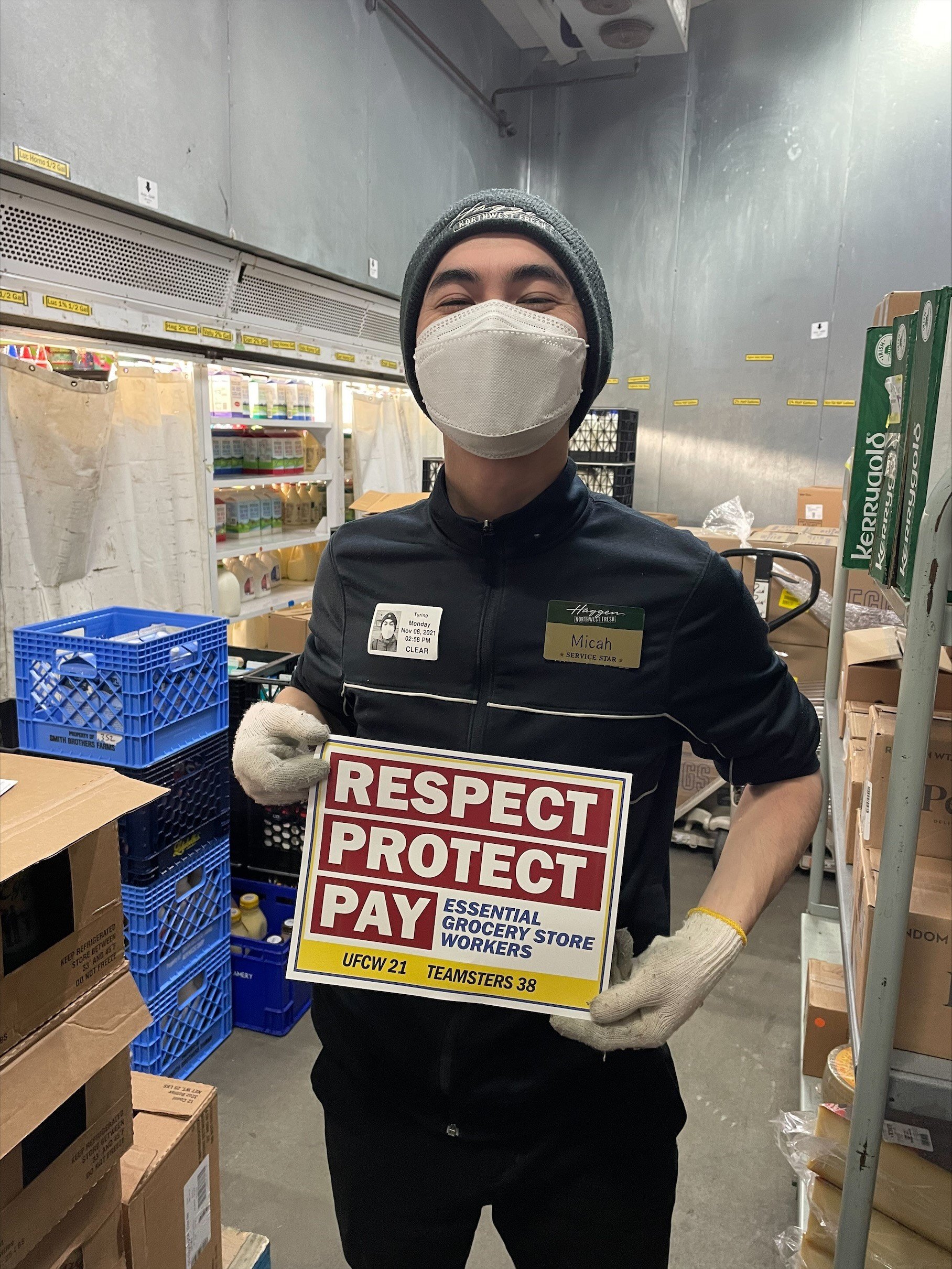
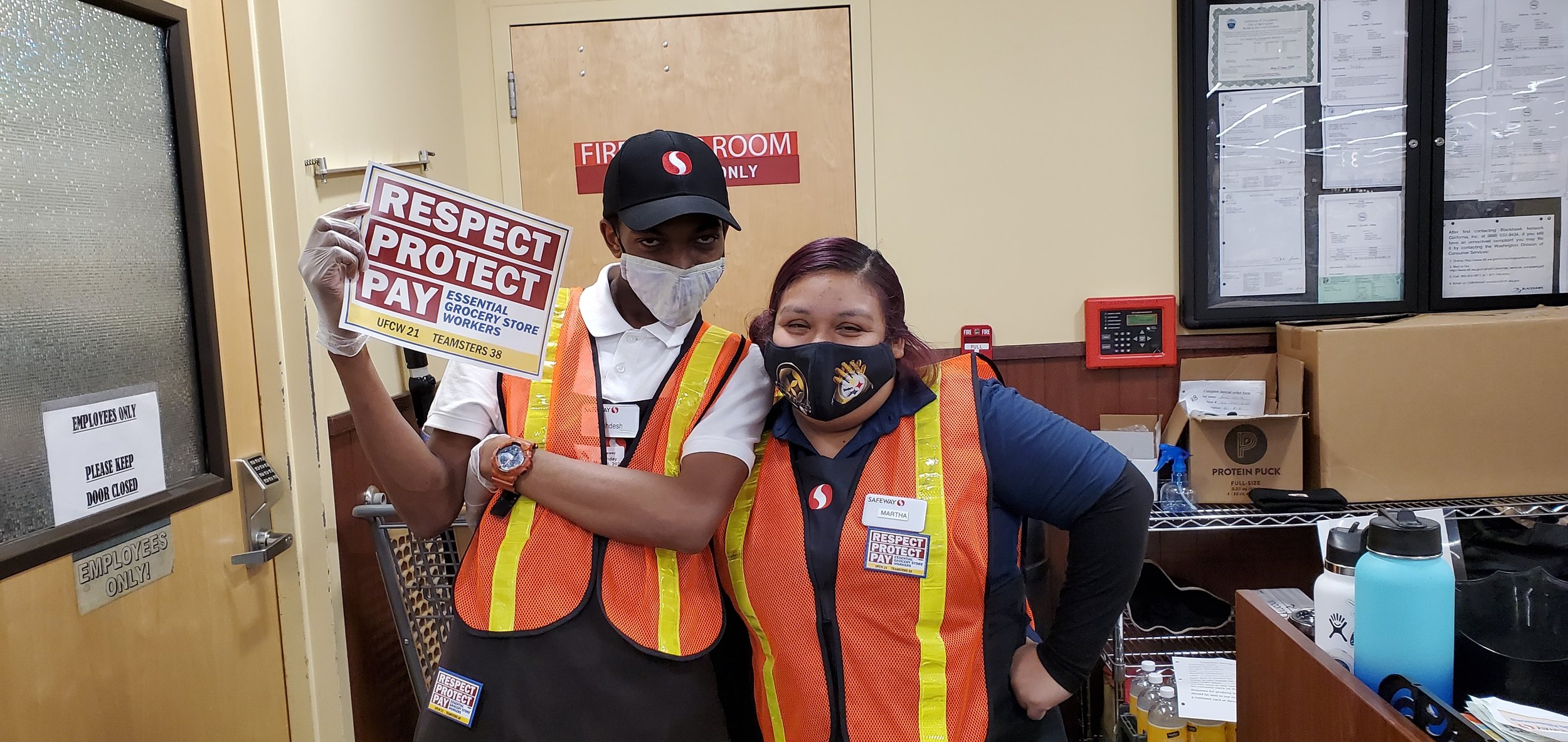
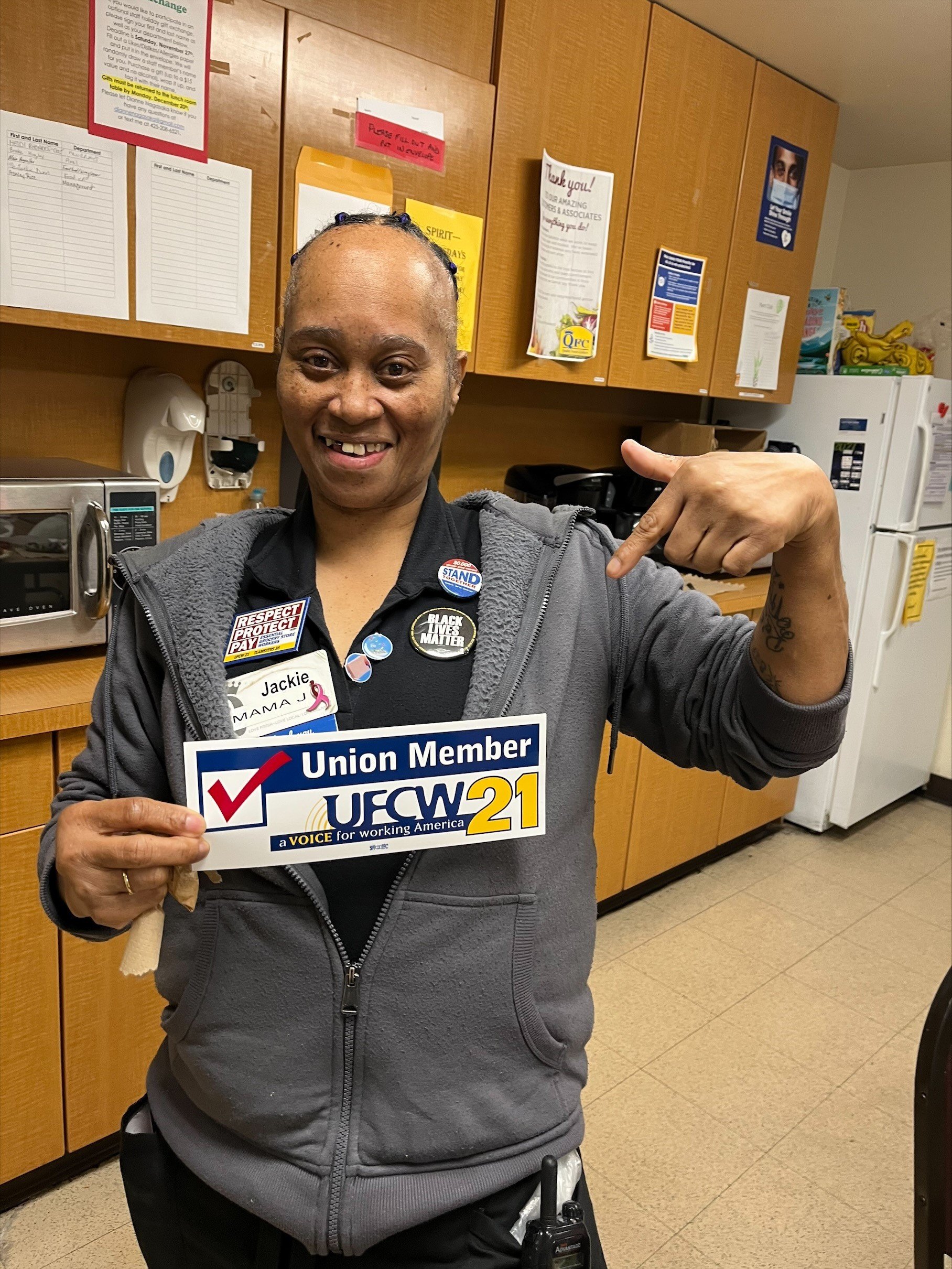
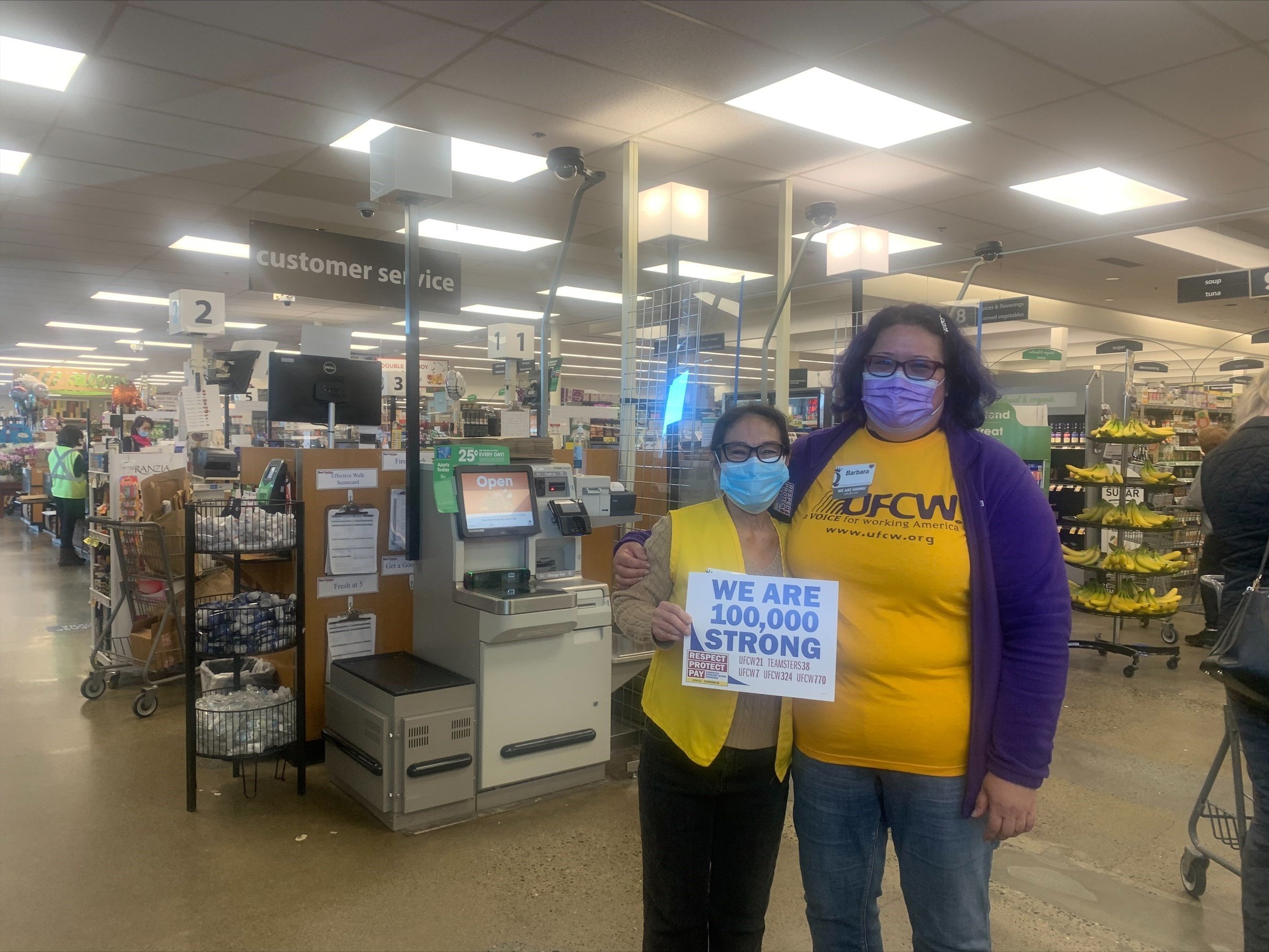
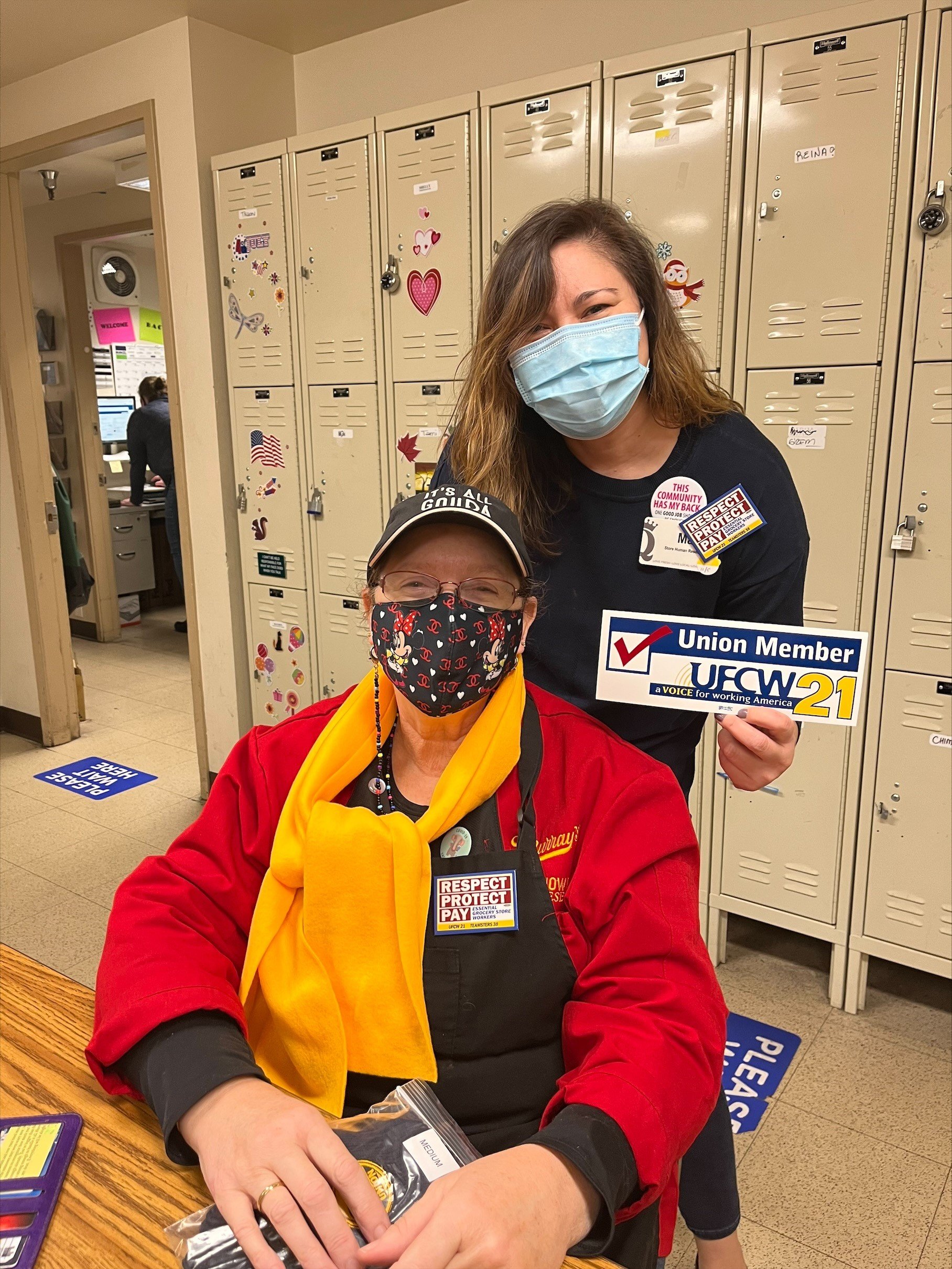
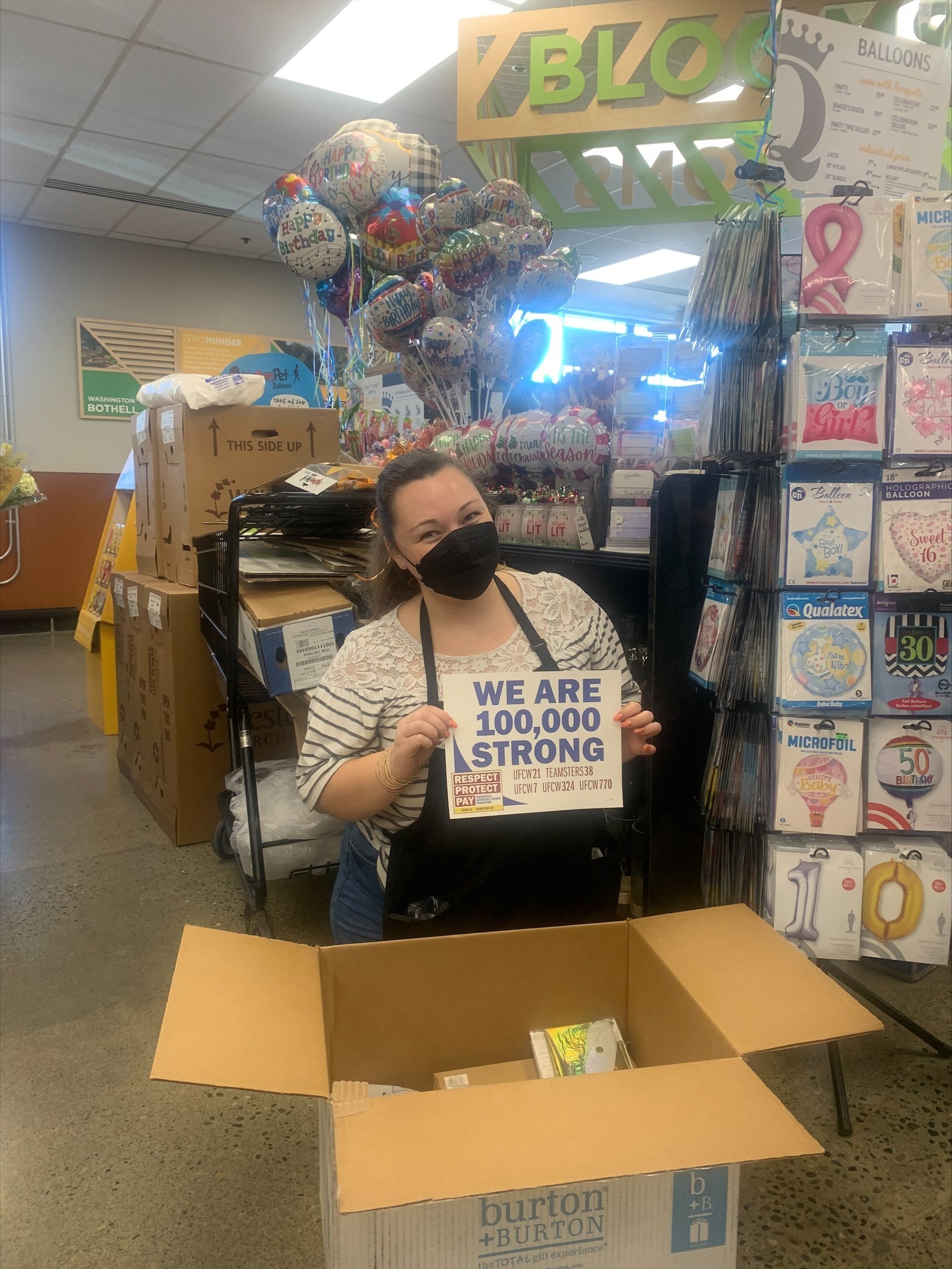
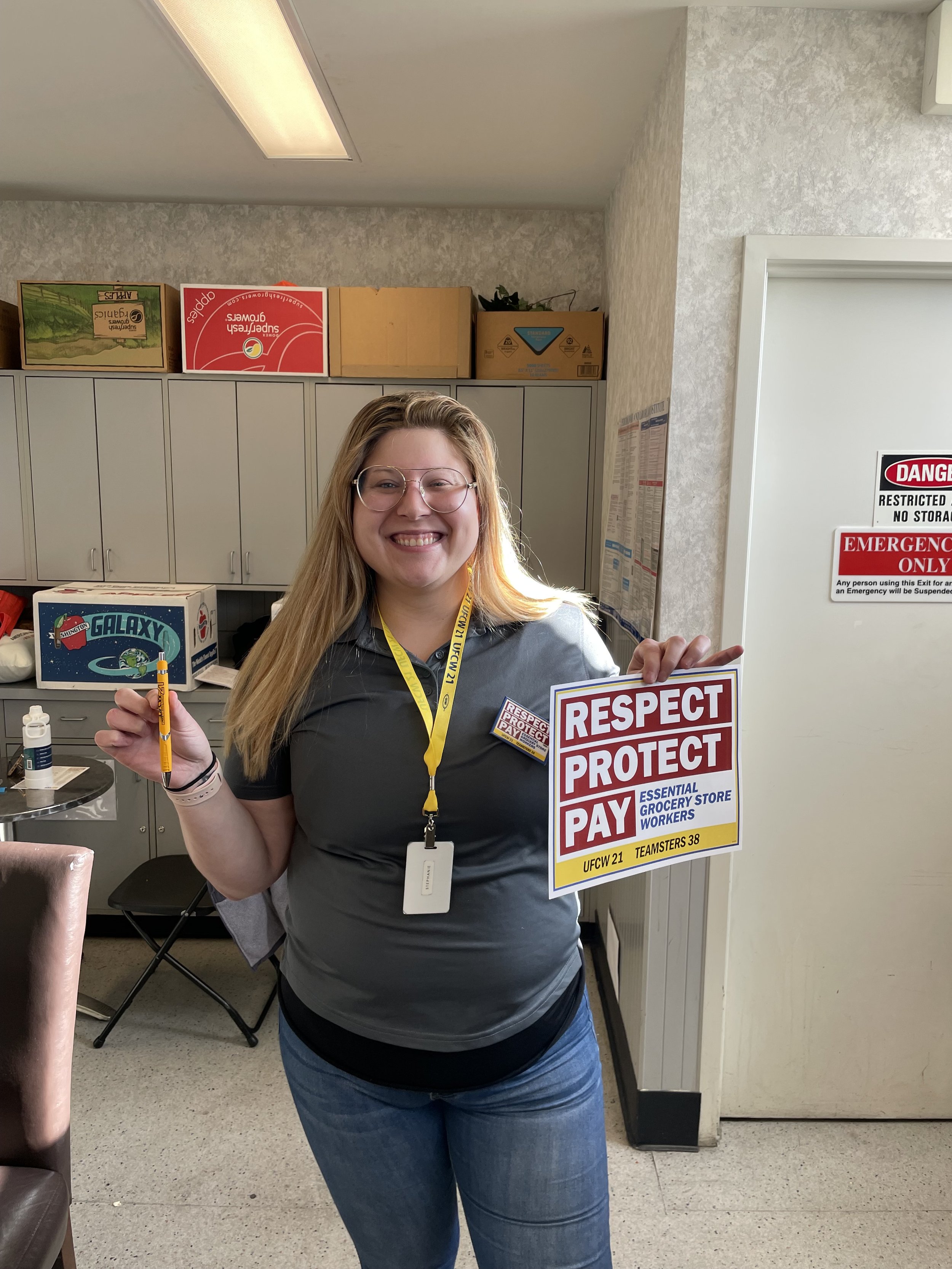
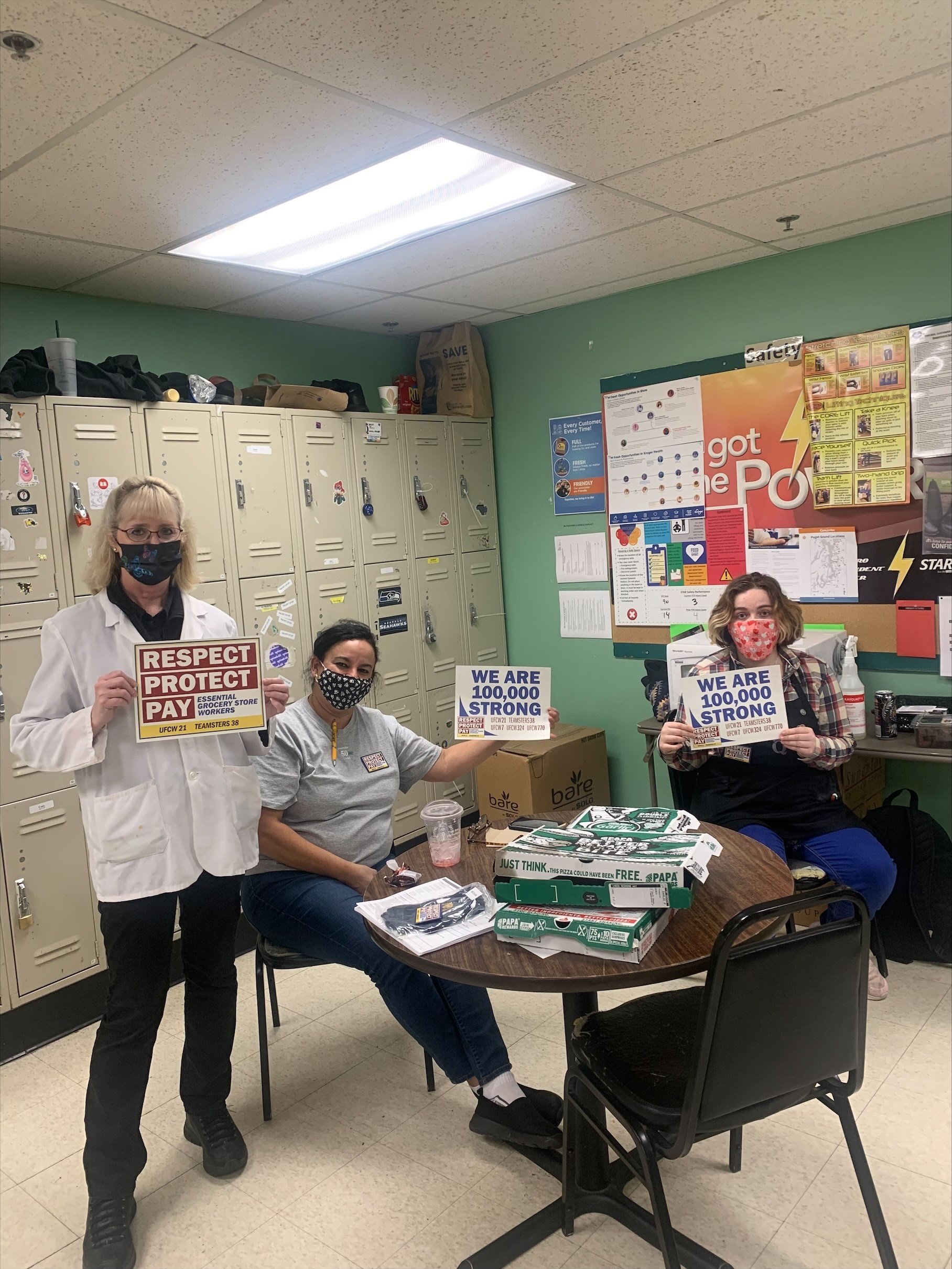
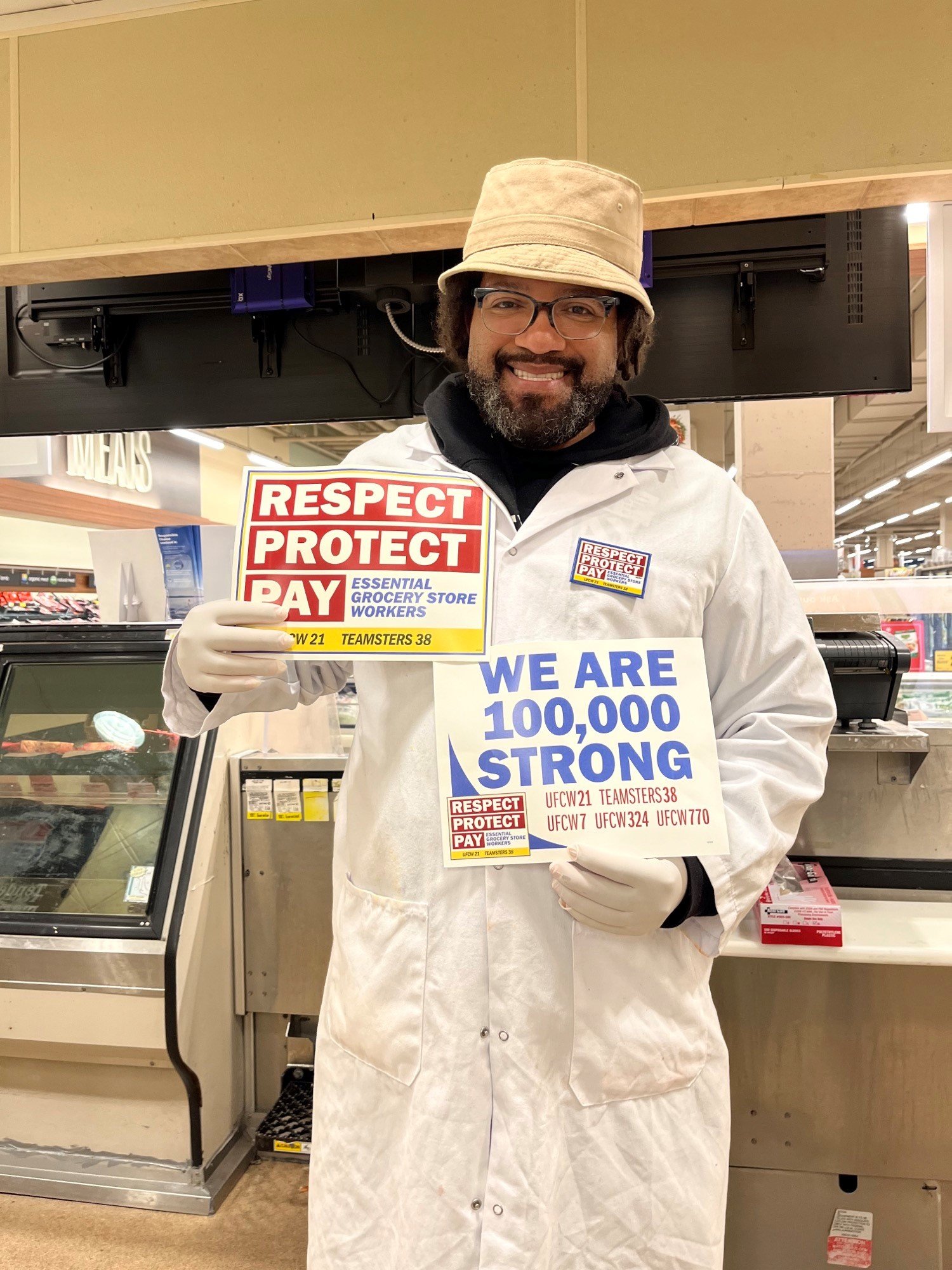
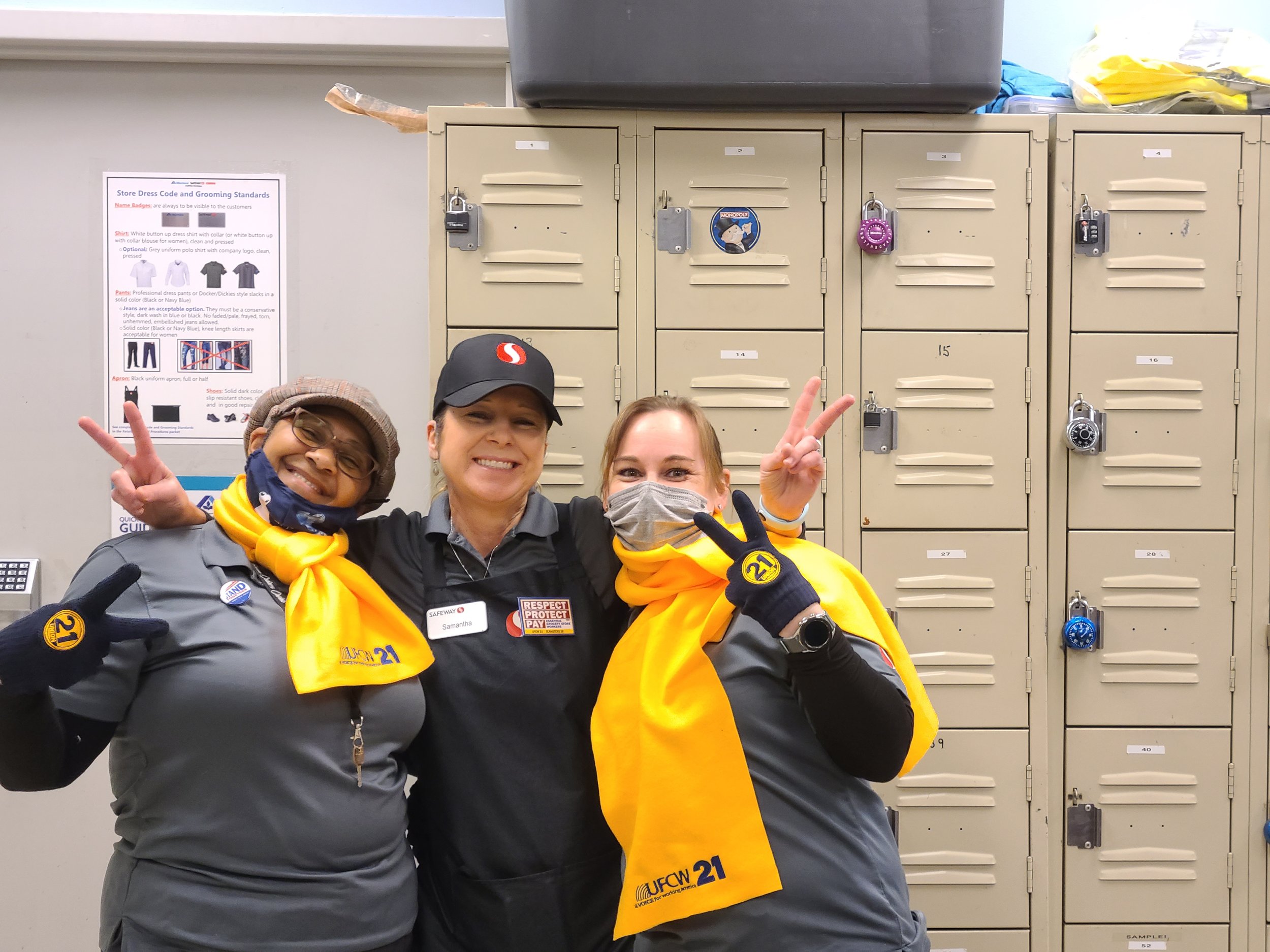
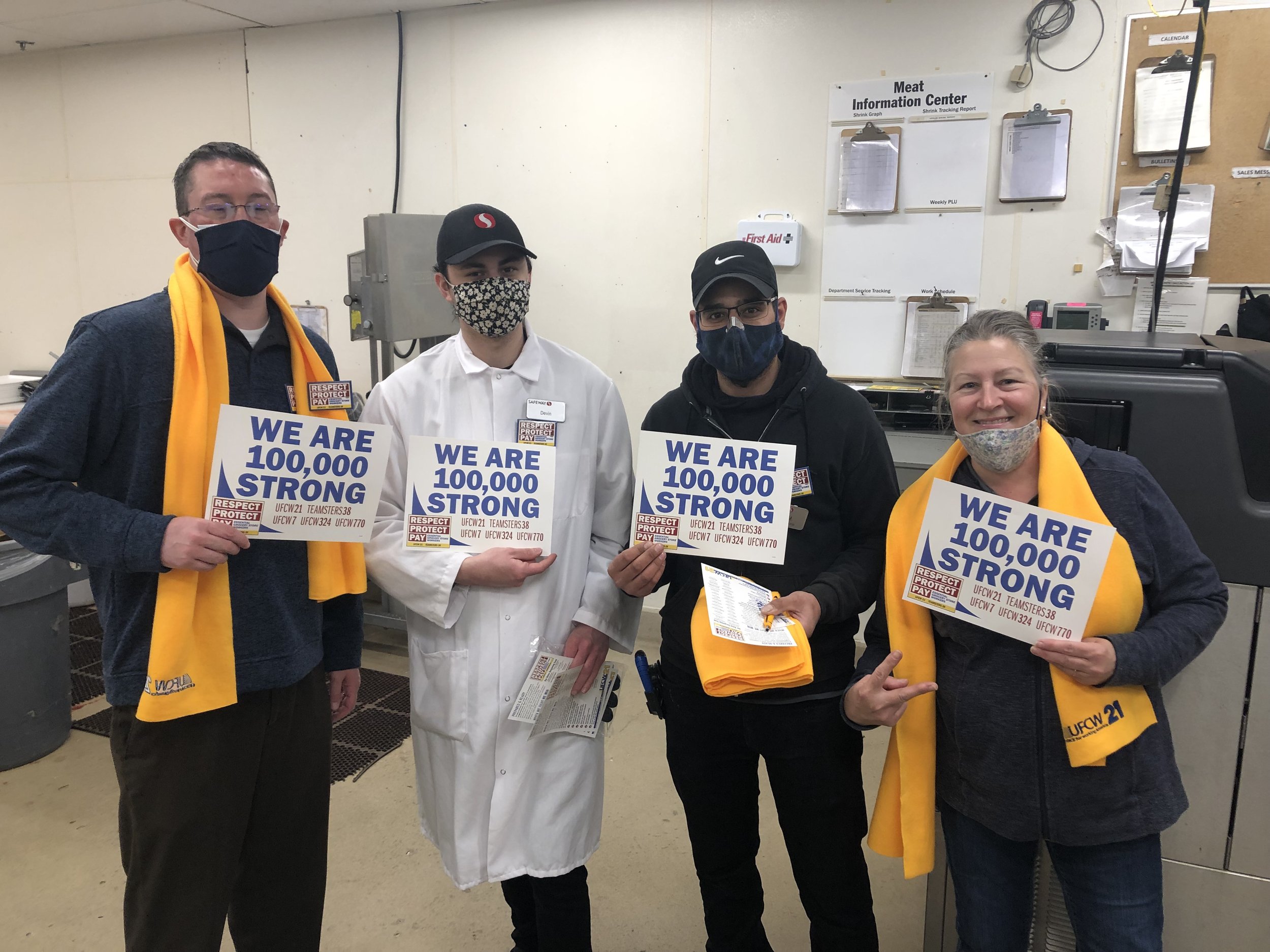
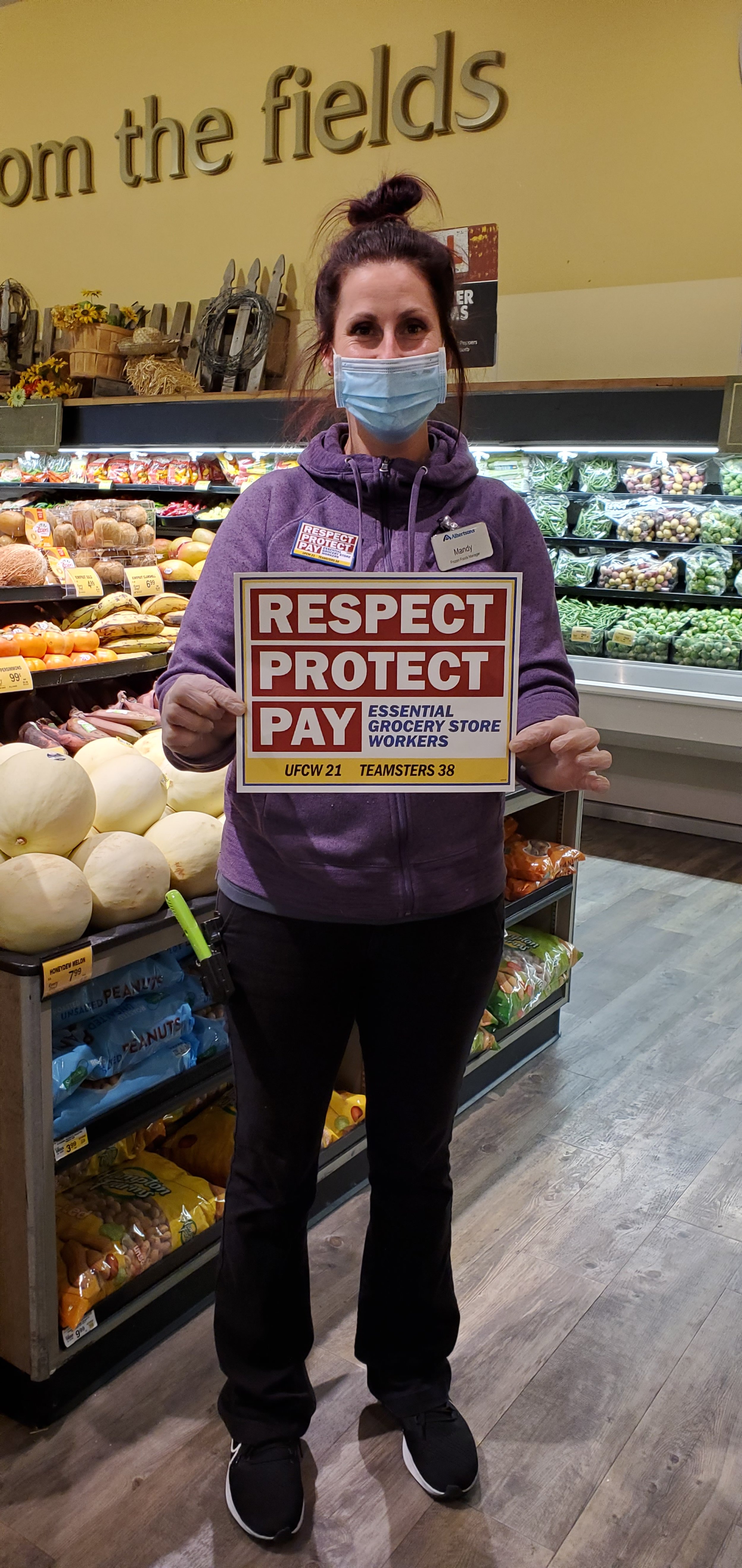
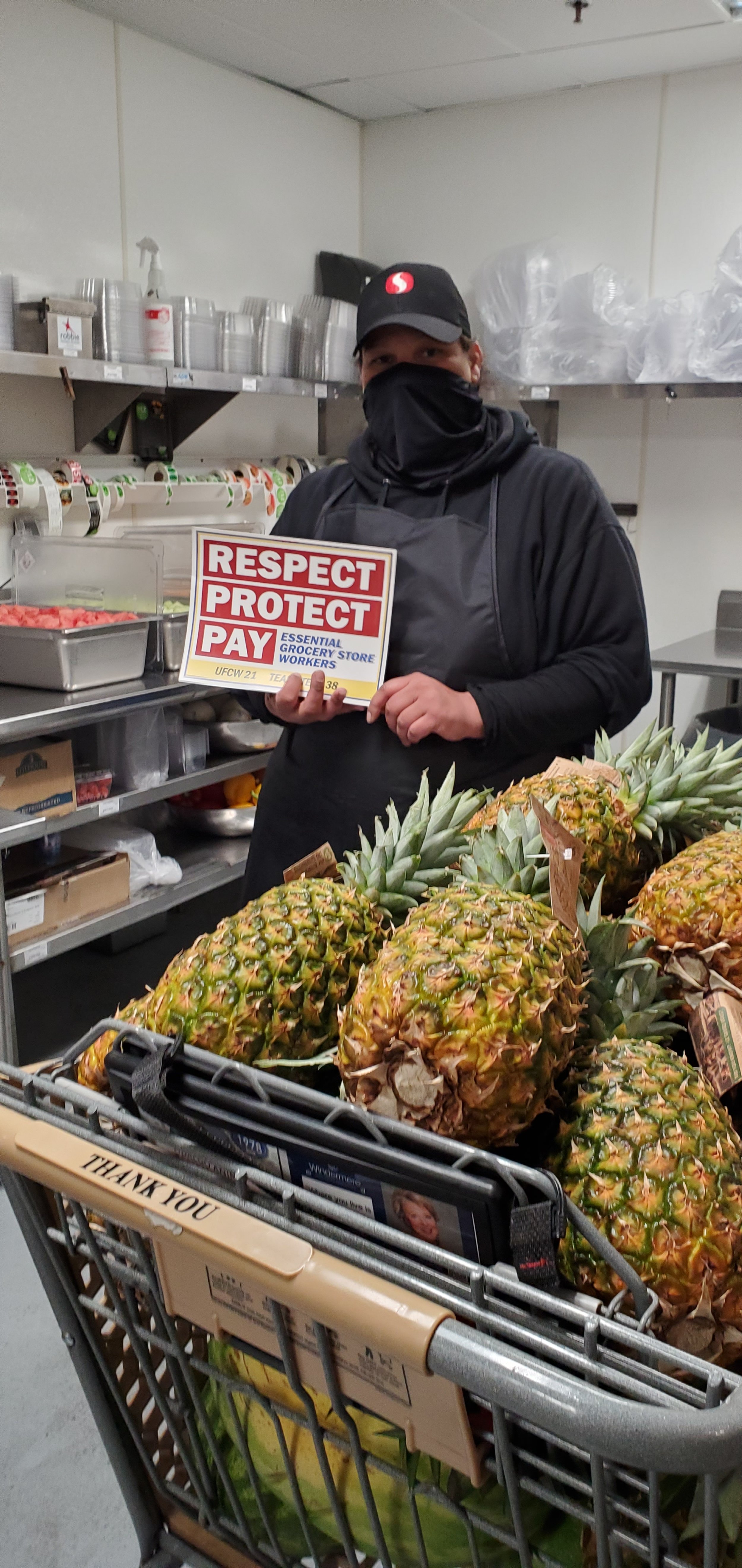
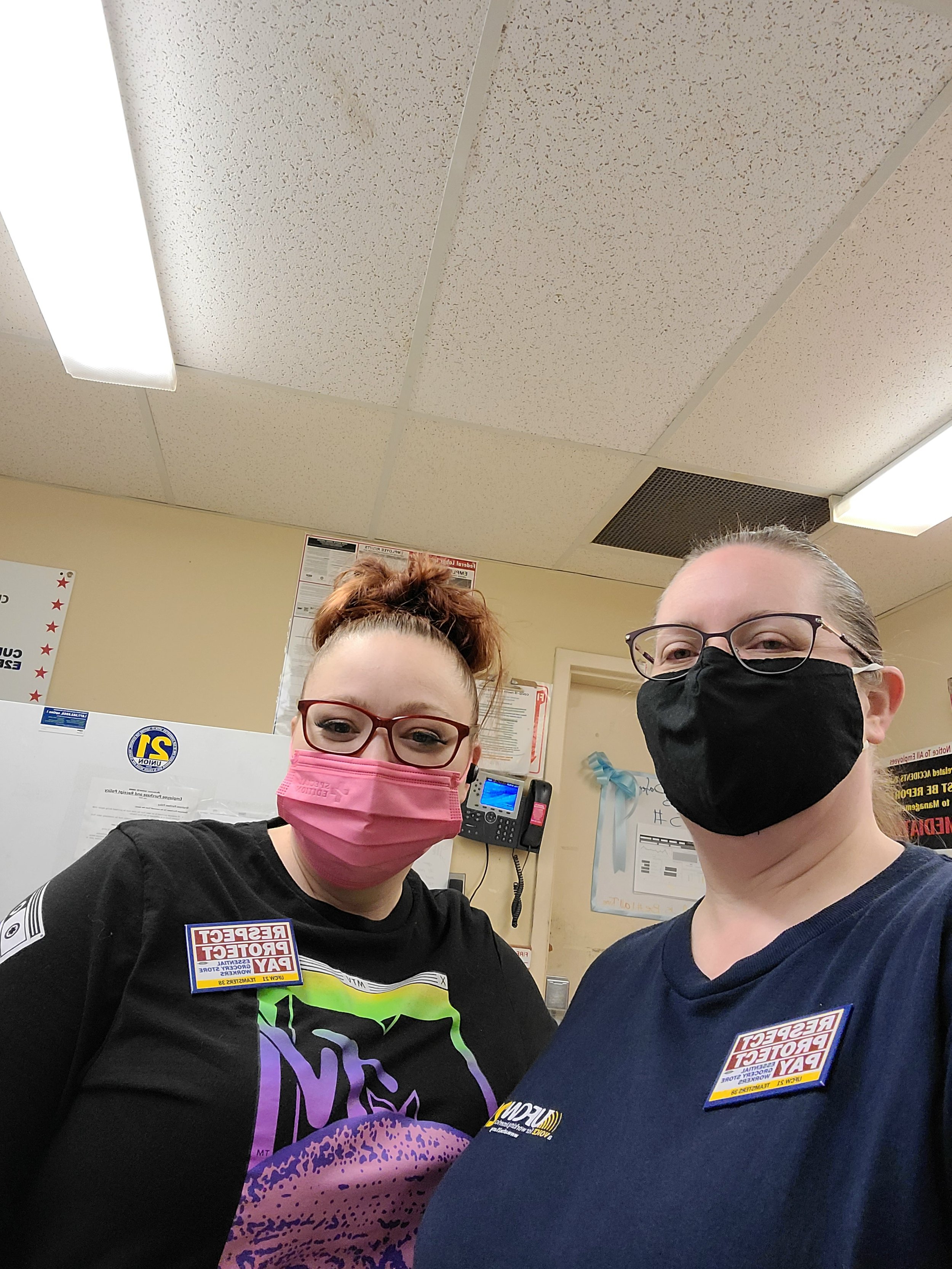
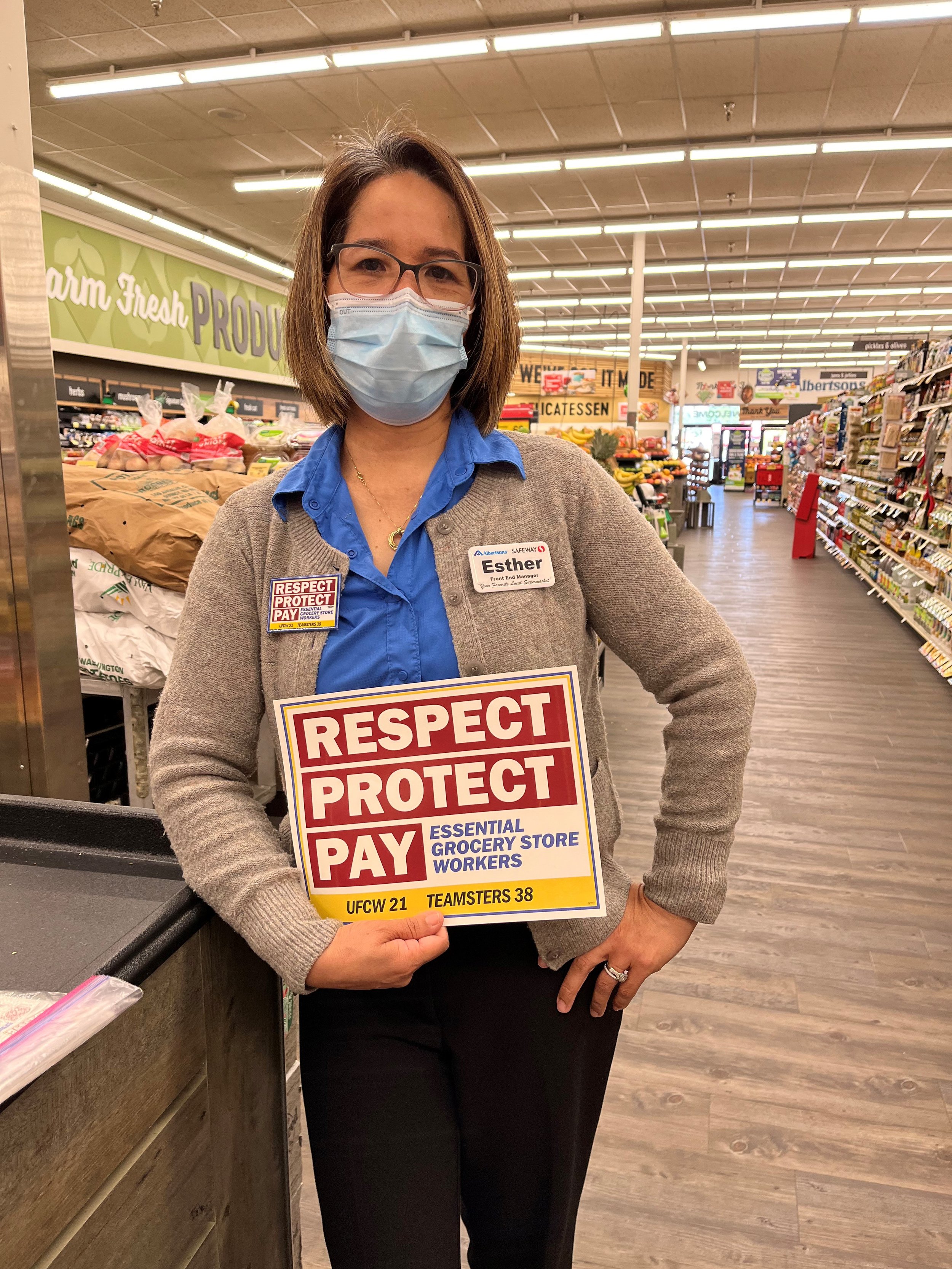
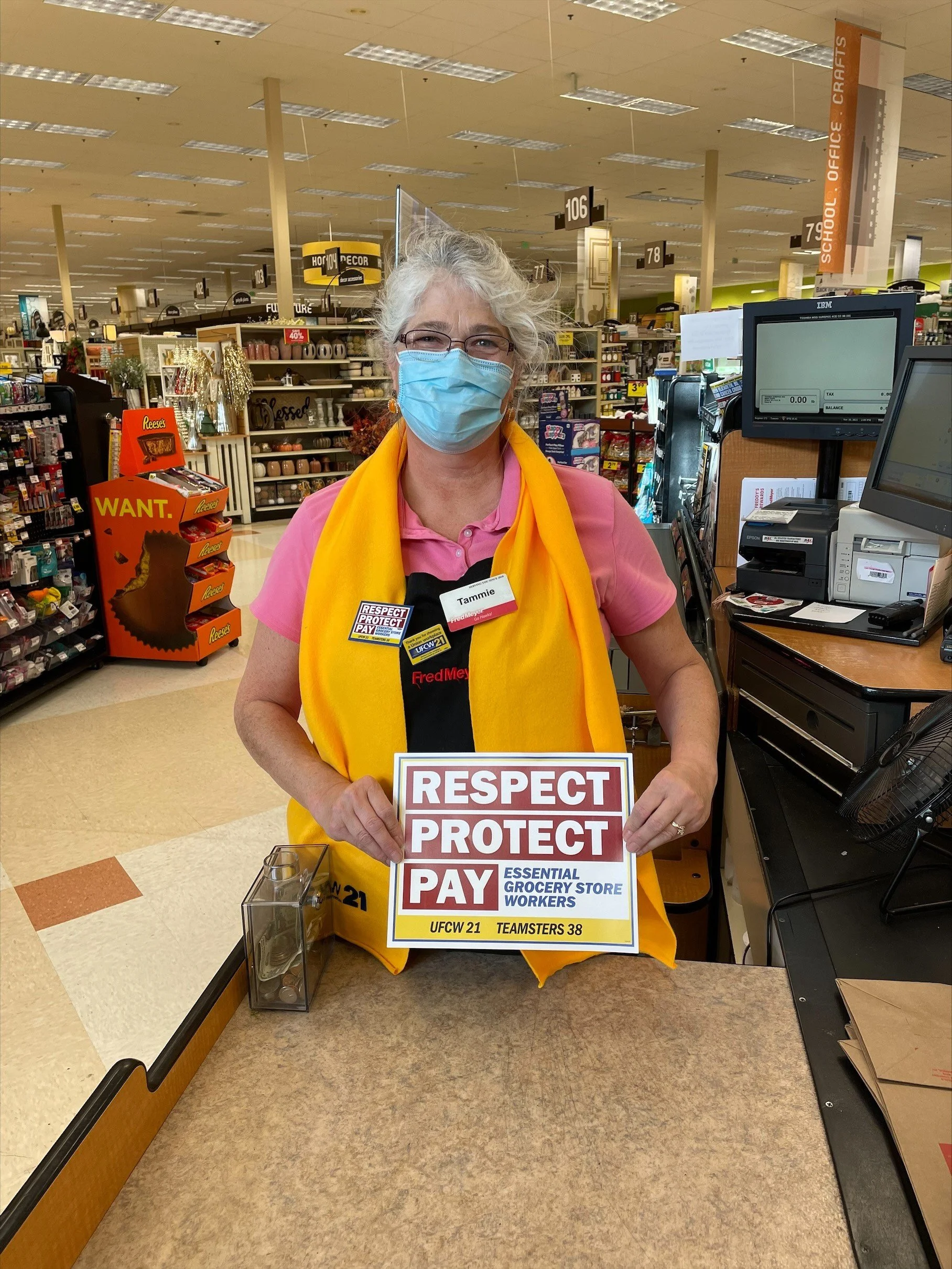
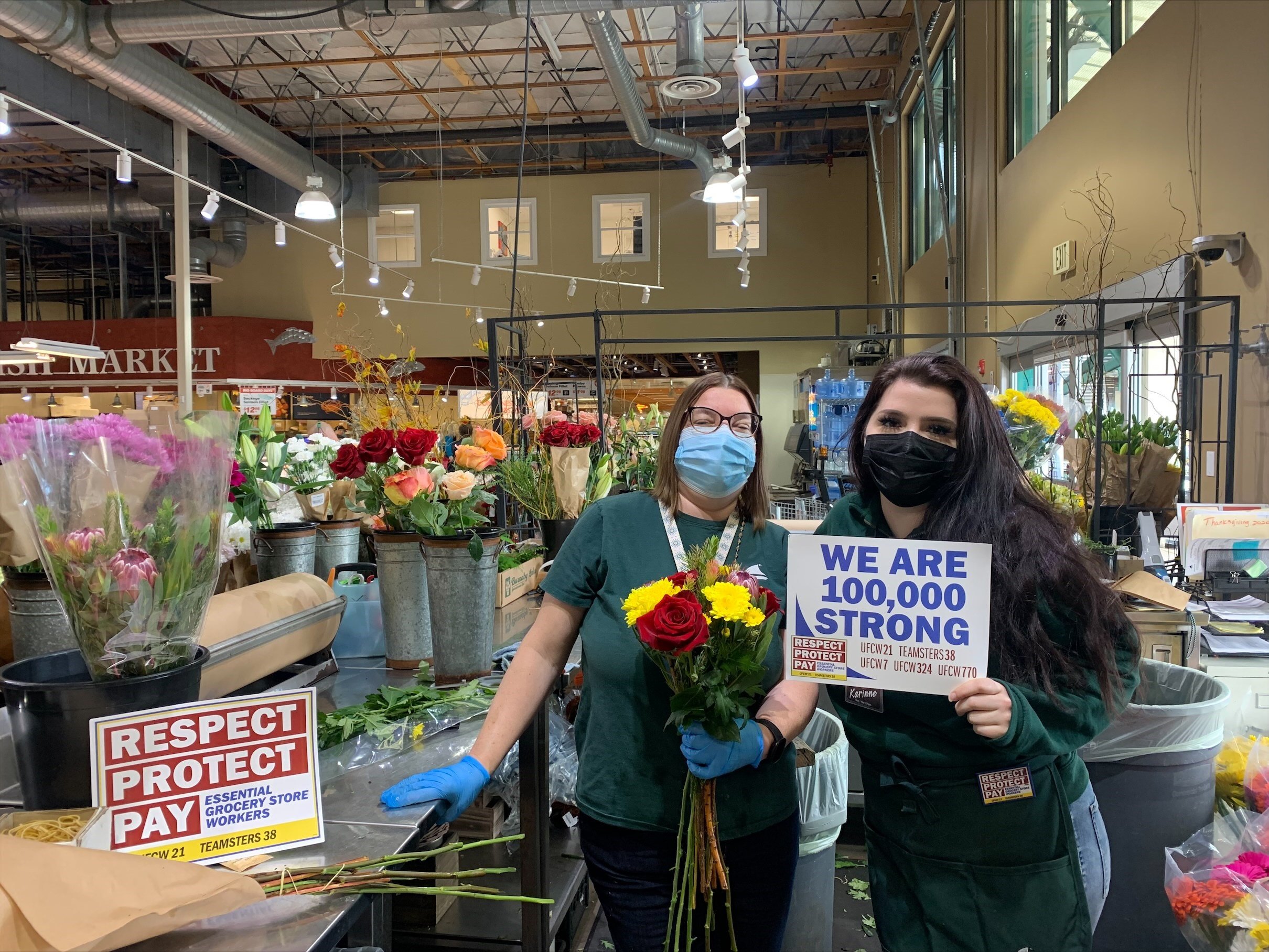
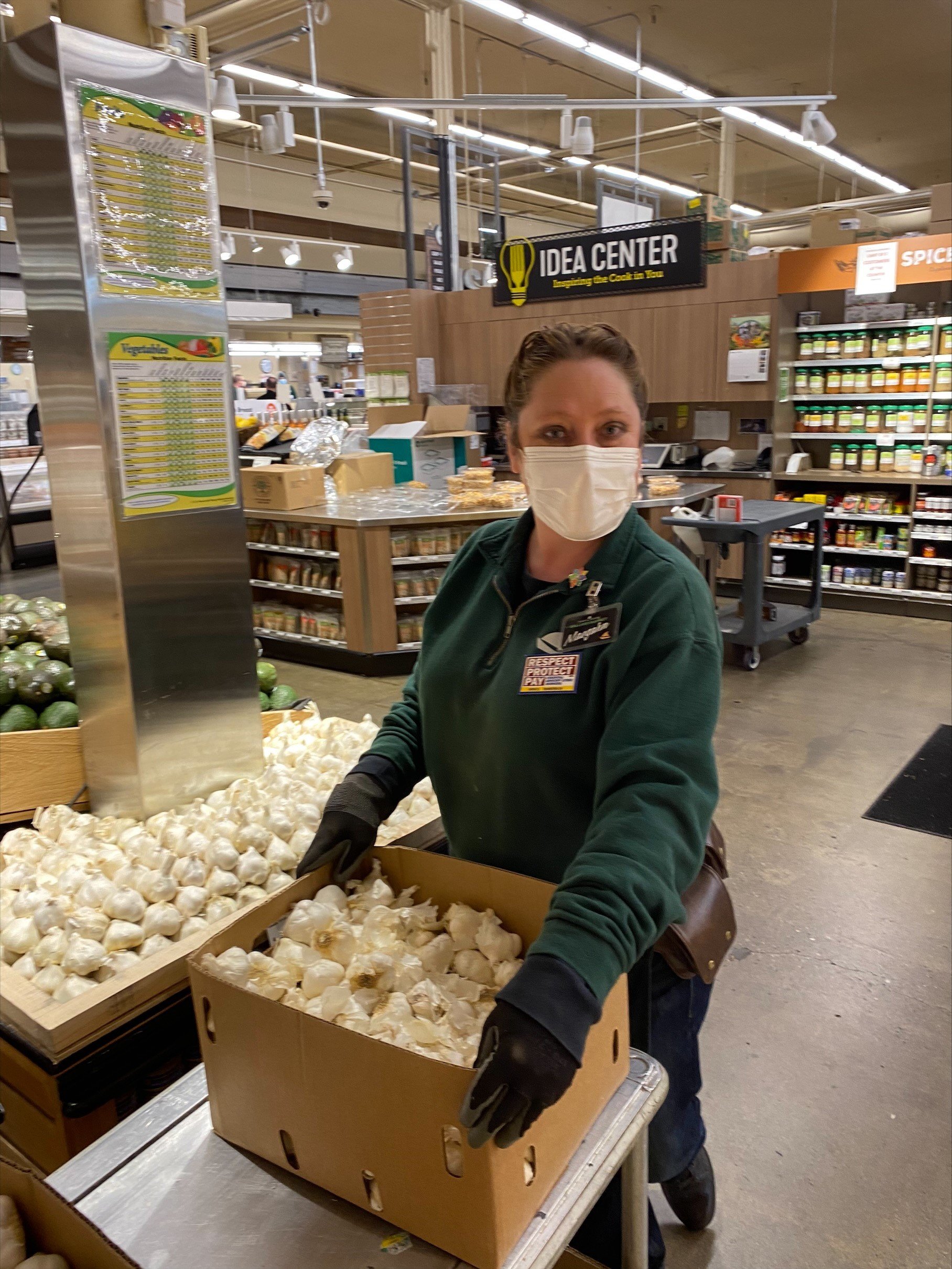
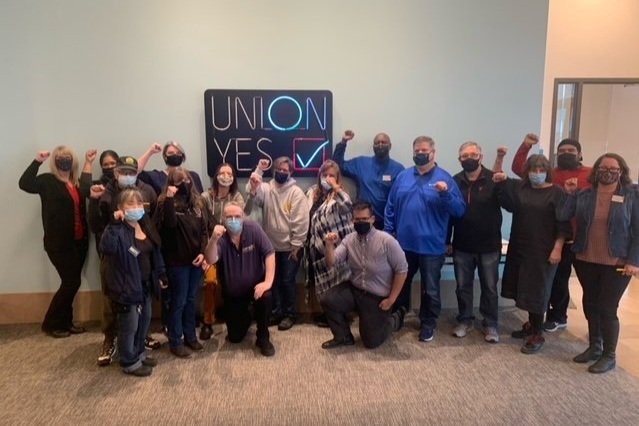
Workplace leaders and Union Reps visited over 250 of our union stores, handing out buttons and taking pictures with members. What happens in negotiations is important. If we want the Employers to Respect, Protect, and Pay us then we must be united and organized to win. Employers have shown over the last two years how much more they prioritize their record high profits over the safety and pay of essential workers. The only way we change that is through collective action. When we fight together, we win together.

The top things all members can do right now to help build for a successful contract negotiation:

  • Wear your “Respect, Protect, Pay” button! Show we are united and focused to improve our workplaces and get higher pay. If you need a button, talk to one of your workplace stewards or leaders, or contact your Rep!

  • Join your Contract Action Team to help organize and mobilize workers to fight for better pay and a better contract. Talk to a workplace leader or your Union Rep if you are interested.
    And join a Contract Action Team meeting this week >>

  • Don’t miss important bargaining updates, actions, benefits, and more. Make sure your personal contact information is up to date with our union:
    ufcw21.org/update-your-information

  • Join our private Facebook group UFCW 21 Grocery Store Workers 2022 tinyurl.com/2022grocerygroup

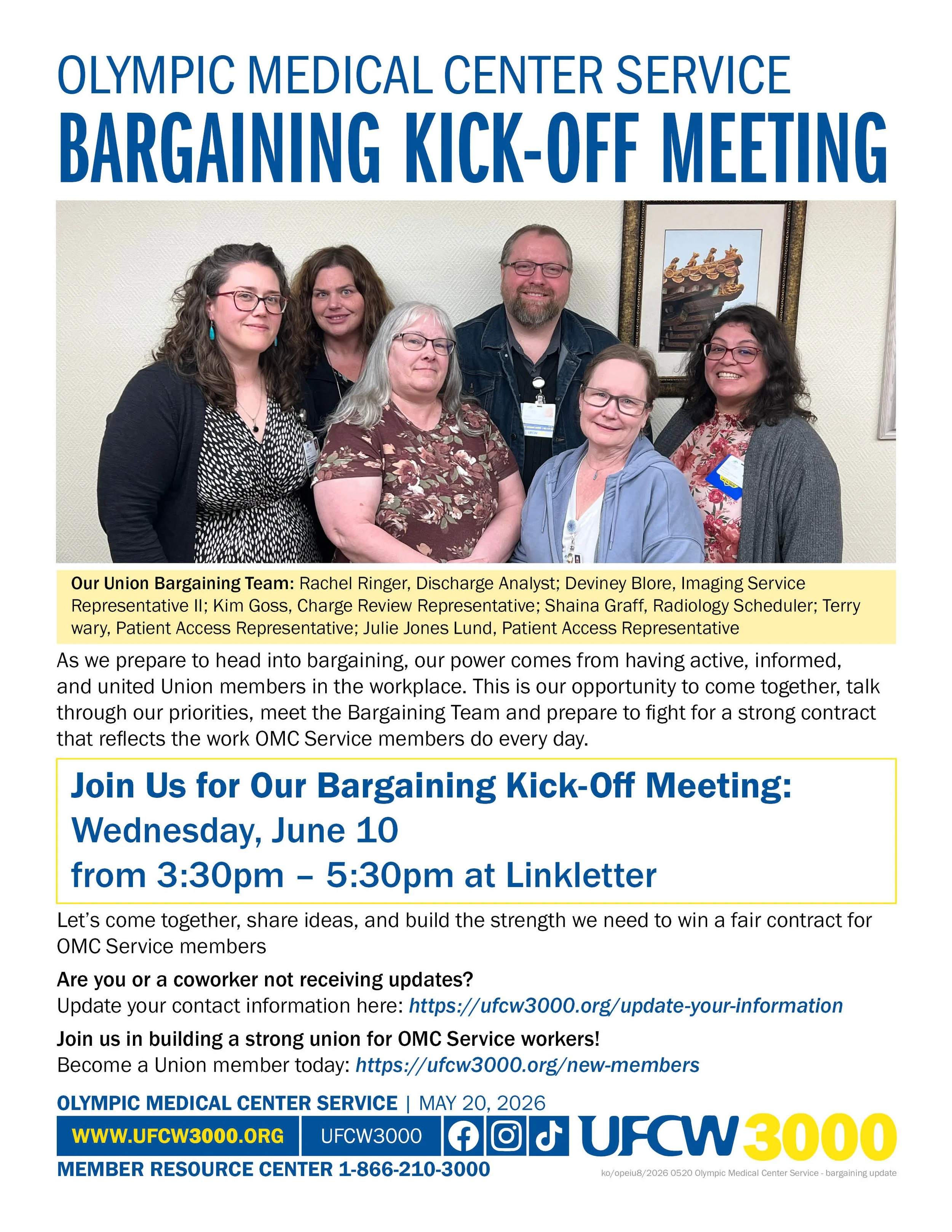
Our Union Bargaining Team:

Ames Reinhold, Metropolitan Market

Amy Dayley Angell, QFC

Aaron Streepy, Attorney

Budha Green, Safeway

Cliff Powers, Safeway

Cynthia Hill, Safeway

Caprii Nakihei, Safeway

Cosmo Villini, Safeway

Enrique Romero, Fred Meyer

Faye Guenther, UFCW 21 President

Heidi Odom, Fred Meyer

Jeannette Randall, Safeway

Jeff Alexander, Fred Meyer

Jeff Smith, Fred Meyer

J’Nee DeLancey, Town & Country

Joanna Clapham, Fred Meyer

Joe Mizrahi, UFCW 21 Secretary Treasurer

Kyong Barry, Albertsons

Maggie Breshears, Fred Meyer

Maroot Nanakul, Safeway

Naomi Oligario, Safeway

Richard Waits, Haggen

Roger Yanez, QFC

Sam Dancy, QFC

Sam Kantak, Teamsters 38 Secretary Treasurer

Shawn Hayenga, Metropolitan Market

Tammi Brady, Teamsters 38 President

Wil Peterson, Fred Meyer

2022 Grocery Store Worker Negotiations Kick Off

Grocery Store Worker union negotiations kick off

Grocery Store Workers have continued to show up for our customers and communities through some of the hardest conditions and circumstances imaginable. It’s time to celebrate our dedication to each other and kick-off this negotiation cycle united and strong.

All week union members, leaders, and Reps have been visiting each of our 200+ union stores handing out buttons, bargaining information, and taking pictures in workplaces as part of our strategy to get as many members involved, informed, and activated as possible! It’s time for employers to Respect, Protect, and Pay essential grocery store workers!

We are prepared and ready  

Preparations for next year’s contract negotiations have begun. Union grocery store workers are more involved and active than ever before as we partner with Teamsters Local 38 here in Washington and other UFCW locals across the Western U.S. Together we are the power of over 100,000 grocery store workers. 

Employers have shown over the last two years how much they prioritize their record high profits over the safety and pay of essential workers. The only way we change that is by making them change through collective action. When we fight together, we win together. 

When we fight we win  

Our Union Bargaining Team will build targeted contract proposals, based on the priorities set by the membership around everything from wages to better safety language, then take those proposals to the Employer's representatives at the bargaining table in early 2022. The Employer will also make proposals to our Bargaining Team. Often times these are proposals to cut our contract benefits and take away gains we have fought for and won in past contracts.  

In 2019, successful contract negotiations resulted in the largest wage increases in our union's history, improved safety language, stronger scheduling language, new workforce development and training language, maintained our health care benefits with no increase in costs, and perhaps the biggest win of all: secured and improved our retirement pension.  

This contract negotiation our union bargaining team, made of rank-and-file union members from diverse workplaces, will continue to focus on the priorities identified by thousands of members in the bargaining survey: 

  • Win higher wages, especially at the top of our pay scales  

  • Create more equity in pay between departments   

  • Protect our high-quality, low-cost health care plan 

  • Keep our pension funded and secure  

  • Improve store safety and training  

  • Improve recruitment and retention so we have the proper staff to help us get the work done 

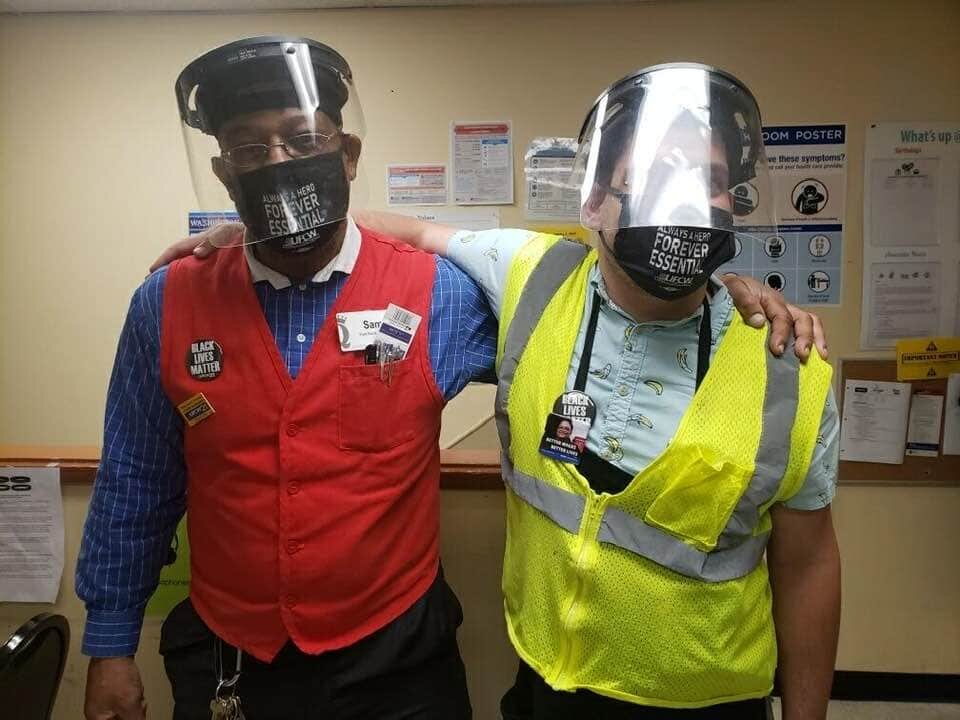
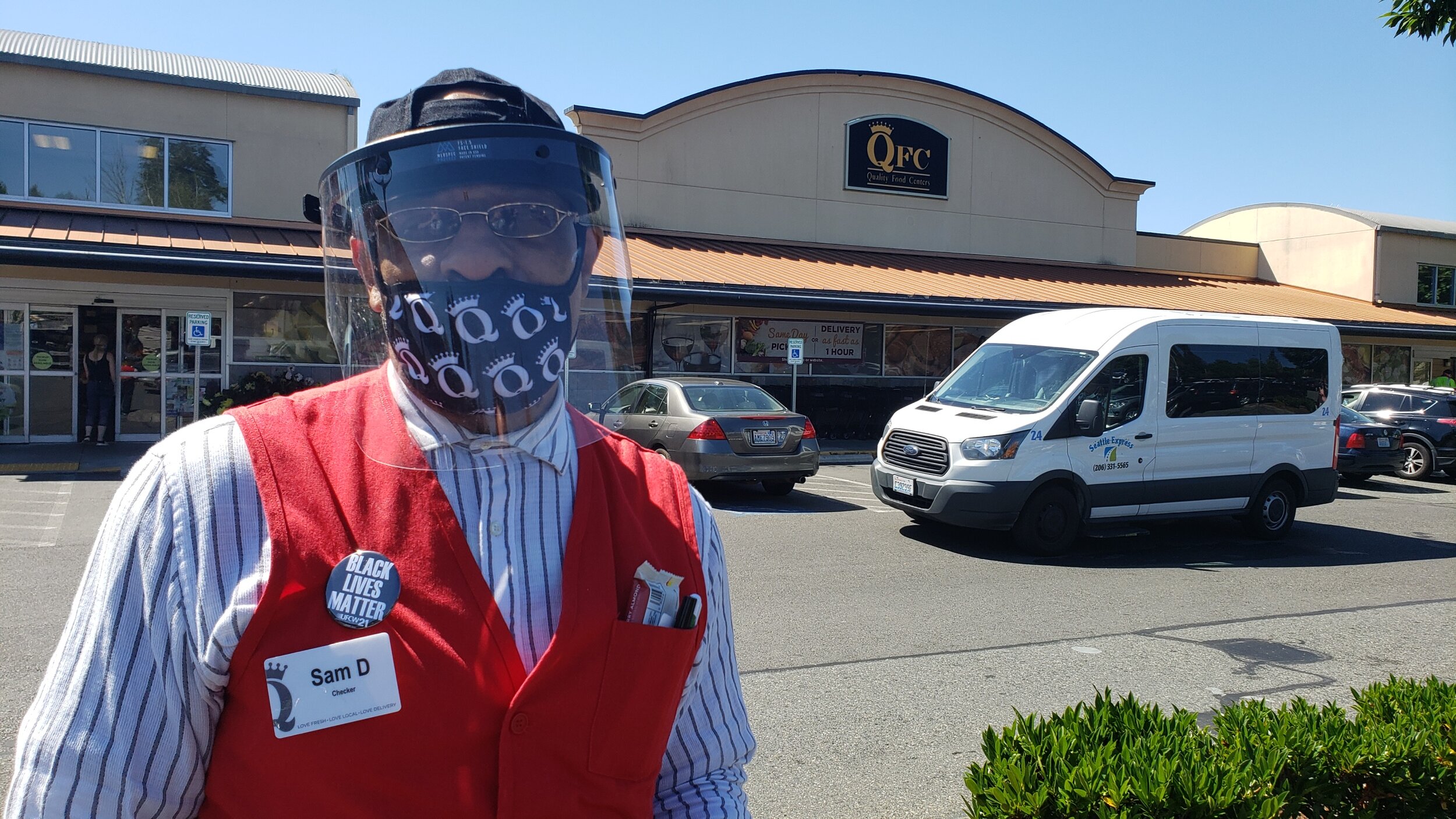
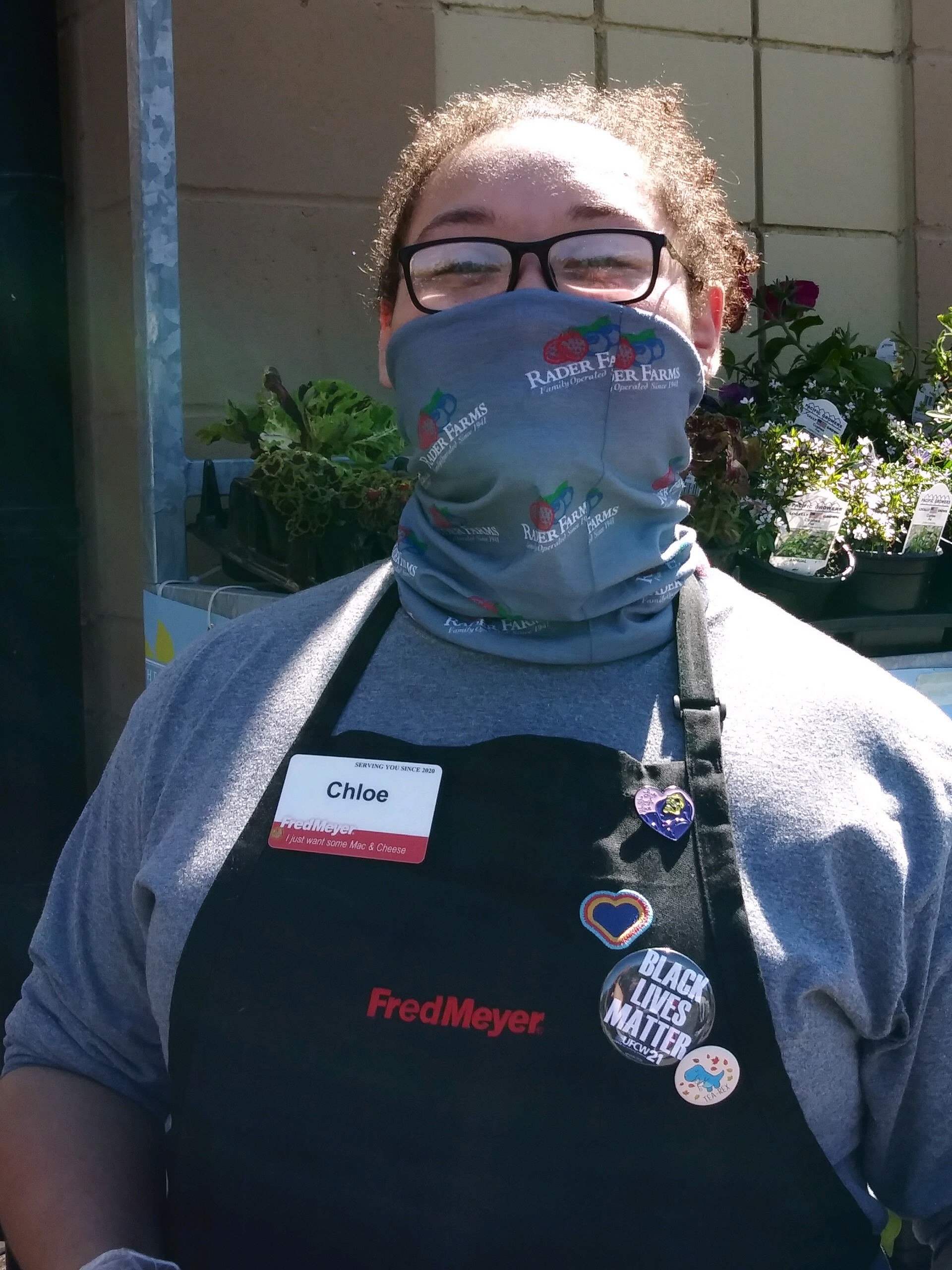
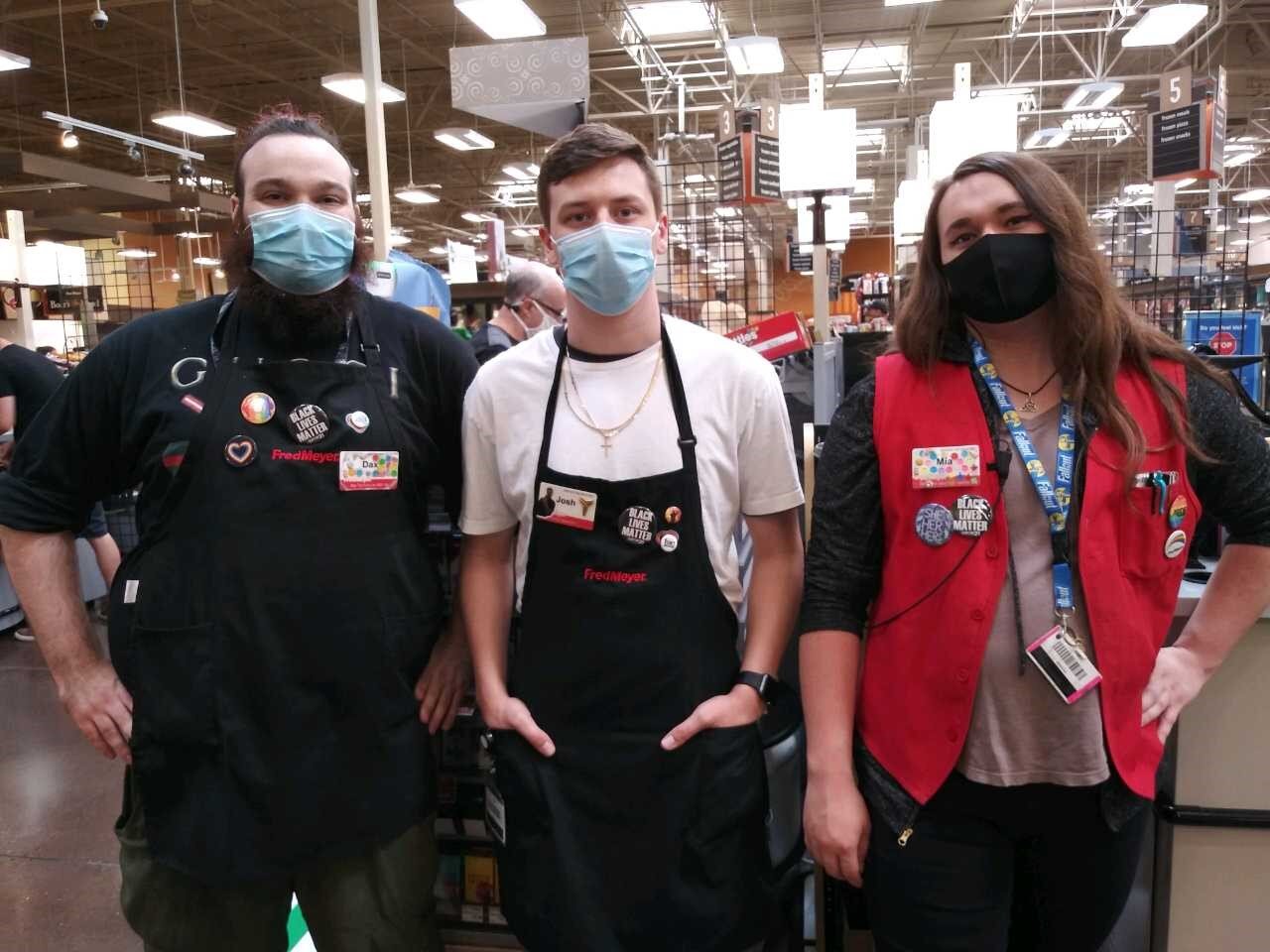
Grocery Store Workers Have Right to Wear Black Lives Matter Buttons

For Immediate Release: September 17, 2021
Contact: Tom Geiger, UFCW 21, 206-604-3421

Grocery Store Workers Have Right to Wear Black Lives Matter Buttons

National Labor Relations Board Tells Kroger’s QFC and Fred Meyer to Reach Settlement or Change Policy

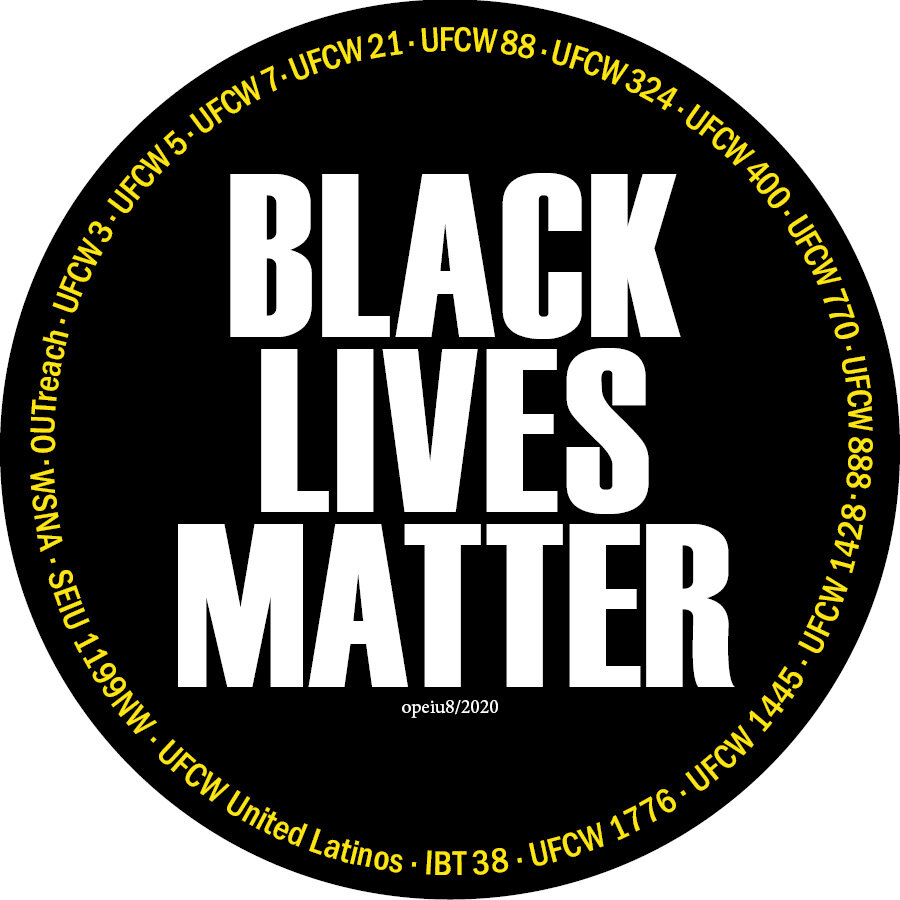
2020 Black Lives Matter Button UFCW locals and Teamsters and SEUI and WSNA.jpg

Seattle, WA -- Region 19 of the National Labor Relations Board has informed UFCW 21 of its finding that Fred Meyer and QFC – both Kroger companies – violated federal labor law when it prohibited workers from wearing union-sponsored Black Lives Matter buttons.

Specifically, Region 19 found merit in UFCW 21’s charges that Kroger violated the law by: 1) failing to bargain with the Union over a change in workplace conditions – in this case the practice of allowing the wearing of buttons at work; and 2) prohibiting workers from taking action together – in this case, by wearing Black Lives Matter messages – to protest racism in the workplace and in society, generally.

Region 19 will now seek a settlement agreement with Kroger, which would likely require a change to company policy. If a settlement cannot be reached, Region 19 would typically issue a formal complaint and a trial would be held before an Administrative Law Judge, whose ruling would be subject to an appeal to the NLRB in Washington D.C.

“This is very uplifting. When workers were trying to speak out through these buttons and collectively say Black Lives Matter and Kroger said to take the buttons off, that was an insult. This decision is welcome news in our work to bring attention to social and racial injustice in the workplace and in our neighborhoods”, said Sam Dancy a Front End Supervisor at the Westwood Village QFC in West Seattle, WA.

Motoko Kusanagi, a Front End Checker at the University Village QFC in Seattle reacted, “We wore the pins because it seemed like the right thing to do. My coworkers showed me their pins happily, letting me know they stood in solidarity with me and my family. One of the core values of the store is inclusion, so we did not think “Black Lives Matter” was a radical statement for this business. The amount of pushback we received for such a small showing of support still sits wrong with me to this day. I’m glad we could fight back.”

UFCW 21 President Faye Guenther concluded, “In the wake of this welcome action by the NLRB, we are calling on Kroger to respect workers’ rights and take meaningful steps to address racial inequities in Kroger workplaces. Among other things, Kroger needs to do a better job of hiring and promoting African Americans at every level of the company and making it clear that it will not tolerate racism from customers or employees.”

Background

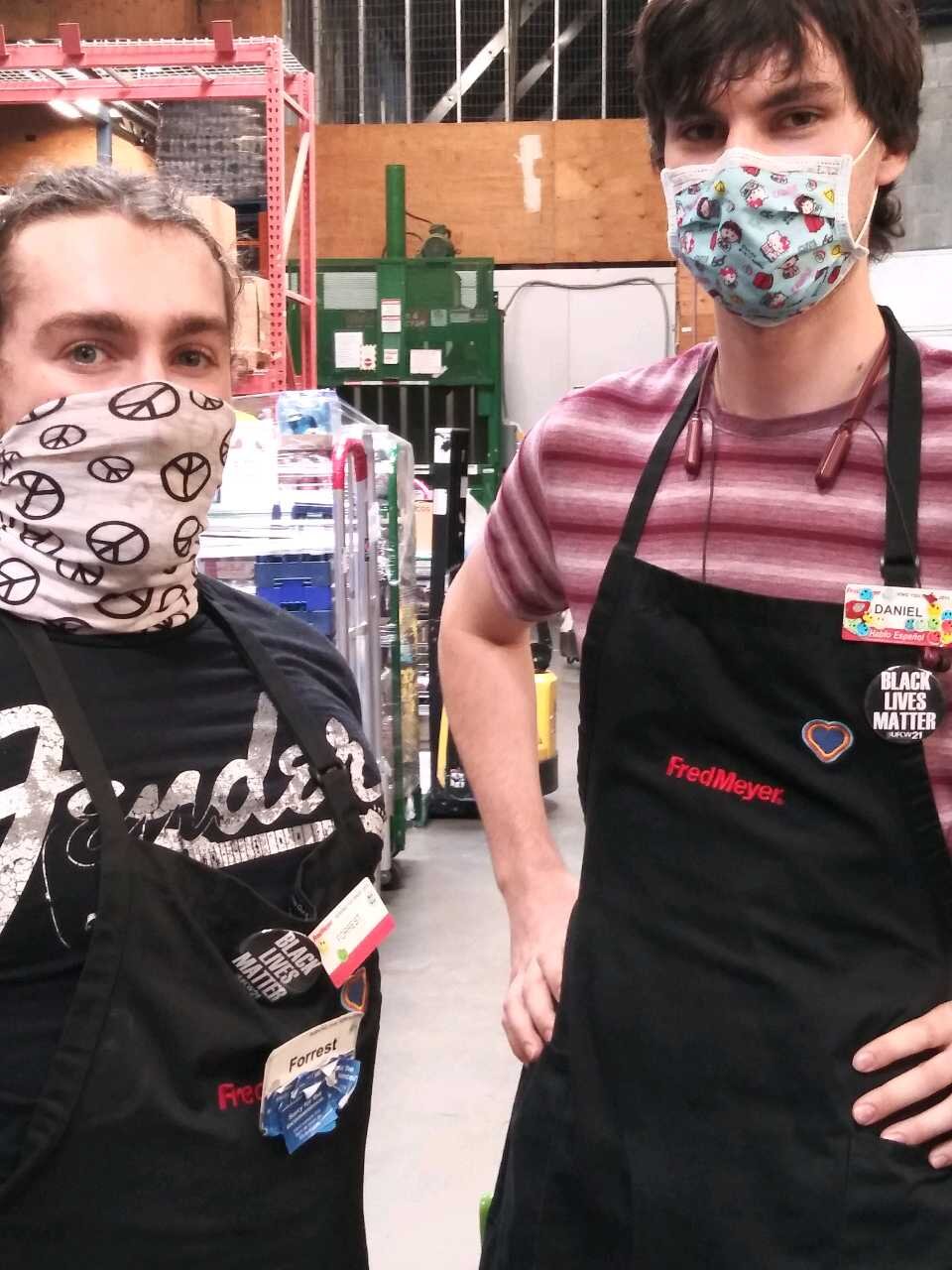
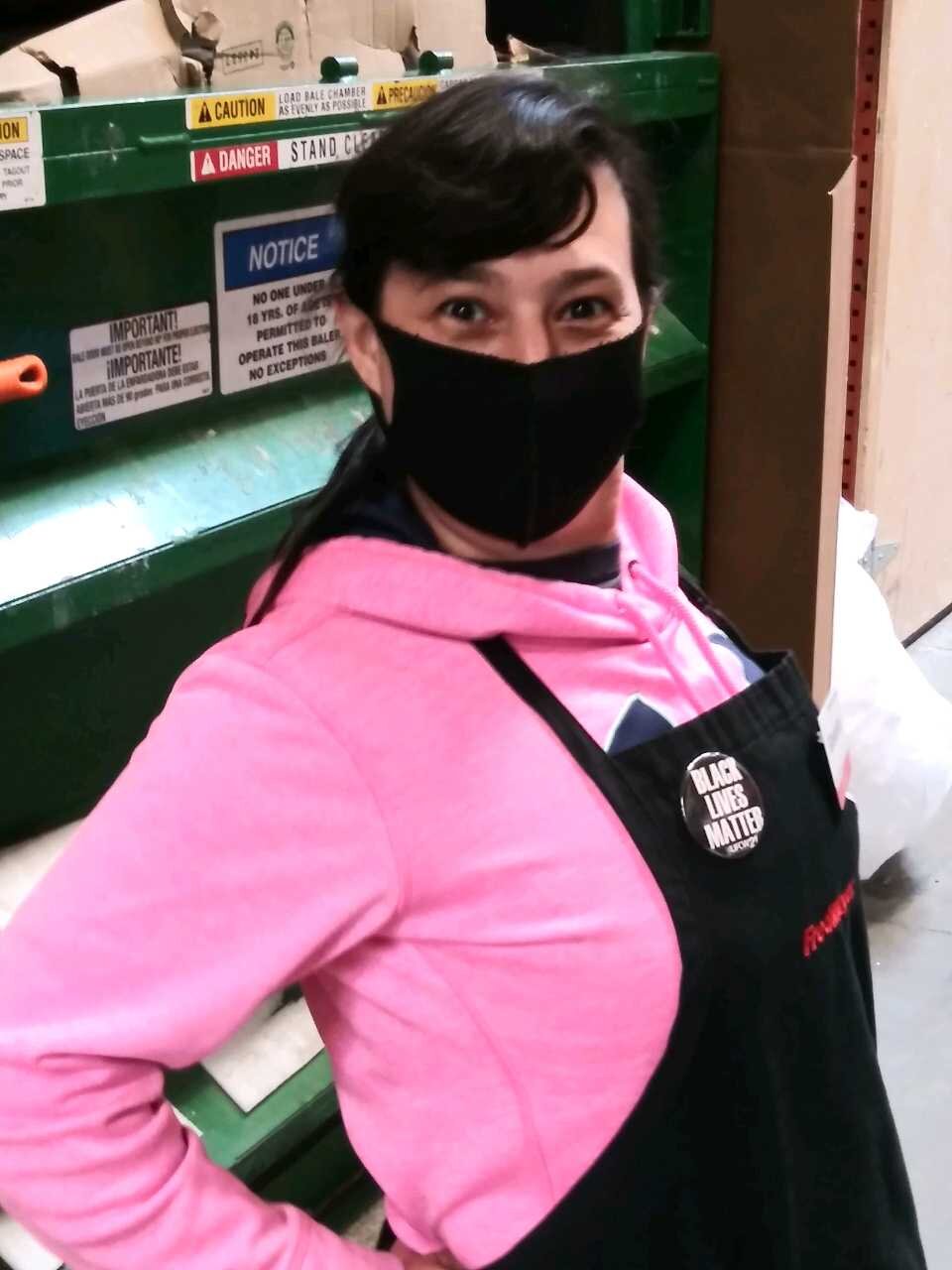
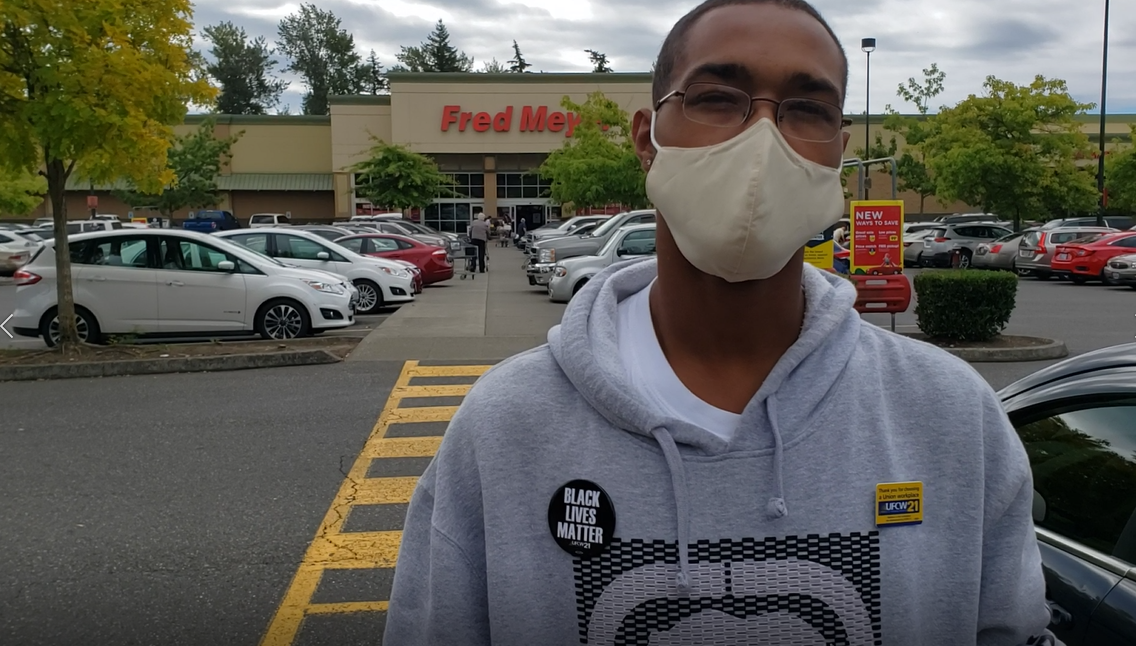
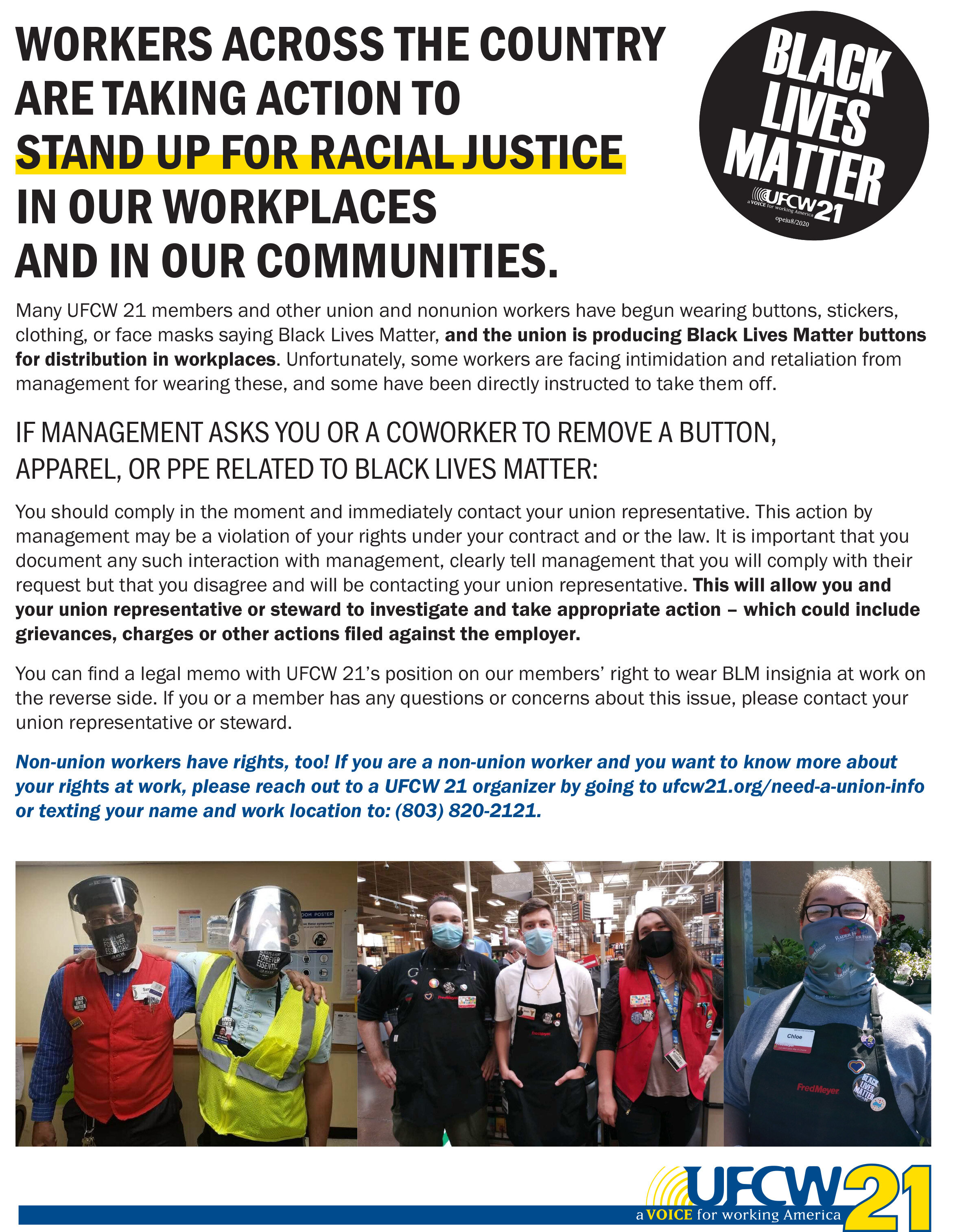
After Minneapolis police officer Derek Chauvin murdered George Floyd on May 25, 2020, many UFCW 21 members working in grocery and retail stores chose to express their opposition to racism by wearing face masks (otherwise worn for protection from COVID) or other items bearing the Black Lives Matter slogan.

Although Kroger issued public statements expressing sympathy with the Black Lives Matter movement, managers at Kroger-owned stores in Western Washington started ordering UFCW 21 members to remove Black Lives Matter masks in June 2020.

 UFCW 21 responded to the company’s Black Lives Matter ban by collaborating with Fred Meyer and QFC workers to distribute union-sponsored Black Lives Matter buttons with the UFCW 21 logo. When managers banned the Union buttons, UFCW 21 filed charges with the National Labor Relations Board. Kroger’s ban and the Union response received widespread local and national attention.

# - # - #

UFCW 21 represents over 46,000 workers at grocery stores, retail, health care and other industry jobs.


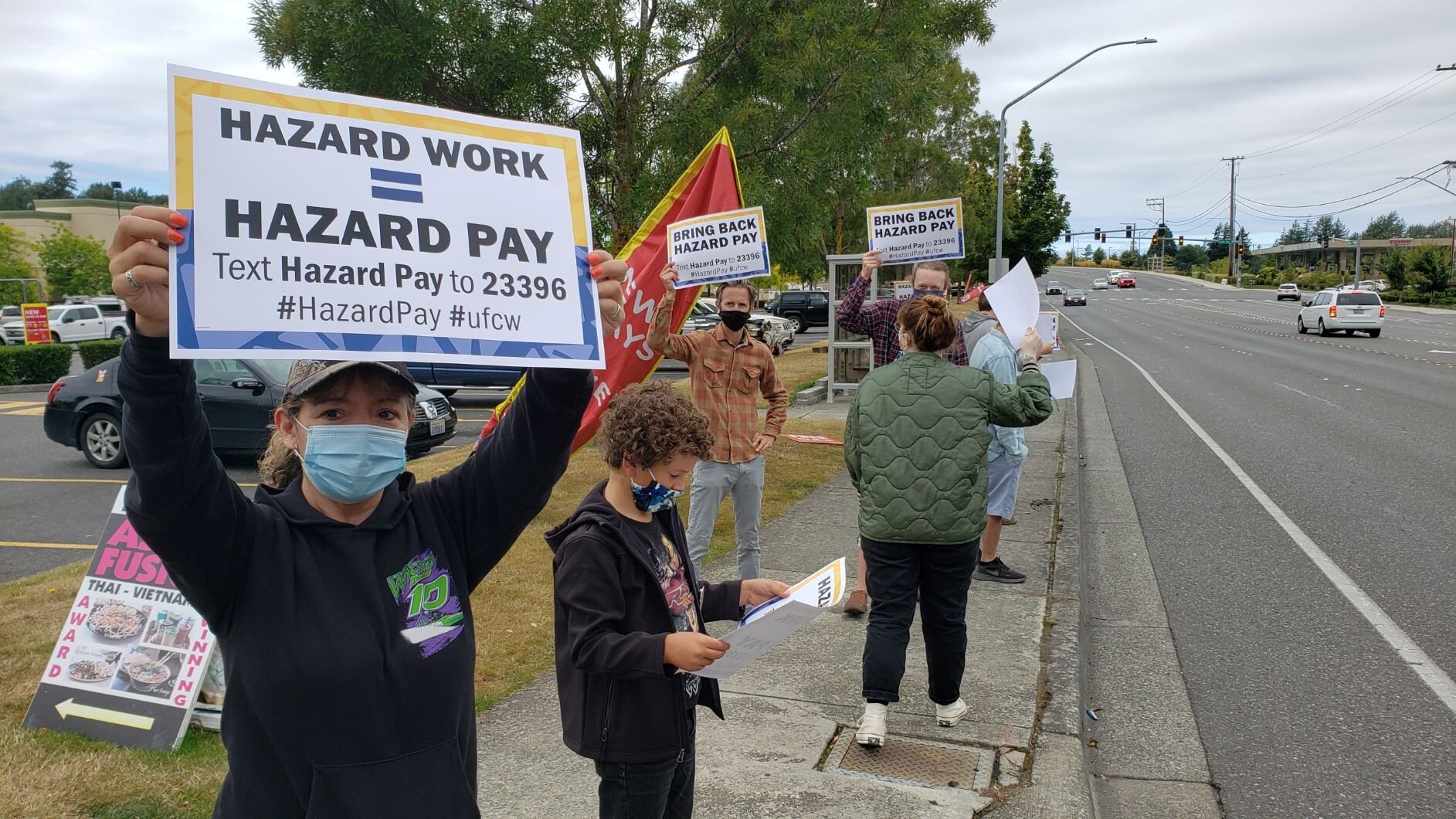
Bellingham grocery workers win their fight for a $4/hour hazard pay mandate

The Bellingham City Council voted 5 to 2 last night (May 10) to mandate $4 per hour hazard pay for frontline workers at large grocery chain stores in the city. Last night’s vote was a final procedural step, following initial approval of the ordinance two weeks earlier. The ordinance will go into effect at 12:01AM on May 25th. It will cover unionized employers, including Fred Meyer, Safeway, and Haggen, as well as some non-union stores such as Whole Foods.

Chris Vincent, a veteran produce worker at Bakerview Fred Meyer, helped organize co-workers to send emails and give public comment at multiple City Council meetings. Upon hearing of the victory, Vincent offered words of celebration:

“We fought an honorable fight for an honorable cause to give the hard-working people on the front lines what they deserve in these hazardous times. I want to personally thank the Bellingham City Council for recognizing the hazardous conditions we work in and for their support in compensating us for it. When we stand together, we win together!”

The Northwest Central Labor Council, led by Secretary-Treasurer Michele Stelovich, and Whatcom County Jobs With Justice, led by Betsy Pernotto, provided crucial support to UFCW21, engaging Council Members and mobilizing supporters to send messages of support and provide comments at several meetings.

Speaking before Council on March 8, the Labor Council’s Stelovich lauded frontline grocery workers:

“They stepped up, they went to work, and they made sure that we had food on our tables. So I just wanted to thank all the grocery workers that have done that. You know that some of the grocery stores have made huge profits… So these are things that they can afford to be able to give their workers… and reward them for being good employees that came to work under very difficult conditions.”

The Whatcom County DSA also mobilized supporters to speak up for grocery workers at multiple Council meetings.

The Northwest Grocery Association and Fred Meyer sent representatives to Council to speak against the ordinance, but there was little opposition, otherwise.

The City Council’s action last night was the culmination of a nearly year-long campaign by Bellingham grocery workers to demand continuation of hazard pay, after Albertsons and Kroger discontinued it last Spring. Members and community supporters held multiple protest actions to educate the public and sent hundreds of messages to City Council once the issue moved into the legislative arena in February.

Throughout the campaign, UFCW 21 members have also emphasized the need for improved COVID safety in their workplaces.

City Council Member Lisa Anderson shepherded the hazard pay ordinance to victory over several months, never backing down in the face of the grocery industry’s legal threats and misinformation.

The hazard pay ordinance covers workers at companies that employ at least 500 employees worldwide and at least 40 in Bellingham. At these companies, hazard pay will be required at stores that are over 10,000 sq. ft. and primarily sell groceries for offsite consumption or which are over 85,000 sq. ft., with 30% or more of their floor space devoted to groceries.

Thank You to the Bellingham City Council members who voted to support grocery workers: Lisa Anderson, Hannah Stone, Michael Lilliquist, Hollie Huthman, and Daniel Hammill

These Bellingham City Council members voted against grocery workers: Gene Knutson and Pinky Vargas

Seattle Hazard Pay goes into effect

Through the hard work UFCW 21 members who wore buttons, emailed over 800 times, and testified directly to Seattle City Council. Essential workers were able to win Hazard Pay in Seattle. Union members made this happen in Seattle, hear directly from the Seattle City Council members who voted unanimously for the hazard pay ordinance how UFCW 21 members made the difference! Thanks to Seattle City Councilmember Teresa Mosqueda for her leadership in bringing forward this ordinance and all the Seattle City Council who stood up for Essential Workers.

HAZARD PAY BASICS: 

  • Covered workers & employers: Workers at grocery stores operating in the City of Seattle whose employers have more than 500 employees worldwide 

  • For the purposes of this ordinance, grocery stores must be over 10,000 sq ft in size or over 85,000 sq ft with 30% of sales floor area dedicated to groceries  

  • Amount: $4/hour for every hour worked in Seattle 

  • Date this ordinance went into effect: February 3, 2021 at 12:01 am 

Read the Seattle Hazard Pay Ordinance

FREQUENTLY ASKED QUESTIONS: 

How did we get this hazard pay? 

UFCW 21 members have been fighting for months and months to get the hazard pay we deserve. In grocery stores, many employers paid hazard pay for a short time at the beginning of the COVID pandemic, then took it away even though the risk of COVID exposure didn’t go away (in fact, it got a lot worse during the COVID spikes this winter). After all these actions, including petitions, filing grievances, and bargaining with employers, Seattle grocery workers went to the City Council and brought up the idea of the city taking this step since employers weren’t. Seattle City Council heard from many grocery store workers and received over 800 emails from workers and community supporters in favor of a hazard pay ordinance, and at least one city council member mentioned seeing workers in UFCW 21 buttons at his local grocery store, and many council members said hearing directly from grocery workers about the importance of hazard pay was key to their decision to support it. (See the video above!) 

Why doesn’t my city council pass hazard pay? 

Maybe they will! It only happens when we organize. We’ve already seen Burien City Council answer the call and pass a hazard pay ordinance, cities and counties in California have passed hazard pay ordinances as well, and we look forward to organizing anywhere that workers want to fight for this. Sign up for future trainings on hazard pay here—just check the appropriate box on that form. 

What counts as hazard pay? Is this on top of overtime, existing hazard pay, and/or tips?  

Employees must receive at least $4 per hour in hazard pay. Hazard pay is in addition to compensation, bonuses, commissions, and tips. 

Can they cut my compensation to pay for this?  

Employers cannot reduce other compensation because of this ordinance. 

What if my employer is already paying hazard pay? 

If an employer is already offering hazard pay, that extra pay can count toward the $4/hour hazard pay they are obligated to pay. 

When is this paid out and where will it show up on my paycheck? Can they just give us a one-time bonus instead? 

This $4/hour hazard pay must be paid out on your regular payday and itemized separately on your paycheck so you can see that you received it. 

Do employers have to notify us about this hazard pay?  

Your employer must post written notice of the rights established by this ordinance at all worksites covered by the ordinance within 30 days of its effective date, which was February 3, 2021. They also have to give you an updated “Notice of Employment Information” telling you your job title and your wage rate. 

What’s the expiration date on this hazard pay? 

There is no set date of expiration; employers need to pay this for the duration of the city’s COVID “civil emergency” proclaimed by the Mayor last March. We don’t know yet when the city will declare the civil emergency over. 

What if I don’t see any hazard pay on my next paycheck? 

If you get paid for hours worked anytime after 12:01 a.m. on February 3, you believe your employer is covered by this ordinance, and you don’t see a record of hazard pay on your paycheck, contact your  Union Rep immediately. The city can investigate employers who don’t pay you the correct amount and force them to pay you, with interest, for the pay you missed. We have had several successful cases in recent years where workers have been compensated thousands of dollars in back pay they were owed. We take enforcement of workers’ rights very seriously. 

Why weren’t all essential workers included in this ordinance? 

UFCW 21 will continue to fight for hazard pay for all essential workers through contract bargaining, workplace organizing, and public actions. When it comes to the legislative process, we recognize that lawmakers, community leaders, the business lobby, voters, and other interest groups are all going to influence what we can achieve. In the case of the grocery industry, elected officials and the public have been receptive to hazard pay legislation because of the very clear connection between the enormous COVID-related profits that large grocery stores are making and the high COVID risk that workers face. We will continue to pursue hazard pay for all essential workers through all available avenues.

I heard that they might close stores or cut hours because hazard pay passed. Is that true, and is there anything we can do about it? 

The big grocery companies that are subject to this ordinance have been making windfall profits because of COVID. They have funneled billions to their shareholders since the start of the pandemic. Yet the workers taking the risk to make all those profits possible saw very little reward. Any employer threatening to cut hours or close stores is doing this in a misplaced effort to bully us into submission, not because they don’t have enough money.

During the pandemic, grocery workers have been designated essential workers because grocery stores are essential to the health and well-being of our communities. We are confident that the public and elected officials in the Puget Sound region will stand with us if these companies attempt bully tactics like retaliatory store closures or hours cuts that would jeopardize safety.

Your union contract has language in it about hours and hours reduction. We need to continue to enforce our contracts and our right to hours under our contracts. Work with your shop steward or union rep if you believe hours are being cut at your store

2021 Hazard Pay Mandate for Frontline Essential workers Windfall profits graphic.jpg

We have the right to push back against intimidation from these companies. Recently, Kroger announced the closure of two stores in Long Beach, California, after Long Beach City Council passed a hazard pay ordinance. Here's what the president of our UFCW International Union said about the store closures: 

“Kroger closing these stores is truly outrageous conduct and a ruthless attempt to create a chilling effect that will discourage other cities from doing what is right and enacting hazard pay mandates that recognize the threat these workers face from COVID-19.  

“Let us be very clear, this is not how you treat frontline essential workers that face daily and worsening exposure to COVID-19. America’s grocery workers will not be silenced in the face of these shameless scare tactics. Major grocery chains across the country have already agreed to new hazard pay agreements and Americans strongly support hazard pay in recognition of the ongoing risks these grocery workers are facing. Kroger does not have the right to ignore laws designed to protect workers and the public during this escalating health crisis. 

“As America’s largest food and retail union, UFCW will use every tool available to ensure that Kroger follows the law and that our state and federal leaders hold companies accountable for flagrantly choosing to evade these vital workplace laws.”

-Marc Perrone, UFCW International President 

Read the full statement here>> 

We know that whenever we organize, we build power. When we win, management gets scared, and sometimes their first reaction is to lash out. But we can stand strong, stand together, and not be intimidated by any pushback from our employers. Getting hazard pay into the pockets of grocery store workers was never going to be easy, but the impact of this win is bigger than just the folks in Seattle and California who won it first. In fact, Trader Joe’s has already announced they’re extending the $4 hazard pay to all their employees, nationwide. Workers made that happen.  

How to Fight Back Against Boss Tactics 

In the coming days, we know employers might try to intimidate workers into ending our fight for hazard pay. Here are some ways to push back. 

Know Your Rights! 

There are important provisions in this ordinance that say employers can’t retaliate, discriminate, or take any “adverse action” against workers because of the passage of this ordinance. Here’s some of the language in the bill around retaliation: 

No employer shall, as a result of this ordinance going into effect, take steps to reduce employee compensation so as to prevent, in whole or in part, employees from receiving hazard pay at a rate of four dollars per hour for each hour worked in Seattle in addition to those employees’ other compensation. 

No employer or any other person shall take any adverse action against any person because the person has exercised in good faith the rights protected under this ordinance. Such rights include, but are not limited to, the right to make inquiries about the rights protected under this ordinance; the right to inform others about their rights under this ordinance; the right to inform the person's employer, the person’s legal counsel, a union or similar organization, or any other person about an alleged violation of this ordinance; the right to file an oral or written complaint with the Agency or bring a civil action for an alleged violation of this ordinance; the right to cooperate with the Agency in its investigations of this ordinance; the right to testify in a proceeding under or related to this ordinance; the right to refuse to participate in an activity that would result in a violation of city, state or federal law; and the right to oppose any policy, practice, or act that is unlawful under this ordinance. 

“Adverse action” means reducing compensation, garnishing gratuities, denying a job or promotion, demoting, terminating, failing to rehire after a seasonal interruption of work, threatening, penalizing, retaliating, engaging in unfair immigration-related practices, filing a false report with a government agency, or otherwise discriminating against any person for any reason prohibited by Section 100.050. “Adverse action” for an employee may involve any aspect of employment, including compensation, work hours, responsibilities, or other material change in the terms and conditions of employment. “Adverse action” also encompasses any action by the employer or a person acting on the employer’s behalf that would dissuade a reasonable person from exercising any right afforded by this ordinance. 

Enforce Your Contract! 

Your union contract has language in it about hours and hours reduction. We need to continue to enforce our contracts and our right to hours under our contracts. Work with your shop steward or union rep if you believe hours are being cut at your store
Burien passes a $5 hazard pay ordinance for grocery store workers

For media inquiries contact Joe Mizrahi, Secretary Treasurer UFCW 21 

Victories like this can only happen when workers’ voices are heard. We believe every worker should have a voice on the job. Do you need a Union? >> 

Are you ready to fight for hazard pay in your city! >> 

During the COVID pandemic, grocery store operators have reaped billions of dollars in windfall profits as a direct result of the shift to at-home meal preparation, but they have failed to compensate workers for the added risks and burdens of working on the frontline during the pandemic. The pandemic has intensified in recent months and new variants will increase the risk, but most grocery workers have not received hazard pay in over 6 months. 

Last night, thanks to the hard work, testimony, and actions of UFCW 21 members, we won $5/hour Hazard Pay for grocery store workers in Burien at large grocery stores. 

Thanks to all the members and allies who contacted Burien City Council in support of this ordinance, as well as those who testified in favor of Hazard Pay by sharing their heartfelt stories and fears. Thank you to those on the Burien City Council who took a stand to champion essential workers, Mayor Jimmy Matta, Deputy Mayor Krystal Marx, Councilmember Pedro Olguin, Councilmember Cydney Moore, and Councilmember Kevin Schilling. 

The big-name grocery stores are making record profits during one of the worst pandemics in history, and they are doing it on the broken backs of their employees.” Sean Murphy, Safeway

I am fearful every day for myself and my loves ones, our health and safety are put in danger every time I step into work.” Maria Dirdala, Safeway

The effective date of the law is still being determined due to a special council session on Monday, February 8, but the progressive majority on the council has indicated they want it to go into effect as soon as possible.  

Our union’s success in passing this ordinance builds on the hard work we have done to pass Initiative 1433 Statewide Sick Leave in 2016, to pass Washington State Paid Family and Medical Leave in 2017, to pass Uninterrupted Meal/Rest Breaks and close the mandatory overtime loophole for health care workers in 2019, and to raise the minimum wage! 


UFCW 21 Grocery Store Workers Taking Our Fight for Hazard Pay to Local Governments

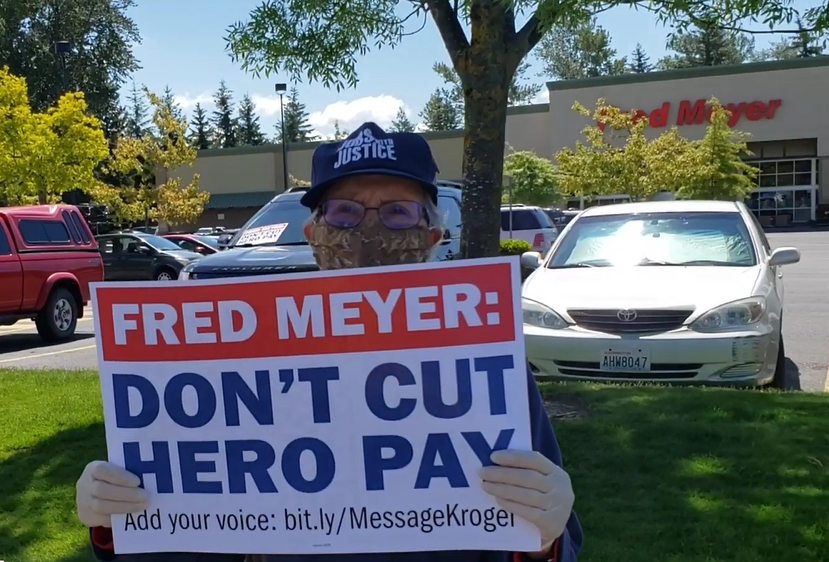
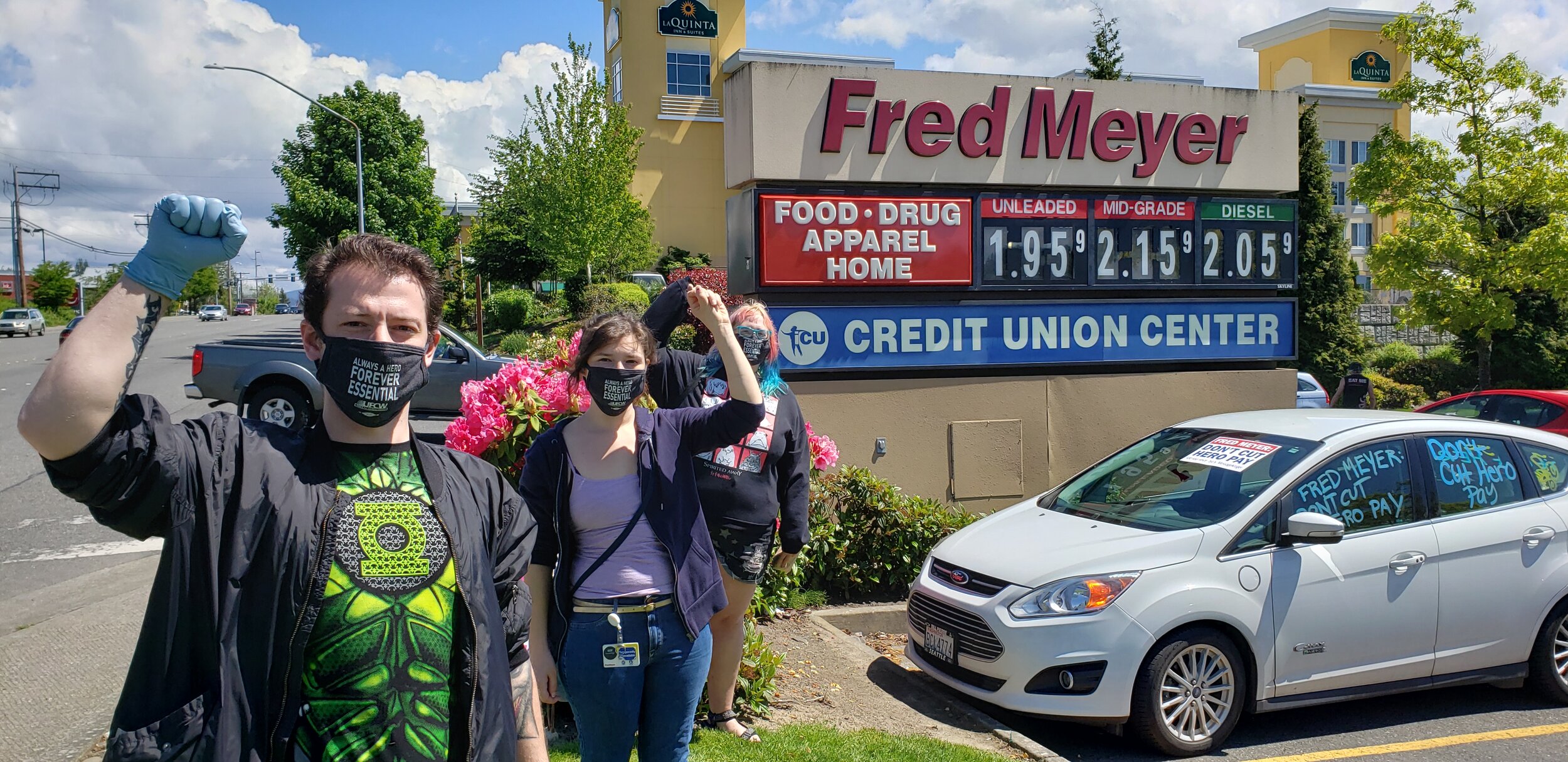
While grocery store workers in our area first saw hazard pay in late March, large grocery employers had cut hazard pay completely by midsummer. We have been pushing back in various ways ever since, pushing petitions, filing grievances, holding actions outside of stores, hosting press conferences, speaking out on social media, and helping thousands of customers contact our employers’ CEOs directly to express outrage at this disrespect for frontline workers.

While our actions were able to extend hazard pay at first and push employers to pay bonuses, and we are currently bargaining with Kroger, Albertsons/Safeway, PCC and others over COVID impacts in our workplaces. It’s time to move forward on additional actions.

UFCW locals have been coordinating to push local ordinances on hazard pay around the country, including right here. At the most recent Burien city council meeting, grocery store workers with UFCW 21 gave public comment calling for the passage of a city ordinance mandating hazard pay for grocery store workers who have kept communities fed during a crisis while corporate employers raked in unprecedented pandemic profits.

UFCW 21 Members Testify at Burien City Council on the need for hazard pay

UFCW 21 intends to introduce ordinances on hazard pay in Seattle and Burien next week. We know our customers and our communities are behind us. We know our employers’ profits are soaring, yet we’re taking on all the risks that make that profit possible. We know it’s possible to pass policies like this: Seattle has already passed one hazard pay ordinance, after food delivery workers organized to win per-order hazard pay premiums plus sick days. Los Angeles County passed a “hero pay” ordinance for grocery and drugstore workers just last week, and other city councils are currently discussing hazard pay for frontline workers.

JOIN THE FIGHT:

  1. SPEAK UP: Why is hazard pay important to you and your coworkers? Share a quick video or written message!

  2. TESTIFY: These days, speaking before city council can be done from your own home, car, or break room because meetings are held online. Live or work in Seattle or Burien? Sign up for more information, and we’ll connect with you when there’s a city council hearing you could speak at!

  3. START SOMETHING: Do you want to bring up a hazard pay ordinance in your city or county? Sign up and a UFCW 21 organizer will connect with you for a training on how to move an ordinance through your city!

Click Here to Add Your Voice and Sign Up to Take Action

WHEN WE FIGHT, WE WIN.

Grocery Store COVID-19 Safety Checklist

Coronavirus is a serious workplace health hazard. All employers have a responsibility to provide a workplace free of safety and health hazards. If your grocery store employer is not complying with any part of this checklist, contact your Union Rep or file a safety report with UFCW 21 at safetyreport@ufcw21.org.

If you are not a UFCW 21 member and have questions about your safety at work, text a UFCW 21 organizer at: 803-820-2121


Click here for a printable version of this checklist

SAFETY CHECKLIST FOR GROCERY STORES IN WASHINGTON STATE

SIGNAGE:

  • Conspicuous signage at entrances and throughout the store with occupancy limits, policy on face coverings, six-foot physical distancing guidelines, and instructing customers to stay home if they are experiencing symptoms of COVID-19

  • 6-foot distance markers in checkout lines and other high-traffic areas to maintain 6 feet of physical distancing

PHYSICAL DISTANCING & BARRIERS:

  • 6-foot physical distance is maintained and enforced between all workers and all customers in all interactions at all times

    • Where strict 6-foot distancing is not feasible for a specific task, physical barriers (e.g., plexiglass shields) and other measures like limiting staff or customers in an area, or staggering break times and work times are used

  • Building occupancy is limited to appropriate level required by state or county regulations – As of 11/16/2020: 25% of building occupancy according to fire code, not including staff

  • Contactless payment systems, automated ordering, and pickup or delivery are used wherever possible

PERSONAL PROTECTIVE EQUIPMENT:

  • Cloth facial coverings are worn by every employee not working alone on the jobsite unless their exposure level dictates a higher level of protection

    • Reusable cloth face coverings are used when risk for transmission is low

    • Disposable masks are required when risk for transmission is medium, e.g. stocking produce around customers during store hours

  • Face coverings are cleaned or replaced after use or when damaged or soiled, are not shared, and are properly stored and discarded

  • Other personal protective equipment (PPE) is provided such as face masks, gloves, goggles, face shields as appropriate/required for

INFECTION CONTROL:

  • All workers are screened for COVID-19 symptoms at the beginning of each shift

  • Employees who feel or appear sick or have any symptoms of COVID-19 are immediately sent home

  • Employer completes all necessary steps when a positive or suspected positive COVID-19 cases is identified in the workplace

    • This includes notifying all close contacts of the positive or suspected positive worker(s) and allowing positive or suspected positive worker(s) to stay home and recover and all close contacts to stay home and quarantine for 14 days, regardless of whether close contacts are symptomatic

    • This also includes cordoning off areas where someone with probable or confirmed COVID-19 worked, touched surfaces, or spent any prolonged amount of time and following all CDC protocols to clean, sanitize, and disinfect the workplace before reopening them

Find all steps and expectations for when there is a confirmed or suspected COVID-19 case identified in the workplace here > >

  • A site-specific COVID-19 Supervisor is designated by the employer for the individual store

    • Worksite COVID-19 Supervisor monitors health of employees

    • Worksite COVID-19 Supervisor enforces COVID-19 job site safety plan

HANDWASHING & HAND SANITATION:

  • Handwashing required when arriving at work, taking breaks, using the bathroom, before and after eating/drinking/using tobacco products, and after touching contaminated surfaces

  • Frequent and adequate handwashing maintained throughout the day

    • Workers get breaks to wash hands regularly

  • Handwashing facilities have clean and hot or tepid water, soap, and paper towels and these are kept stocked

  • Hand sanitizer (with at least 60% alcohol) provided for workers and customers

SANITATION OF WORKPLACE, SURFACES, & EQUIPMENT:

  • Housekeeping schedule with frequent cleaning and sanitizing and an emphasis on surfaces that are regularly touched (“high touch” surfaces)

    • Sanitize and disinfect high touch surfaces frequently (e.g., restrooms, checkout counters, shopping cart handles, door handles)

  • Operating hours allow enough time to thoroughly clean, sanitize, and disinfect facilities between shifts

  • Increase frequency of washing utensils

  • Disposable gloves available and used for shared tools

  • Employee equipment including handhelds/wearables, scanners, radios, other tools are properly cleaned and disinfected before and after use

  • Fitting rooms (if available) are disinfected by an employee with appropriate supplies and PPE after each new customer use

  • Any items used by customers in fitting room and not purchased are removed from inventory and stored for no less than 24 hours

  • IN KING COUNTY: A designated sanitation worker is designated at all times to continuously clean and sanitize commonly touched surfaces according to CDC guidelines

  • IN KING COUNTY: There is a way to sanitize shopping carts and basket handles (can be with available wipes for customers or workers who sanitize between each use)

CUSTOMER COMPLIANCE & ENFORCEMENT:

  • Business does not serve customers or visitors who aren’t wearing face coverings

    • Individuals with medical conditions or disabilities are exempt from this requirement and are not required to carry proof of the condition or disability

    • Employer should offer to provide accommodation such as curbside pickup, delivery, or non-peak hour shopping for these customers

  • Customers must wear a face covering anytime they are not seated, and if seated anytime they are not eating

    • If seated dining is permitted by the state/county at the time, customers may remove face coverings to eat and drink, but must wear face coverings when sitting and not eating

    • As of 11/16/2020: All common/congregate seat areas and indoor dining facilities must be closed

PUBLIC HEALTH & COVID PLANNING COMPLIANCE:

  • Employer has a written plan addressing physical distancing, protective equipment, hygiene, cleaning, communication, screening, and disinfection of contaminated areas onsite and available to regulators

  • Employer notifies local health department within 24 hours if 2 or more employees develop confirmed or suspected COVID-19 within a 14-day period, or if employer suspects COVID-19 is spreading in the workplace

  • Employer cooperates with public health authorities in investigation of suspected and confirmed cases and outbreaks

  • Employer cooperates with infection control measures including isolation, quarantine, and environmental cleaning

  • Employer complies with all public health authority orders and directives

  • Employer fully complies with Washington’s High-Risk Workers Protection proclamation

TRAINING:

  • All workers are trained in the language they understand best about:

    • Signs & symptoms of COVID-19

    • How to prevent COVID-19 transmission

    • The employer’s COVID-19 policies (these must inform workers about the steps being taken in the workplace to establish social distancing, increased handwashing, and to prevent the spread of the virus

    • Handwashing length, duration, and frequency

    • Appropriate PPE use

    • Safe use of chemicals used to clean, sanitize, and disinfect

RIGHT TO REFUSE UNSAFE WORK


MORE INFO FROM STATE AND COUNTY DEPARTMENTS

Note: Where there is a contradiction between these documents and one requirement is stricter than another, the stricter requirement should be enforced.


Shopping in a grocery store or have friends and family who might help hold grocery store employers accountable for a safe workplace and shopping experience? Fill out a Grocery Store Report at GroceryStoreReport.com

UFCW 21 PRESS ADVISORY: Changes Needed to Make Grocery Stores Safer

UFCW 21 PRESS ADVISORY
For Immediate Release: December 9, 2020  -- 6 PM
Contact: Tom Geiger, 206-604-3421

Outbreak at Burien Fred Meyer and other Stores Raise Levels of Concerns for Essential Workers and Shoppers

WHO:   Top officers of UFCW 21 and members from the store tell our story. We will be joined by Teamsters 38.

WHAT: Online ZOOM press conference to raise concerns, present the facts, and propose solutions to make shoppers and workers safer. We are calling on grocery stores to immediately put these better protocols in place and enforce them, and we are calling on government agencies to better ensure this takes place. We will take questions from the press.

WHEN:  Thursday, December 10 at 9:30 AM Pacific

IF YOU MISSED THE CALL: You can watch a complete recording of the press conference here. There is also a recording available for download here.

Background: Early in the pandemic there appeared to be a willingness by grocery store chains to better prioritize safety with the looming pandemic and change the way of doing business. Workers’ wages were raised by $2/hour which at least helped a little to make people working in the store feel a bit more appreciated. Increased staff was scheduled to handle the additional work of sanitization, cleaning carts, wiping down check-out stands as well as to allow for workers to rest, take more frequent breaks and wash hands more often. Even with those changes, serious problems persisted with dire consequences as members got worn out and some contracted COVID 19.

Unfortunately, by early summer, even as social restrictions were eased and more people were shopping, it had become clear that as grocery store sales were increasing, as revenues and profits went up, and as stock holder dividend pay outs were made, the grocery store chains’ practices to protect workers and shoppers slipped backward:

       -    workers’ pay was cut by $2/hour

       -    workers reported fewer staff to cover shifts

       -    mask requirement orders were not strictly enforced by management

       -    lax enforcement of standards to limit the number of shoppers in the store is resulting in crowded stores and insufficient social distancing

       -    reduced cleaning and other practices that would help clean and disinfect stores

       -    recently, the problems have only gotten worse.

UFCW 21 represents over 46,000 workers in grocery store, retail, health care and other industry jobs across the state of Washington.

Press Advisory: Puget Sound Grocery Store Workers Speak Out for Hazard Pay, Staffing and Safety

450x900px Hazard Pay-Grocery Store Workers SPEAK OUT.jpg

Advisory

For immediate release: Monday November 23, 2020
Contact: Tom Geiger. 206-604-3421

Puget Sound Grocery Store Workers Speak Out for Hazard Pay, Staffing and Safety

Thank you to all who attended, if you missed this online webinar where unionized grocery store workers share their experiences and feelings about improved safety and reinstating hazard pay you can watch it here.

Grocery store workers here in Washington and around the nation continue to go to work every day, risking exposure to the deadliest virus in over one hundred years. Despite these risks and the dramatic increase in sales and profits that grocery stores have recorded since the beginning of the pandemic, the hazard pay that had been put in place in March was cut by early summer. Workers are also feeling a lack of sufficient staffing at a time when the need for sanitizing and breaks are paramount. Unionized workers have continued to press for the hazard pay and improved safety procedures. With the recent new spikes of exposure, positive cases and deaths, workers are re-doubling efforts for safety, staffing and hazard pay.

Background:

Nine months into the pandemic front line workers like grocery store workers are still going to work every day, exposed to the virus and concerned with safety.  Early on during the pandemic, many stores like Safeway, QFC and Fred Meyer began paying workers an additional $2 an hour in hazard pay. In addition, we won increased safety protocols grocery store workers had been demanding, such as frequent disinfecting, wiping down carts and check-out stands, installing plexiglass, limiting the number of people inside the store to be able to allow shoppers to socially distance, asking shoppers to wear masks and allowing workers to take frequent breaks to wash hands and maybe get some fresh air.

At the very beginning of March 2020 our nation had its second recorded death from Covid. By the end of that month, the death toll had surpassed 1,500. By the early summer, in all counts, the pandemic had already taken a massive toll, was still out of control, and there was no end in sight. However, while profits and sales at grocery stores soared, workers’ hazard pay was inexplicably cut.  Workers who continued to do essential and hazardous work were apparently not worth the extra $2 an hour. Unionized workers’ protests delayed the pay cuts in some places for a month, but by mid-summer, it was all taken away.

Fast forward to today: our nation has recorded over a quarter million COVID deaths. The slow-down in daily rates of infection and deaths has now turned around, with spikes and new records set throughout the month of November. Workers continue to be exposed, but safety protocols in many stores seem to have become more lax, and reduced staffing has made it very difficult to take the time to do the extra work required to disinfect the store, check-out stations and carts, as well as making it hard to take more frequent rest breaks to wash hands and get fresh air. And the hazard pay that was cut from workers’ weekly checks has still never been reinstated.

Unionized grocery store workers in Washington and around the nation this week are calling out for improved safety, including safer staffing, and a reinstatement of hazard pay for hazardous work.

Grocery Store Workers speak out:

"As a grocery cashier, at least at my store, the best analogy I can give you is that every day is like that Snowmageddon period, where we had lines as far back as we could see, and we didn’t have enough cashiers. Customers are so used to it that they don’t even think about complaining, and the corporate heads think they can get by with it. It’s not because they can’t hire enough people; they’ve hired plenty of people. They just want to have a minimum crew and maximum profits. So we get worked to death because there’s fewer of us doing the work of many.  - Wil Peterson, 17-year Kroger employee 

"To my customers, I say you don’t need to be accepting these long lines. We have 13 check stands in my store. Today there were only 2 cash registers open. This is ridiculous. We’re speaking up about it. We’re working through our union to get a safer store. The way it is now means more strain on everybody — more work for us, customers in the store longer, backed up in the aisles, even though experts seem to say people should keep their shopping trips to 30 minutes. How can they do that if corporate isn’t listening to them and to us?" - Wil Peterson, 17-year Kroger employee 

“I just also want the company to work to keep me safe, and not run me into the ground. Our work is a lot more stressful than it used to be. In our department, we’ve grown in size but we’ve grown even more in how many orders are coming in. Everyone is tired. Everyone is getting worn down. Sections of the store can get so crowded, it’s impossible to keep social distancing and still meet our timelines for fulfilling orders. And I’m very conscious of the risk I’m exposed to. My partner is a nurse, and we have a lot more potential exposure than the people we know who can work from home. That risk is something that I don’t get to leave behind when I leave work—I carry it home with me. My job takes up so much more space in my life now.

On top of all this, on top of them cutting the hazard pay we were getting at the beginning of the pandemic, we’re getting squeezed to be more productive. We push trolleys with the orders we’re preparing all around the store, and they just increased the capacity of those trolleys by 50%. Now they’re so big we can’t see past them around corners, and they’re 50% heavier to push around all day. Lately, the only things any of us are talking about is how tired and sore we are. People are saying they don’t know how much longer they can stay. We are working on these issues through our union, but if our employers can’t commit to keeping us safe, we’re going to lose people who are experienced, who know how to do this work and care about it.” - Amanda, QFC Clicklist

“Through all of this, wanting to give good service, keep our workplace safe for ourselves and our customers, we’re getting nothing from our employers. We got a small amount of hazard pay in the spring and then it was taken away, just like that. They just put $100 on our Advantage cards recently as a little bonus, and it feels like a slap in the face. “

Click here to file a safety report on your neighborhood store and help keep our Grocery Store Workers and our Communities safe.

Click here to file a safety report on your neighborhood store and help keep our Grocery Store Workers and our Communities safe.

“We’re back in the throes of it all. We’re here working on the front lines and we don’t feel appreciated. It’s not fair. I’m pissed off. I’m tired. My family’s health care depends on this job. I’m a cancer survivor and I’ve fought to maintain our great union health care for years, I’m proud to work here. I love my customers, but this is so hard. “

We need hazard pay. We need fully staffed stores so we can keep ourselves and our customers safe. We need respect from our employers—we’re the ones running these stores every day. “ -Amy, QFC


Tell PCC Administration: Stop Undermining Our Co-Op Democracy!

450x900px PCC workers on the board you can help.jpg

PCC administration is trying to block the union and community advocates from gathering signatures to nominate PCC workers to serve on the co-op’s Board of Trustees, which we believe violates the democratic process and the values of our co-op. Over the last several months PCC administration has:

  • Obstructed workers’ access to comprehensive election information.
  • Refused to allow workers to collect signatures electronically, even as COVID surges in our community.
  • Banned signature-gatherers from being outside PCC.

PCC members deserve a fair process that values the voices of essential workers. Two longtime PCC workers, Donna Rasmussen and Laurae McIntyre, are currently running for Board seats and need thousands of signatures to earn their nominations. Please sign their petitions to get them on the ballot!

HOW YOU CAN HELP:

Call the PCC office at 206-547-1222 and tell them:

“I’m a PCC shopper, and I’m asking the CEO to stop blocking workers from running for the Board of Trustees. Give Laurae and Donna a fair and safe process to get on the ballot and let workers collect signatures electronically.”

You can also file a customer comment online at: pccmarkets.com/contact-us


Learn more about the Board Candidates
 

Essential Workers Bill of Rights: Grocery Store Workers

450x900px Social media post-bill of rights.jpg

Article 1

RIGHT TO BETTER WAGES: We have a right to fair pay so we can afford food, clothing, a place to live, and the other necessities we need to live our lives and support our families. Better wages mean that current workers can be given the opportunity to move into higher paying jobs and have their time with the company recognized.

Article 2

RIGHT TO LIFE OUTSIDE WORK: We have a right to a life outside of work including two dependable days a week for ourselves, our families, our places of worship, and our communities.

Article 3

RIGHT TO HEALTH CARE: We have a right to an affordable health care plan that helps us stay well and takes care of us when we are ill.

Article 4

RIGHT TO RETIREMENT: We have a right to a dependable pension so we can retire with dignity.

Article 5

RIGHT TO PAID SICK DAYS: We have a right to paid sick days when we are sick so we can stay at home, get well and contribute to a healthy food supply. Nobody should have to choose between staying home and caring for themselves or a sick family member and paying the rent.

Article 6

RIGHT TO JOB SECURITY: We have a right to protection against unjust firing or demotion, and unfair discipline.

Article 7

RIGHT TO SAFE WORKPLACES: We have a right to decent and safe working conditions. This includes basic humane treatment including rest breaks and worker safety protections.

Article 8

RIGHT TO A VOICE ON THE JOB: We have a right to a voice in the workplace when we choose to have a union, without any interference by our employers.

Article 9

RIGHT TO HEALTHY FOOD: Grocery workers and our customers have a right to safe and healthy food in the stores where we work and shop.

Article 10

RIGHT TO MORE HOURS: We have a right to a dependable number of hours of work each week so that we can predict our paycheck, manage our household budgets, and be able to pay our bills.

Washington State’s Department of Labor and Industries on Protecting Grocery Store Workers

Our state’s Department of Labor & Industries (L&I) has produced a document with their recommendations for grocery stores to ensure that stores comply with the state’s social distancing requirements. Find a printable PDF of this document on the L&I website here. 

If you think your store is not following social distancing protocols, there are lots of ways to report that, including via safety and health complaints or through the state’s COVID-19 social distancing report form, or by emailing UFCW 21 at safetyreport@ufcw21.org

Coronavirus (COVID-19): Protecting Grocery Store Workers 

The Department of Labor & Industries (L&I) requires employers to implement the Governor’s proclamation. Employers must ensure social distancing for employees and customers; frequent and adequate handwashing; and that sick employees stay home. Employers must also provide basic workplace hazard education about coronavirus and how to prevent transmission in languages best understood by employees. 

Workplace Discrimination 

It is against the law for any employer to take any adverse action such as firing or threats against a worker for exercising safety and health rights such as raising safety and health concerns to their employer, participating in union activities concerning safety and health, filing a safety and health complaint or participating in a Division of Occupational Safety and Health (DOSH) investigation. Workers have 30 days to file their complaint with L&I DOSH and/or with Federal OSHA. 

Ideas for an Effective Social Distancing Plan: 

  • Limit the number of customers entering the store to facilitate social distancing at store entrances, throughout store and at check-out lines.  
  • Require all workers to stay at least six feet away from customers and coworkers.  

  • Temporarily mark six-foot increments (using adhesive colored tape, chalk, etc.) on the ground or floor to ensure social distancing.  

  • Post large print attention-grabbing signs readable from a far distance (or use portable, electronic reader boards) that inform customers of social distancing practices.  

  • Designate workers to monitor and facilitate distancing at check-out lines.  

  • Discontinue self-serve foods, free sample stands and product demonstrations. 

Ideas for an Effective Handwashing Plan: 

  • Install hand-sanitizing dispensers at store entrances and at key locations inside for customers.  
  • Ensure all workers know why and how to effectively wash hands for at least twenty seconds.  
  • Require workers to wash hands frequently with soap and water for at least twenty seconds, such as when they arrive at work, leave their workstations for breaks, eat, use tobacco, and after handling money.  

  • Ensure gloves are used for cart retrievers, handling money, common use of the same cash register or keypad by different cashiers, food safety and cleaning.  

  • Set up a schedule to keep these supplies well stocked and trash emptied. 

Ensure Sick Workers Are Not at Work:  

  • Monitor employees for signs of illness and require sick workers to stay home.  

  • Ensure employees know the signs and symptoms of COVID-19 caused by coronavirus exposure. 

Ideas for Providing Basic Workplace Hazard Education About Preventing Coronavirus Transmission: 

  • Instruct all workers on social distancing, handwashing, and other store-wide safety procedures related to coronavirus.  

  • Teach workers the importance of hand washing before eating, drinking, or using tobacco.  

  • Advise on respiratory etiquette, including covering coughs and sneezes and not touching eyes, noses, and mouths with unwashed hands or gloves.  

  • Prohibit sharing utensils, phones, work tools, and other workplace items that are not sanitized.  

  • Communicate important safety messages/ updates daily with methods such as posters, reader boards, etc. 

Checkout Stands and Counters Considerations  

  • Consider closing self-check stands if not all surfaces can be sanitized between customers and if it is not possible to ensure at least six feet between users.  

  • Consider installing “sneeze shields” at check stands, and ask customers to stand behind them, or relocate pay station key pads further away from worker.  

  • When supplies are available, provide disposable wipes/hand sanitizer at check-out stands for employees and customers (e.g. at key pads, registers, bagging area).  

  • Prohibit reusable shopping bags and provide single use bags for groceries. 

Stocking and Surface Cleaning 

  • Schedule as much stocking and deep cleaning as possible during closing hours. If a 24-hour store, stock during the slowest period of the night.  

  • Appoint a designated sanitation worker(s) at all times to continuously clean and disinfect high-touch surfaces on a significantly increased schedule. Use the environmental cleaning guidelines set by the CDC.  

  • When disinfecting for coronavirus, the EPA recommends using the longest recommended contact time and/or most concentrated solution per the label.  

  • Be sure to follow the label directions for FOOD CONTACT SURFACES when using the chemical near or on utensils and food contact surfaces.  

  • Use protective gloves and eye/face protection (e.g. face shields and/or goggles) when mixing, spraying, and wiping with liquid cleaning products, like diluted bleach. 

Other Protective Measures 

  • Provide ways for workers to express any concerns and ideas to improve safety.  

  • Alert store managers or shift supervisors of strategies on handling customers or workers who are not following social distancing practices or demonstrate signs of illness during the visit. For example, it might be helpful to move a coughing customer out of line to a separate checkout station distant from others.  

  • Update store Accident Prevention Program (APP) to include awareness and prevention measures for diseases and viruses.  

Resources 

L&I’s COVID-19 webpage 

County Public Health Grocery store guidance with downloadable posters here  

WA Food Industry Association: www.wa-food-ind.org/Covid-19 

Get help  

For a free safety and health consultation go to http://www.Lni.wa.gov/SafetyConsultants or call 1-800-423-7233 or visit a local L&I office. 

When we stand together, we win! Thank you!

2019 1111 Grocery Store Bargain Thank you header.jpg
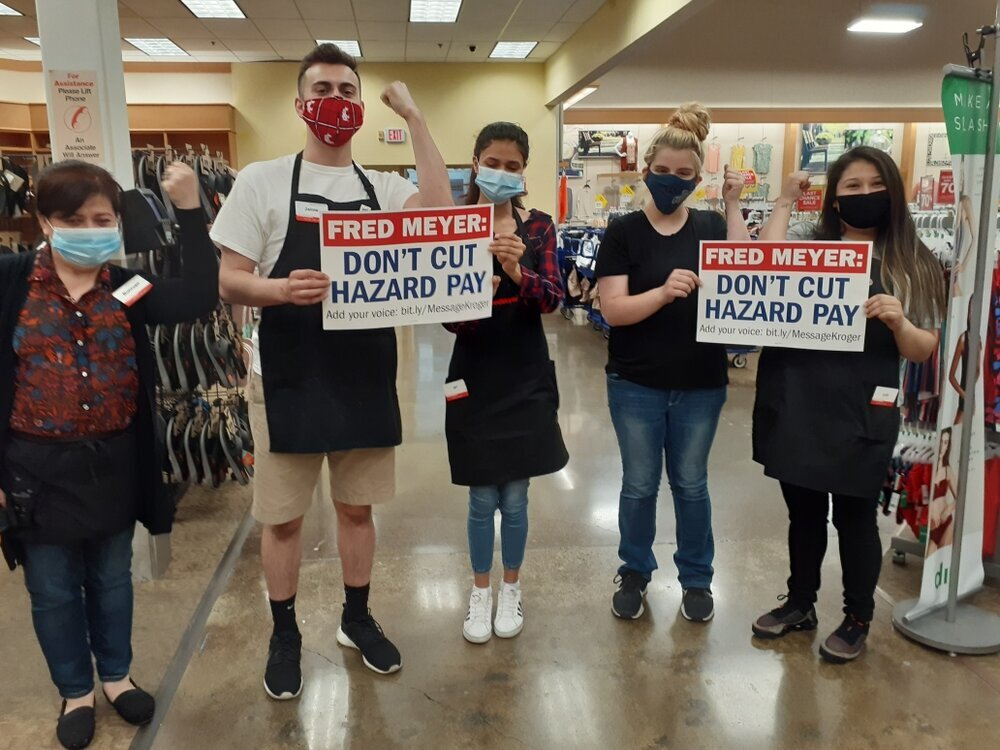
When we stand strong and stand together, we win. Over the last twelve months we built a successful campaign for a fair contract through our actions, our stories, and our unity. Back in November of 2018, a record number of members from stores all across the region participated in the bargaining survey which provided the focus, direction, and priorities for our member bargaining team. The next twelve months would see us come together for Contract Action Team meetings, community partner gatherings, leaflets, neighborhood canvasses, and then summer informational pickets. During it all we wore our buttons, united with other UFCW members up and down the West Coast, and shared 25,000 Better Jobs–Better Communities union grocery store bags with our customers and community allies.
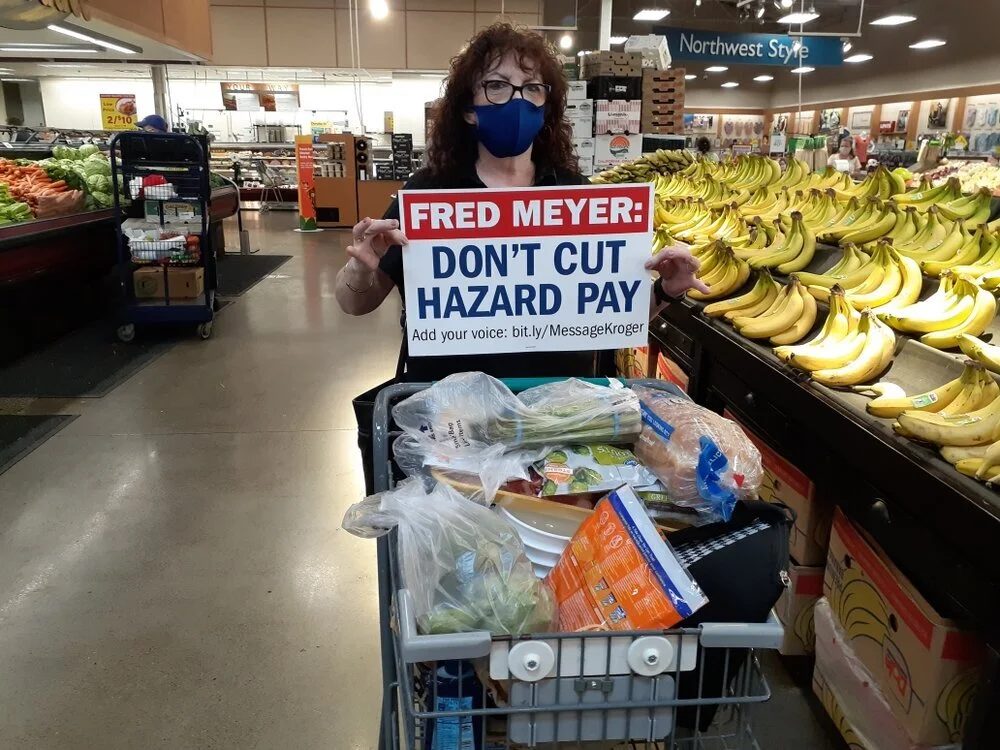
Because of our shared strength and purpose we ratified the strongest grocery store contract in decades, with no takeaways. We did this together; every department, every store, every community. Together, we win.

A strong new contract means new language about our rights and wages to learn, be trained on, and enforce. Sign up for safety training, Steward training, member action teams, and more.

Here’s what UFCW 21 members are saying about our new contract:
(if you’re on your phone and don’t see the quotes, turn your phone sideways)

Puget Sound Grocery Store Workers are proud of a contract that includes:

  • Strongest journey wage increases in UFCW 21’s history.

  • Full back pay to expiration .

  • A long-term solution to our pension with projected improvements.

  • Health care benefits that are projected to be fully-funded, include benefit improvements and NO increases to premiums or deductibles.

  • First scheduling overhaul in decades, giving us more control over our schedules.

  • Strong safety language for the first time ever in our contract.

  • A plan for the future of technology and workforce training.

  • Protections for our wage scales, so as minimum wage goes up, so do our wage steps.

  • NOT ONE SINGLE CUT OR TAKEAWAY!


Members have been reporting that they are receiving their retro-pay checks and journey pay increases, be sure to check your check!

Retro-pay:

  • Journey persons under contracts that expired before contract ratification are entitled for retro-pay under the newly negotiated pay scale. Check with your Steward or call your Rep if you think you were eligible but have not received retro-pay.

New minimum wage:

  • On January 1st, the state’s minimum wage goes to $13.50 an hour, and all wages by contract are at least 10¢ above minimum and each step at least 10¢ above the last step. Our union was one of the leading forces that helped pass the law that requires the minimum wage to rise as the cost of living goes up.

Look closely at pay around the holidays:

  • For work after 6 pm on Christmas Eve and New Year’s Eve, you should be paid time and a half.

  • All hours worked on Christmas Day, New Year’s Day, and other holidays is paid at time and a half. In addition, if you qualify for Holiday Pay, make sure you receive it.

If you think you have a problem, read the contract and contact your steward, or call your Rep.

Grocery Store Bargaining Update: Exciting News This Morning

IMG_0275.jpg

We have exciting news. After more than six months of negotiations, hundreds of actions leafleting and picketing in front of our stores, wearing solidarity buttons, handing out 25,000 Better Jobs-Better Communities union grocery store bags to our customers, and joining together with other UFCWs up and down the West Coast, we are pleased to announce that we have reached a Tentative Agreement with the employers, pending one last step. This final critical step will be for Kroger and Safeway/Albertsons to work out the remaining details to the long-term pension agreement.

This Tentative Agreement is fully recommended by the Grocery Store Bargaining team, pending Kroger and Safeway/Albertsons finalizing the pension deal.

Details for the Tentative Agreement will be available for all active UFCW 21 grocery store members working in King, Snohomish, Kitsap, Mason, and Thurston Counties at the big chains (Safeway, Albertsons, Fred Meyer and QFC) and independent stores. The upcoming vote meetings will be taking place in early November (see below for voting dates, times and locations). Members have been signing up to attend these meetings over the past couple weeks. Members can drop by anytime during one of the vote meeting times to learn details, get questions answered and vote.

Vote meeting times, dates and locations are listed below: 

  • Friday, November 1, 2019 — BELLEVUE8AM-12PM & 4-8PM
    Meydenbauer Center / 11100 NE 6th St, Bellevue, WA 98004

  • Sunday, November 3, 2019 — SEATAC8AM-12PM & 4-8PM
    Doubletree Seatac / 18740 International Blvd, Seattle, WA 98188

  • Monday, November 4, 2019 — SEATTLE8AM-12PM & 4-8PM
    Fisher Pavilion, Seattle Center / 305 Harrison St, Seattle, WA 98109

  • Tuesday, November 5, 2019 — LYNNWOOD8AM-12PM & 4-8PM
    Lynnwood Convention Center / 3711 196th St SW, Lynnwood, WA 98036

  • Wednesday, November 6, 2019 — BREMERTON8AM-12PM & 4-8PM
    Kitsap Convention Center / 100 Washington Ave, Bremerton, WA 98337

  • Wednesday, November 6, 2019 — OLYMPIA8AM-12PM & 4-8PM
    The Olympia Center / 222 Columbia St NW, Olympia, WA 98501


RSVP to the VOTE

In Solidarity, YOUR GROCERY STORE BARGAINING TEAM

Amy Dayley Angell, QFC #891 (Ballard), Front End Checker, UFCW 21
Christina Harris, Fred Meyer - Lake City #179 (Grocery), Bakery Clerk, UFCW 21
Cliff Powers, Safeway #402 (Oak Harbor), Produce Clerk, UFCW 21
Denise Anderson, Safeway #1546 (Aberdeen), Meat Wrapper, UFCW 367
Eleanor Knight, Albertsons #4483 (Auburn), 4th PIC, UFCW 21
Irene Garcia, Fred Meyer - Auburn #19 (Retail), Home Clerk, UFCW 21
Jeannette Randall, Safeway #1923 (Roxbury), Front End Checker, UFCW 21
Jeff Smith, Fred Meyer - Snohomish #681 (Retail), Non-food receiving Clerk, UFCW 21
J'Nee DeLancey, Town & Country #211 (Ballard), Beer/Wine/Spirt Manager, UFCW 21
Joann Gardner, Albertsons #3106 (Puyallup), Personnel Coordinator/Bookkeeper, UFCW 367
Kyong Barry, Albertsons #4483 (S Auburn), Front End Manager, UFCW 21
Lisa Gasser, Fred Meyer #424 (South Hill), Bakery Clerk, UFCW 367
Maggie Breshears, Fred Meyer - Greenwood #122 (Grocery), Personal Shopper, UFCW 21
Maroot Nanakul, Safeway #464 (Bear Creek), Front End Manager, UFCW 21
Michaela Strain, QFC #819 (Bothell), Meat Wrapper, UFCW 21
Mike Sherman, Fred Meyer # 265 – Puyallup, Grocery Clerk, UFCW 367
Mike Solberg, Safeway # 547 (Graham), Grocery Clerk, UFCW 367
Paul Ames Reinhold, Metropolitan Market #157 (Uptown), Cheese Kiosk Clerk, UFCW 21
Richard Waits, Haggen #15 (Burlington), Deli Clerk, UFCW 21
Robin Hillistad, QFC #858 (N Seattle), HR Specialist/Bookkeeper, UFCW 21
Sam Dancy, QFC #825 (Westwood Village), Front End Supervisor, UFCW 21
Sue Wilmot, Safeway #1252 (Bainbridge Island), Front End Checker, UFCW 21
Wendy Garrett-Drake, Albertsons #469 (Mukilteo), Personnel Coordinator/Bookkeeper, Teamsters 38
Wil Peterson, Fred Meyer - Everett #95 (Grocery), CCK Checker, UFCW 21
Faye Guenther, President, UFCW 21
Steve Chandler, Principal Officer Teamsters 38
Joe Mizrahi, Secretary Treasurer, UFCW 21
Tammi Brady, Recording Secretary, Teamsters 38
Samantha Kantak, Executive Assistant, Teamsters 38
Kate Meckler, Trustee, UFCW 367
Angel Gonzalez, Deputy Trustee, UFCW 367
Jim McGuinness, Attorney, UFCW 21, Teamsters 38 and UFCW 367